Facelift Consultation: 25 Questions for Natural Results
By Tseng Plastic Surgery
What if the most important instrument in a facial rejuvenation is not the surgical tool, but the conversation that happens weeks before the first incision? It's natural to feel a blend of anticipation and hesitation when considering surgery. You likely worry about looking "overdone" or losing the unique character of your face. Understanding the right facelift consultation questions is the first step in transforming that anxiety into a sense of quiet confidence. By asking the right things, you ensure that your surgeon's technical precision aligns perfectly with your personal vision of refinement.
You deserve a result that feels like a harmonious return to your younger self rather than a dramatic departure from it. We've compiled a comprehensive guide to help you master the consultation process. You'll learn how to evaluate a surgeon's artistic philosophy, distinguish between techniques like the deep plane or SMAS lift, and prepare for a recovery that prioritizes your safety. From verifying board certifications to understanding the nuances of facial volume, this roadmap empowers you to choose a partner who values your individual journey as much as the final, elegant outcome.
Key Takeaways
- Learn why verifying American Board of Plastic Surgery certification and hospital privileges is a non-negotiable step for ensuring clinical integrity and patient safety.
- Understand the technical distinctions between SMAS and Deep Plane techniques to determine which method best restores your facial structure with lasting elegance.
- Discover how an artist-scientist approach to aesthetic harmony ensures your results look refreshed and natural rather than "pulled" or "operated."
- Empower your decision-making by using essential facelift consultation questions to evaluate a surgeon’s artistic vision and professional transparency.
- Gain a clear perspective on the recovery timeline and necessary preparations to ensure a smooth journey toward your desired transformation.
Qualifying Your Surgeon: Vetting Credentials and Clinical Integrity
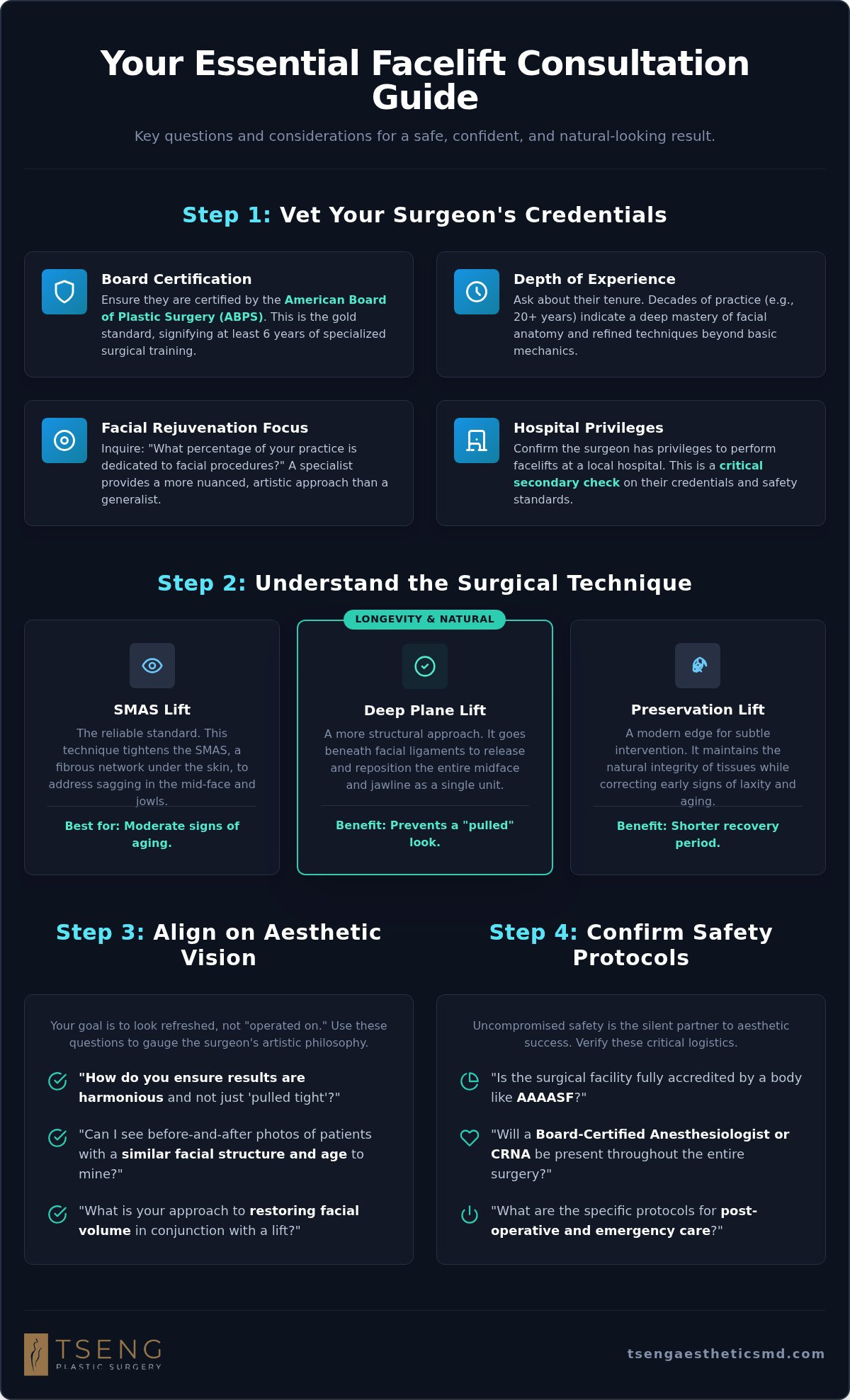
Choosing a surgeon is an exercise in discerning both clinical excellence and artistic compatibility. While many practitioners offer aesthetic services, your search should begin with the gold standard: certification by the American Board of Plastic Surgery (ABPS). This credential signifies that a surgeon has completed at least six years of surgical training and passed rigorous examinations. However, certification is merely the baseline. A legacy of experience, such as Dr. Tseng’s 20 years in practice, provides a depth of knowledge that cannot be replicated. This tenure allows a surgeon to refine their technique over thousands of hours, moving beyond basic mechanics to master the nuances of facial anatomy.
When preparing your facelift consultation questions, don't overlook the importance of hospital privileges. Even if your procedure is performed in a private surgical suite, a surgeon should hold privileges at a local hospital for the specific procedure you're seeking. This acts as a secondary layer of vetting; hospitals perform their own rigorous background checks and peer reviews before granting these rights. It's a critical safety indicator that ensures your surgeon is held to the highest institutional standards. For a deeper understanding of the procedure's history and clinical scope, you might review this facelift (rhytidectomy) overview.
The "Master of One" Philosophy
Facial rejuvenation requires a different artistic eye than body contouring. You should ask how many facelifts the surgeon performs annually and what percentage of their practice is dedicated specifically to the face. A patient-first mentality is often found in practices that prioritize quality and precision over high-volume throughput. A master craftsman understands that every face is a unique canvas, requiring a personalized approach rather than a one-size-fits-all solution. This focus ensures that the surgeon’s technical skill is finely tuned to the delicate structures of the neck and face.
Safety and Facility Accreditation
Safety is the silent partner of aesthetic success. Your facelift consultation questions should include a thorough inquiry into the surgical facility's accreditation, such as through the AAAASF. This ensures the environment meets stringent national standards for equipment, safety, and staffing. Consider these specific points during your evaluation:
- Is the surgical suite fully accredited for major procedures?
- Will a board-certified anesthesiologist or CRNA be present throughout the surgery?
- What specific protocols are in place for post-operative emergency care?
These questions ground your journey in clinical reality; they ensure that your pursuit of a refreshed appearance is supported by uncompromised safety standards and professional integrity.
Decoding Surgical Techniques: SMAS, Deep Plane, and Preservation
The choice of surgical technique is a pivotal moment in your rejuvenation journey. It's often the centerpiece of your facelift consultation questions. While the SMAS facelift remains a reliable standard for repositioning tissue, modern advancements have introduced more nuanced options like the Deep Plane and Minimal Invasive Preservation lifts. Each method offers distinct advantages depending on your aesthetic goals and the specific degree of laxity in your facial structures.
This fibrous network, known as the SMAS, acts as the structural foundation of your face. In a traditional SMAS lift, this layer is tightened to address sagging. In contrast, a Deep Plane facelift goes beneath the facial ligaments to release and reposition the entire midface and jawline. This structural approach is known for its longevity and its ability to prevent the unnatural "wind-swept" appearance that occurs when skin is pulled too tight over fixed underlying structures. Understanding facelift risks and safety is also essential during this stage to ensure you are fully informed about the clinical implications of each method.
For patients seeking a more subtle intervention, the Minimal Invasive Preservation Face and Neck Lift offers a modern edge. This technique focuses on maintaining the natural integrity of the tissues while correcting early signs of laxity. It typically results in a shorter recovery period compared to more extensive procedures, making it a preferred choice for those who want a refreshed look with minimal downtime. During your visit, your surgeon will evaluate your skin elasticity, bone structure, and fat distribution to determine which path best preserves your unique identity. If you're ready to explore these possibilities, a personalized consultation can clarify which combination of science and artistry is right for you.
Comparing Lift Depths and Longevity
The SMAS layer is the underlying structural network of muscle and connective tissue that sags over time, leading to the visible jowls and nasolabial folds associated with facial aging. While traditional SMAS techniques might require a standard recovery of two to three weeks, minimal invasive preservation lifts often significantly reduce this timeline. Deep-plane adjustments prevent a "wind-swept" look by repositioning the deep tissues rather than placing tension on the skin surface.
The Role of Volume Restoration
Ask your surgeon how they plan to address the natural loss of facial fat that occurs with age, as a lift alone cannot restore lost fullness. Many patients benefit from the combination of facelifts with injectables or autologous fat grafting to create a three-dimensional rejuvenation. While fillers are excellent for minor touch-ups, fat grafting offers a permanent solution that integrates seamlessly with your existing anatomy to produce a soft, unoperated glow. Integrating these facelift consultation questions into your discussion helps clarify whether you need a lift, volume, or a combination of both.
Aligning on Aesthetic Vision: Ensuring Natural Results
A successful facial rejuvenation is a delicate marriage of clinical mastery and artistic intuition. You aren't simply seeking a technician; you're looking for an artist-scientist who understands the subtle geometry of the human face. This alignment of vision is perhaps the most critical component of your facelift consultation questions. While technical skill ensures safety, it's the surgeon's aesthetic eye that ensures you still look like yourself, only more rested and vibrant. Conservative adjustments often yield the most sophisticated results, as they focus on harmony rather than drastic, structural changes that can alter your fundamental identity.
When you evaluate a surgeon's portfolio, look beyond the simple removal of wrinkles. Focus on "identity preservation." This means the patient's eyes, mouth, and expression remain recognizable and balanced. Inquire about the surgeon's philosophy on refinement versus change. A master craftsman will prioritize restoring what was lost over time rather than creating a face that looks "operated" or artificially tight. You can find a detailed list of questions to ask your plastic surgeon to help you probe these artistic nuances during your meeting.
Identifying the "Overdone" Red Flags
The fear of looking "pulled" or "wind-swept" is a common anxiety. To avoid this, ask your surgeon how they manage tension during the procedure. In a sophisticated lift, the tension is placed entirely on the deep structural layers, leaving the skin to be draped gently without stress. You should also discuss incision placement and scar camouflage techniques. High-quality work focuses on natural facial rejuvenation where scars are hidden within the natural contours of the ear and hairline, making them virtually invisible once healed. If a surgeon suggests pulling the skin tight as the primary solution, it's a significant red flag.
Visualizing Your Outcome
Every face ages differently based on bone structure and skin quality. To get a realistic sense of your potential results, ask to see before-and-after photos of patients who share your specific aging patterns and facial shape. This is more helpful than looking at generic "ideal" outcomes. Discuss the concept of aesthetic balance; a refreshed jawline should look harmonious with the midface and neck. If the practice offers 3D imaging or digital morphing tools, use them to facilitate a deeper conversation about your goals. These tools aren't meant to provide a "guarantee," but they serve as a vital communication bridge to ensure your facelift consultation questions lead to a shared, clear vision of the final result.
Navigating the Logistics: Preparation, Recovery, and Safety
The physical transformation of a facelift begins long before you enter the surgical suite. Preparation is a collaborative effort between your clinical team and your own dedication to health. You'll receive specific protocols regarding skin preparation, nutritional optimization, and the temporary cessation of certain medications or supplements that can affect healing. These logistical details are essential components of your facelift consultation questions, as they ground the surgical plan in a foundation of safety and physiological readiness. A thorough preparation phase ensures your body is in the best possible state to support the artistry of the procedure.
During the first 48 hours, the practice's role shifts from architect to guardian. A premier practice provides detailed post-operative protocols that ensure you feel supported and secure during the most sensitive phase of healing. This includes clear communication channels for any concerns and specific instructions for managing the initial stages of recovery. Managing your expectations regarding bruising and swelling is equally important; while the initial changes are visible, "social readiness" typically arrives as the inflammation subsides and your refined features begin to emerge. It's a journey that moves at its own pace, requiring patience and professional guidance.
The First Week Post-Op
Managing discomfort and swelling in the first seven days requires a methodical approach. You should ask about the specific steps the practice takes to minimize these side effects, such as the use of cold compresses or specialized head wraps. Inquire whether your surgeon utilizes surgical drains or specialized bandages, as these choices can influence both your comfort and the speed of your initial healing. Clarifying the schedule for follow-up appointments and suture removal is also vital; these visits allow your surgeon to monitor your progress with the same precision applied during the procedure itself. This high level of personal care is what defines a patient-first experience.
Long-Term Maintenance and Longevity
A facelift is a significant investment in your confidence, and protecting that investment requires a long-term strategy. It's natural to wonder how long a deep plane facelift lasts compared to more superficial techniques. While surgical results are enduring, your skin will continue to age naturally. Discussing non-surgical treatments, such as professional-grade skincare or light-based therapies, can help maintain the vibrancy of your results for years to come. Understanding how lifestyle factors like sun protection and hydration impact your longevity ensures you remain an active participant in your aesthetic journey. If you're ready to begin this partnership, you can schedule a comprehensive evaluation to discuss your unique needs and goals.
The Final Evaluation: Assessing the Practice Experience
The consultation is the final crucible for your decision, serving as the moment where clinical data meets personal intuition. While the previous sections focused on technical mastery and surgical plans, this stage is about the environment and the relationship you'll maintain throughout your recovery. A methodical, unhurried rhythm during your meeting is often the clearest indicator of how you'll be treated during your actual transformation. If you feel like a number in a high-volume "factory," your results may lack the personalization you deserve. Instead, look for a practice that prioritizes a patient-first mentality, ensuring the surgical plan feels like a bespoke garment tailored to your unique anatomy.
Your list of facelift consultation questions should serve as a bridge to understanding the practice's underlying philosophy. Observe how the staff interacts and whether the surgeon truly listens to your concerns or simply waits for their turn to speak. Trusting your "gut feeling" is a valid part of this clinical journey. You're entrusting a professional with your identity; an emotional connection built on mutual respect and quiet confidence is just as vital as the technical mastery of the deep plane or SMAS techniques. This harmony between professional expertise and personal vision is what ultimately leads to a successful outcome.
Transparency and Integrity
A surgeon's integrity is most visible when discussing the complexities of surgery rather than just the benefits. Ask how the surgeon handles complications if they arise and inquire about their specific revision policies. While high patient satisfaction rates are a point of pride for any master craftsman, transparency regarding potential risks is a hallmark of professional prestige. You should also ensure all costs are presented with absolute clarity. A practice that values its reputation will provide a comprehensive breakdown of fees, including anesthesia and facility costs, leaving no room for hidden financial surprises as you move forward.
The Quiet Confidence of Expertise
True expertise doesn't need to employ aggressive sales tactics or push unnecessary procedures. Evaluate whether the surgeon is focused on your specific goals or if they are suggesting a "templated" list of additions that don't align with your vision of refinement. There should be a palpable harmony between their clinical authority and their compassionate care for your well-being. When you finalize your choice, it should be based on a legacy of proven, refined results and the sense that you've found an artist-scientist who views your face with both precision and grace. This final assessment ensures that your path to a refreshed appearance is grounded in trust and elite professional standards.
Embracing Your Path to Refinement
A successful facial transformation is built on a foundation of trust, technical precision, and shared aesthetic values. By mastering your facelift consultation questions, you move from a place of uncertainty to one of empowered clarity. You've learned how to vet a surgeon's clinical integrity, distinguish between advanced techniques like the deep plane lift, and evaluate the artistic vision required for truly natural results. This preparation ensures that your journey is as smooth as the elegant outcome you envision.
Your reflection should always feel like home. With over 20 years of surgical excellence and board-certified expertise in facial rejuvenation, Dr. Tseng is dedicated to providing balanced, subtle improvements that honor your unique identity. We invite you to Schedule Your Personalized Facelift Consultation with Dr. Tseng to discuss how a patient-first approach can achieve your goals. You're one step closer to a refreshed, youthful appearance that feels entirely your own. We look forward to guiding you through this transformative experience with the care and sophistication you deserve.
Frequently Asked Questions
Is a facelift consultation worth it if I am not ready for surgery yet?
A consultation is highly valuable even if you aren't ready for surgery immediately, as it serves as an essential educational foundation. It allows you to understand your unique facial anatomy and the specific aging patterns you may experience. By discussing potential facelift consultation questions early, you can develop a long-term aesthetic roadmap. This proactive approach helps you align your expectations with realistic clinical outcomes when the time is right for a procedure.
How long does a typical facelift consultation take?
A typical consultation usually lasts between 45 and 60 minutes to ensure a methodical and unhurried experience. This time is dedicated to a thorough examination of your facial structure and a detailed discussion of your aesthetic goals. We prioritize a patient-first rhythm where your concerns are heard and every technical aspect is explained with clarity. This deliberate pace is essential for building a foundation of trust and ensuring a personalized surgical plan is developed.
Can I see before-and-after photos of patients with my specific face shape?
You are encouraged to review before-and-after photos of patients who share your specific bone structure and aging patterns. Viewing results from similar anatomical starting points provides a realistic expectation of what can be achieved through surgical refinement. This process helps you evaluate the surgeon's ability to maintain identity preservation across various facial shapes. It also demonstrates the practice's commitment to creating natural, balanced results that look unoperated and refreshed rather than drastically changed.
What is the difference between a mini facelift and a full facelift consultation?
The primary difference lies in the scope of tissue repositioning and the specific areas of concern addressed during the clinical evaluation. A mini facelift consultation often focuses on early signs of jowling and skin laxity in the lower face. In contrast, a full facelift consultation involves a deeper analysis of the midface, jawline, and neck. Your surgeon will determine the most appropriate depth, such as a SMAS or deep plane approach, based on your unique anatomy.
Should I bring photos of my younger self to the consultation?
Bringing photos of yourself from ten or fifteen years ago is highly beneficial for the surgeon's evaluation. These images act as a historical reference point, allowing the artist-scientist to see your natural facial proportions and original volume distribution. By understanding your baseline, the surgeon can tailor a plan that restores your youthful character rather than creating an unfamiliar appearance. It helps ensure the surgical outcome is a harmonious return to your younger self.
What are the most common risks discussed during a facelift consultation?
Transparency regarding safety is a hallmark of professional integrity. During the meeting, you will discuss risks such as hematoma, infection, and potential changes in skin sensation or nerve function. While these complications are rare in the hands of an experienced board-certified surgeon, a thorough explanation is necessary for informed consent. Your surgeon will also detail the specific protocols used to minimize these risks and ensure your safety remains the highest priority throughout the surgical journey.
Will the surgeon discuss non-surgical alternatives during the meeting?
A comprehensive evaluation always includes a discussion of non-surgical alternatives like injectables or a non-surgical facelift. These options may be suitable for patients with mild laxity or those looking to delay more invasive procedures. Your surgeon will provide an honest assessment of what non-surgical treatments can achieve compared to the definitive results of a surgical lift. This ensures your final decision is based on a clear understanding of all available paths to facial rejuvenation.
How soon after a consultation can I schedule my surgery?
Surgery can typically be scheduled within a few weeks to several months following your initial meeting, depending on the practice's availability. This window allows for the necessary pre-operative preparations, including medical clearances and lifestyle adjustments. We encourage a deliberate decision-making process rather than rushing into a procedure. Once you feel confident in your choice, our team will coordinate a timeline that aligns with your recovery goals and personal schedule to ensure a smooth experience.

