When Fillers Stop Working: Causes and Next Steps
By Tseng Plastic Surgery
What if filler hasn’t stopped working, but your face has changed around it? If the result looks less noticeable or no longer feels balanced, it’s understandable to wonder what to do when fillers stop working. A change in appearance doesn’t always mean the product has fully worn off. Shifting facial features, skin laxity, or filler that remains from earlier treatments may all affect how your results look.
It can be tempting to add more, especially when you expected the result to last longer. But more filler isn’t always the right answer. Before deciding, note what looks different, when you first noticed it, and whether the change is gradual or sudden. A careful assessment can help distinguish fading from other changes.
This article explains why filler results may seem to fade, how to track changes, which symptoms need prompt medical attention, and what a measured next step can involve. You’ll also learn how a clinician can assess facial balance and discuss whether observation, a different non-surgical approach, or another option may better suit your needs.
Key Takeaways
- A less visible or changed result doesn’t, by itself, show whether filler has worn off or what caused the difference.
- Filler materials, treatment areas, and individual changes vary, so there isn’t one timeline that applies to everyone.
- Before deciding what to do when fillers stop working, document what has changed and gather details about previous treatments.
- A clinical assessment can help distinguish gradual fading from other changes and guide a thoughtful discussion of next steps.
- More filler isn’t automatically the answer. A personalized plan can account for facial balance, concerns, and goals.
What Does It Mean When Dermal Fillers Seem to Stop Working?
A change in your appearance deserves attention, but it doesn’t identify the cause on its own. “My filler stopped working” may mean reduced fullness, a result that’s less visible than before, or a treated area that looks different from the original outcome. Those observations are valid, but they don’t confirm that the filler has fully disappeared or that another treatment is needed.
Fillers vary in material and use. The area treated, your treatment history, and your individual response also shape how results appear over time. A clinician assessing the change will consider these details together rather than rely on a single expected timeline. For background on the materials and uses involved, see this overview of injectable fillers.
How Can You Tell Whether Filler Has Faded or the Result Has Changed?
Gradual loss of visible fullness can be one pattern, but appearance alone can’t establish what has happened beneath the skin. A sudden change is different from a slow shift and may call for prompt clinical advice, particularly if it comes with new pain, swelling, skin-color changes, or vision symptoms. Don’t try to diagnose the cause by comparing appearance alone.
Light, facial expressions, camera angles, and day-to-day perception can all affect how a treated area looks. Compare dated photographs taken in similar lighting and from similar angles instead of relying only on memory. Note when you first noticed the change, which area is affected, and whether it seems to be progressing. These details make a clinical discussion more useful.
Why the Same Filler Result Can Look Different Over Time
Your face continues to change, and shifts in facial features or surrounding tissues can alter the way a previously treated area appears. The original goal matters, too. A subtle refinement may feel less noticeable over time even if the change has been gradual. Expectations about how long a result should last can also affect whether that shift feels like fading or disappointment.
Perceived fading is an observation, not a confirmed clinical finding. If you’re considering what to do when fillers stop working, start by describing what looks different and when you noticed it. A personalized assessment can help distinguish a gradual change from a result that merits closer review. That makes it easier to discuss your facial balance and goals without assuming that more filler is needed.
Why Might Fillers Seem Less Effective Over Time?
A less noticeable result can have several explanations. Visible change alone can’t show whether filler has diminished, remains in the area, or is unrelated to the filler itself. Materials differ, treatment areas respond differently, and each person’s facial features and treatment history shape the outcome. There isn’t one reliable duration that applies to every filler or every patient.
Some changes happen gradually, but product-specific timelines need to be considered alongside the exact material, location, and clinical context. An online article can’t determine whether filler remains or identify a complication. If you’re considering what to do when fillers stop working, use general information as a starting point for discussion, not as a diagnosis.
How Filler Type and Treatment Area Affect Expectations
The product used and the area treated matter when interpreting a change. Different materials have distinct characteristics, and the same material may look different in areas with different movement, structure, or aesthetic goals. A general timeline found online may not accurately describe an individual result.
If available, review your treatment records for the product name, treatment date, and area. The clinician who performed the treatment can explain what was used and how its known characteristics relate to your history. These details are more useful than estimating from memory or comparing your experience with someone else’s.
When the Issue May Be Expectations Rather Than Filler Longevity
A prior result may feel less effective because your preferences have changed, even if the original treatment still contributes to your appearance. For example, you may now want a different contour or more overall facial definition. Dissatisfaction with shape or balance isn’t the same as confirmed loss of product effect. Adding volume without understanding the distinction may not address what concerns you.
Facial aging can also involve changes beyond volume, such as skin laxity or tissue descent. In those cases, restoring fullness alone may not match the concern or the result you hope to achieve. The modern facelift guide explains how facial rejuvenation can address concerns that aren’t simply about volume.
A measured clinical review brings together your treatment history, current appearance, and evolving goals. That conversation can clarify what may be contributing to the change and whether observation or another approach is worth discussing. Instead of treating perceived loss as proof that filler has stopped working, start with the specific difference you notice and when it began.
Does Filler Really Stop Working, or Is More Filler the Wrong Answer?
A changed appearance doesn’t automatically mean filler has stopped working. The visible result may seem reduced, but dissatisfaction with shape, changes in facial features, or an unexpected difference can also affect how you perceive it. These possibilities call for different considerations, so an automatic top-up may not address the reason you’re concerned.
Adding volume without first clarifying your goal can create a result that feels fuller but still looks unbalanced to you. For example, if your concern is a change in contour rather than reduced fullness, more volume may not create the definition you want. Review your treatment history, current appearance, and preferences before deciding whether another treatment makes sense.
Signs That Call for Assessment Instead of an Automatic Top-Up
Arrange a clinical assessment if the appearance changes unexpectedly, feels uneven, or differs from the result you intended. These observations don’t identify a cause on their own, so don’t label the change or try to manage it yourself. A clinician can consider your treatment history alongside an examination and discuss what the findings may mean.
Bring any available treatment records. Describe what changed, when you noticed it, and whether it has continued to evolve. This context makes the discussion more specific than a decision based on a single photograph or memory.
How to Think About More Filler Versus a Different Approach
A thoughtful recommendation depends on the concern you want to address, your anatomy, prior treatment, and the degree of change you hope to achieve. After reviewing these factors, a clinician may suggest observation, further assessment, or discussion of an appropriate treatment option. The goal is to choose an approach that fits your features and supports a balanced appearance, rather than simply adding volume by default.
Some concerns involve more than volume. If your main goal relates to skin laxity or tissue descent, a filler-focused approach may not address the issue you’re noticing. This surgical and non-surgical facelift comparison offers context on how different approaches relate to facial rejuvenation.
If you’re weighing what to do when fillers stop working, name the specific change you want to address rather than deciding in advance that you need more filler. A personalized aesthetic assessment can connect your concerns with a considered discussion of suitable options.
What Should You Do When Filler Results Change?
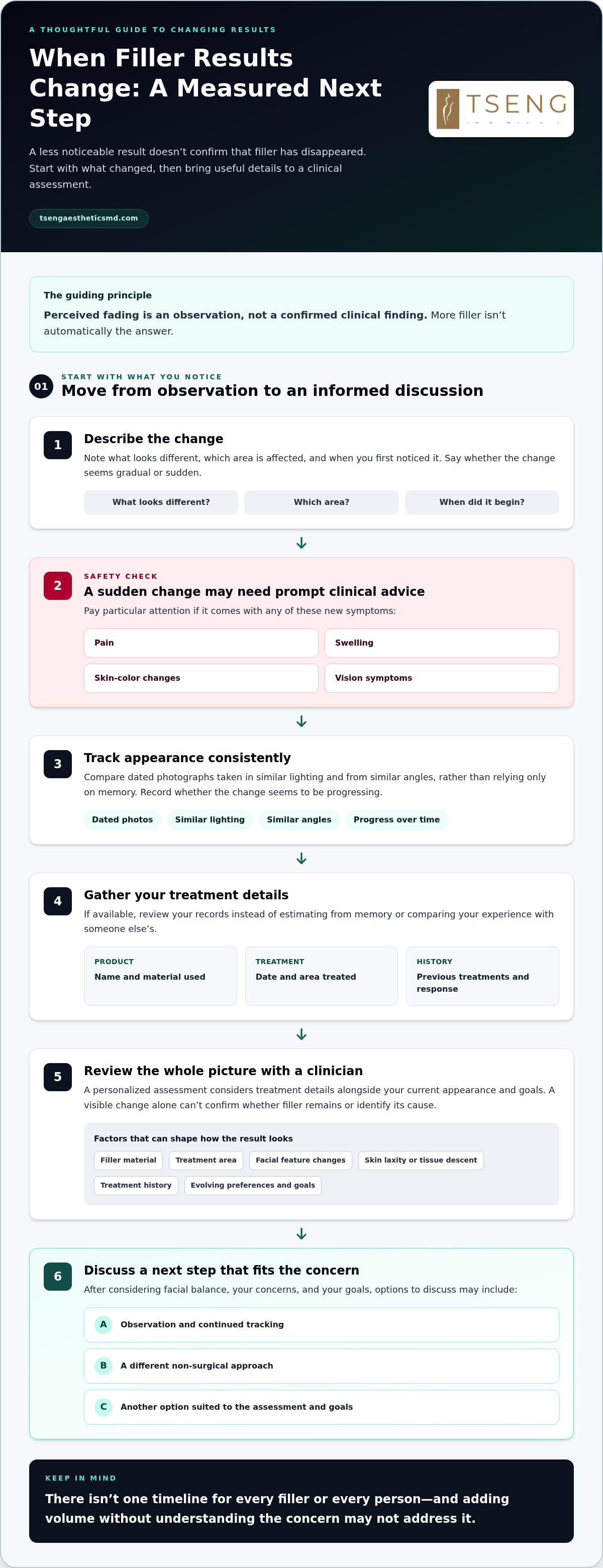
Start by documenting what you notice, gathering your treatment details, and arranging a clinical assessment before deciding on another treatment. This sequence helps distinguish a gradual change from a concern that needs faster attention, while giving the clinician useful context for the discussion.
What Information to Bring to a Filler Assessment
Before the appointment, make a brief record of when the change began, whether it is progressing, and any symptoms that came with it. Gather treatment dates, product details if available, areas treated, and notes about your response to prior treatments. Consistent photographs can help illustrate the change, especially when you can compare similar angles and lighting.
Keep your description simple and specific. For example, note that one side looks different, fullness seems reduced, or the result no longer matches your goal. A qualified clinician can review this history alongside an examination. Your observations are useful context, not a diagnosis.
Which Symptoms Need Prompt or Emergency Attention?
Some symptoms after filler require urgent action rather than a routine appointment. Seek emergency medical care immediately for any vision change or stroke-like symptoms, such as sudden weakness, numbness, trouble speaking, confusion, or difficulty walking. Do not wait to see whether these symptoms resolve, and do not delay emergency care to contact an aesthetic practice.
Severe or worsening pain, unusually pale or blanching skin, a mottled appearance, or other unusual skin-color changes also need urgent medical assessment. These signs can indicate a serious complication, but only a clinician can evaluate the cause. If you’re uncertain about the urgency, seek prompt medical guidance. Sudden vision or neurological symptoms call for emergency care.
For changes without urgent warning signs, use a measured plan:
- Document: Record when you first noticed the difference and whether it has changed.
- Gather: Bring treatment records, photographs, and notes about symptoms or prior responses.
- Arrange: Schedule a clinical assessment so your history and current appearance can be reviewed together.
- Discuss: Consider the assessment before deciding whether to monitor the change or explore an appropriate option.
Knowing what to do when fillers stop working begins with matching your response to your symptoms. For non-urgent changes, a personalized assessment can help you discuss your concerns and goals. Arrange a personalized aesthetic assessment to review a change in your filler results.
How a Personalized Filler Assessment Can Guide Your Next Step
A thoughtful assessment can turn uncertainty into a clearer conversation about what has changed and what matters to you now. Rather than assuming the answer is more filler, a clinician considers your treatment history, current appearance, concerns, and personal goals together. The aim is to understand the issue before discussing possible next steps.
What a Thoughtful Consultation Should Clarify
Start by describing what you notice and what you hoped the original treatment would achieve. A clinician can review relevant treatment details, examine your facial features and balance, and consider whether your concern relates to fullness, shape, or another visible change. Your preferences matter: a plan should reflect both the clinical assessment and the result you feel comfortable pursuing.
This is a shared decision, not a one-size-fits-all recommendation. You can ask what the assessment suggests, what monitoring might involve, and what options may be appropriate to discuss. A measured conversation also leaves room to pause rather than make an immediate treatment decision.
Choosing a Proportionate Path Forward
The next step depends on the findings and your priorities. It may involve monitoring the appearance or discussing a suitable option, with attention to facial harmony and your comfort with any proposed change. Natural-looking balance can guide the conversation, but no particular result should be assumed before an individualized assessment.
At Tseng Plastic Surgery, Dr. Mark H. Tseng brings more than 20 years in practice to personalized aesthetic care, including injectables. The practice also offers non-surgical facelifts, with an emphasis on natural-looking, balanced results and each patient’s goals. If you’re wondering what to do when fillers stop working, an assessment can help you explore the concern without presuming that additional treatment is necessary.
If you’d like to discuss a change in your results and your aesthetic goals, you can schedule a personalized aesthetic consultation. The conversation can help you consider a proportionate path forward at a pace that feels right for you.
Take a Measured Next Step Toward Facial Balance
A change in your filler result doesn’t automatically mean the product has worn off or that more is needed. Treatment material, facial changes, and shifting goals can all influence how the result appears. A personalized assessment is a more useful starting point than an automatic top-up. Keep a record of what changed and when, and seek emergency care for vision changes or stroke-like symptoms after filler.
Knowing what to do when fillers stop working means making space for careful evaluation before choosing a path forward. Dr. Mark H. Tseng has been in practice for over 20 years, and Tseng Plastic Surgery offers injectables with an emphasis on individualized, natural-looking aesthetic care. A thoughtful discussion can connect your concerns and goals with options suited to your needs.
When you’re ready to explore a change in a calm, personalized setting, schedule a personalized aesthetic consultation. Your next step can begin with understanding, not pressure.
Frequently Asked Questions
Why do my fillers seem to have stopped working?
Fillers may seem less effective because visible fullness has changed, your facial features have shifted, or your aesthetic preferences are different. A less noticeable result doesn’t confirm that the filler has disappeared. The material used, treated area, and your treatment history all matter. If you’re wondering what to do when fillers stop working, document the change and discuss it with a qualified clinician before deciding on more treatment.
Is it normal for filler results to fade over time?
Filler results can change over time, but the experience varies by material, treatment area, and individual response. A gradual decrease in visible fullness is one possibility, though appearance alone can’t confirm what is happening beneath the skin. Facial changes can also affect the result. If the change concerns you, compare dated photographs taken in similar lighting and arrange a clinical assessment rather than relying on memory alone.
Can I get more filler if my current results are not noticeable?
Possibly, but an assessment should come before adding more. A less noticeable result may reflect fading, a change in facial features, or dissatisfaction with shape or balance rather than a need for additional volume. A clinician can review your treatment history and current appearance, then discuss whether monitoring or an appropriate option fits your goals. More filler isn’t automatically the best way to address a changed result.
How long do dermal fillers last before they need to be repeated?
There isn’t one repeat-treatment schedule that applies to every dermal filler. Longevity can differ according to the material, the area treated, and individual factors, so broad timelines may not describe your experience. Check your treatment records for the product and date, then discuss those details with a qualified clinician. Don’t assume a result needs repeating simply because a general online estimate suggests a certain timeframe.
Can hyaluronidase dissolve every type of filler?
No. Hyaluronidase is used to break down hyaluronic acid filler, but it doesn’t dissolve every filler material. Whether it is suitable depends on identifying what was used and assessing your situation. Don’t try to manage or dissolve filler yourself. A qualified clinician can review your treatment records and examine the area before discussing whether this approach is appropriate or whether another plan should be considered.
What should I do if my filler looks uneven or changes suddenly?
Arrange a prompt clinical assessment for an unexpected change or uneven appearance. Note when it began, whether it is progressing, and any associated symptoms. Bring treatment details and photographs if available. Seek emergency medical care immediately for vision changes or stroke-like symptoms after filler. Severe pain or unusual skin blanching, mottling, or discoloration also needs urgent medical assessment. Don’t delay emergency care to contact an aesthetic practice.
Can facial aging make filler results look less effective?
Yes. Changes in facial features and surrounding tissues can alter how a treated area appears, even if the original result hasn’t simply disappeared. If your concern involves skin laxity or tissue descent rather than volume alone, adding filler may not address what you notice. A clinician can assess facial balance alongside your goals and history, then discuss proportionate options without assuming that retreatment is necessary.

