Liposuction Cost: What Shapes a Personalized Estimate?
By Tseng Plastic Surgery
When you search “liposuction cost Bellevue,” a headline figure may seem like a useful starting point, but it may not show the full cost of a procedure. A surgeon’s fee is only one part of an estimate, so comparing figures without checking what they include can leave out important details about the surgical plan.
It’s understandable to want a clear picture of liposuction costs. The number of treatment areas and the scope of surgery can shape an estimate, and the right plan depends on your anatomy and goals rather than a one-size-fits-all price. At Tseng Plastic Surgery, Dr. Mark H. Tseng brings more than 20 years of practice experience to individualized surgical planning, with attention to balanced, natural-looking results.
This article explains what may contribute to a personalized liposuction estimate, including the areas treated and related surgical expenses. It also compares liposuction with mini tummy tuck considerations: liposuction targets localized fat, while a mini tummy tuck may be considered when loose lower-abdominal skin is a concern. You’ll learn how to distinguish these goals and what to discuss during a consultation, so you can better understand the plan behind an estimate.
Key Takeaways
- A personalized liposuction estimate reflects the proposed treatment plan, so a surgeon’s fee alone may not show the full picture.
- The number, location, and extent of treatment areas, along with your anatomy and contour goals, help shape the surgical plan.
- Liposuction addresses localized fat, while a mini tummy tuck may be considered for concerns involving excess lower-abdominal skin.
- Compare estimates by reviewing which procedure details and expenses are included, rather than focusing on a single fee label.
- Dr. Mark H. Tseng brings more than 20 years of practice experience to planning tailored to individual anatomy and aesthetic goals.
Liposuction Cost: Why a Headline Fee Rarely Tells the Whole Story
A liposuction estimate at Tseng Plastic Surgery is a plan-specific summary of the proposed procedure and associated expenses, not a universal price. The plan may differ based on which areas are treated, the extent of treatment, and the setting and anesthesia involved. A figure presented as the surgeon’s fee, therefore, may not represent the full projected procedure expense.
For example, a plan focused on one area may involve a different scope from one addressing the abdomen and flanks. That doesn’t mean one plan is automatically better. It reflects how treatment choices, anatomy, and goals shape the work involved. A general overview of Liposuction can explain the procedure, but it can’t determine what an individual surgical plan will require.
What can a liposuction estimate include?
The surgeon’s professional fee covers the surgeon’s role, while facility and anesthesia components relate to where and how the procedure is performed. Depending on the proposed plan, an estimate from Tseng Plastic Surgery may also describe procedure-related care and follow-up. These components may appear together or as separate line items, so the label on a figure matters as much as the figure itself.
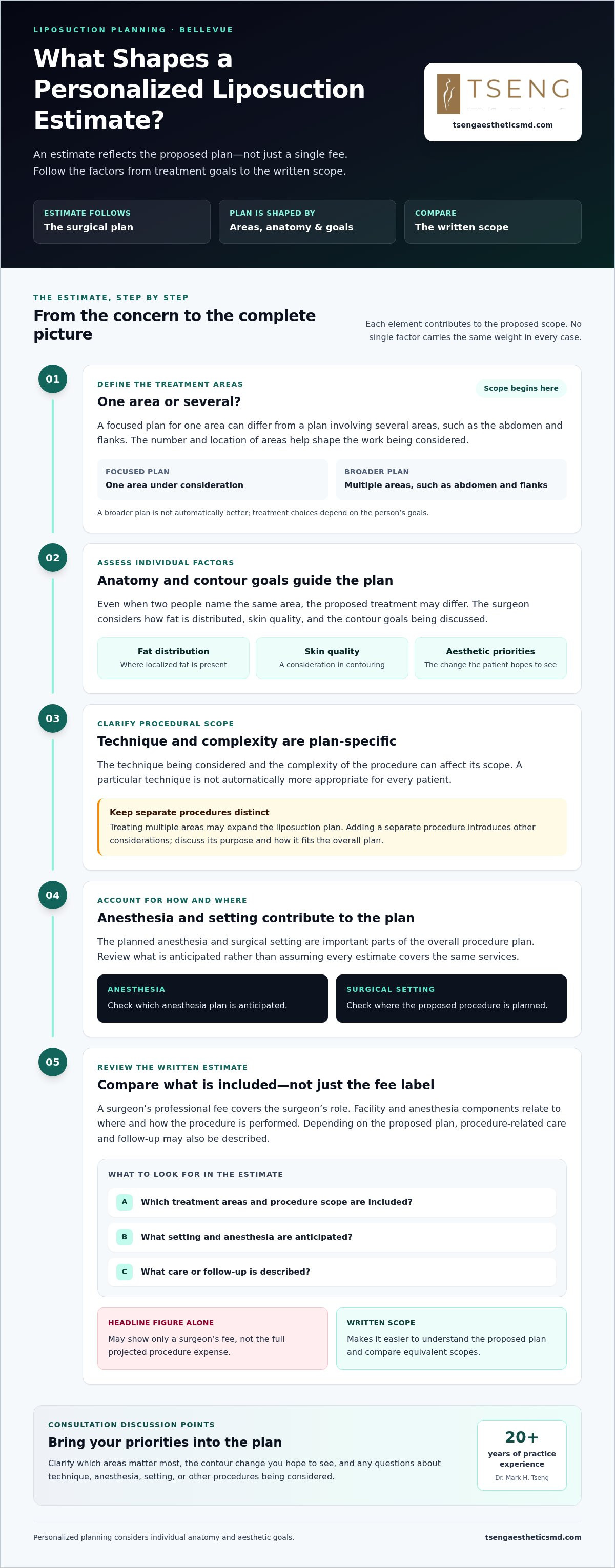
A complete estimate should describe the planned procedure and associated services. Review the written scope: which areas are included, what setting and anesthesia are anticipated, and what care or follow-up is described. If one estimate lists only a surgeon fee while another outlines a broader set of services, comparing headline figures alone won’t provide a like-for-like view.
Why online averages cannot predict an individual estimate
The search for general pricing information can lead to broad figures, but it isn’t a personalized estimate for a procedure with Tseng Plastic Surgery. Online averages may also combine unlike figures: one source may report a surgeon’s fee, while another discusses a broader projected expense. Without knowing what each number includes, it’s difficult to make a useful comparison or predict an individual plan.
Personal planning adds another layer. Patients may have different anatomy, treatment goals, and areas under consideration. Even when two people name the same body area, the extent of treatment proposed may differ. A consultation allows the surgical team to assess those details and discuss a plan aligned with the patient’s goals.
Use online information to understand the kinds of components an estimate may contain, not to assume what your own plan will cost. The more clearly the written estimate describes the procedure and related services, the easier it is to understand what is proposed and compare equivalent scopes.
Which Factors Shape a Personalized Liposuction Estimate?
A personalized estimate follows the surgical plan. The number of areas under consideration matters, as do their location, the extent of contouring being discussed, and the procedural details. Two people seeking treatment in the same area may have different plans because their anatomy, fat distribution, skin quality, and aesthetic priorities differ.
The main factors shaping an estimate are the treatment areas and their scope, individual anatomy and contour goals, procedural complexity, and the planned anesthesia and surgical setting. These elements work together, and no single factor carries the same weight in every case.
Treatment areas, anatomy, and the scope of contouring
A focused plan for one area differs in scope from a plan involving several areas, such as the abdomen and flanks. The surgeon assesses how fat is distributed and considers skin quality, since these features influence the contouring approach under consideration. The aim is to discuss a plan suited to the person, not to assume that treating additional areas automatically serves their goals.
During consultation, you and the surgeon can clarify which areas matter most and whether each fits your desired contour. The American Society of Plastic Surgeons’ liposuction cost information also explains that estimates relate to the specifics of the procedure, reinforcing why broad averages can’t substitute for an individualized assessment.
Technique, anesthesia, and surgical setting
The technique being considered and the complexity of the procedure can affect its scope. A particular technique isn’t automatically more appropriate for every patient; the plan should account for the surgeon’s assessment and the goals being discussed. Anesthesia and facility services are also important to understand, since the planned setting and anesthesia contribute to the overall procedure plan.
It helps to distinguish the complexity of liposuction itself from optional or combined procedures. Treating multiple areas may expand the liposuction plan; adding a separate procedure introduces other considerations. These aren’t interchangeable line items. Discuss each proposed procedure, its purpose, and how it fits the overall plan so the estimate reflects the scope being considered.
For a clearer discussion, consider bringing a short list of priorities to your consultation:
- Which areas you most want to address, and what change you hope to see in their contour.
- Any concerns about skin quality or how different areas relate to one another.
- Questions about the proposed technique, anesthesia plan, and surgical setting.
- Whether any other procedure is being considered and how it would change the scope.
These details help focus the conversation on your anatomy and goals, keeping the estimate connected to the actual plan rather than a generic template. A consultation for individualized liposuction planning can help clarify which areas align with your priorities and what the proposed procedure entails.
Liposuction vs. Mini Tummy Tuck: Which Plan Fits the Concern?
These procedures address different concerns, so comparing them as simply less expensive or more expensive can miss the central question: what change are you hoping to address? Liposuction removes localized fat to refine body contours. A mini tummy tuck is abdominal surgery with a different scope, which may involve addressing excess skin in the lower abdomen. Neither procedure is a universal solution for every abdominal concern.
The distinction matters because removing fat is not the same as removing loose skin. A surgical evaluation helps clarify which features contribute to the concern and whether the proposed procedure aligns with your goals.
When liposuction may align with the goal
Liposuction may be part of the discussion when the main concern is localized fat in an area such as the abdomen or flanks. The surgeon also assesses skin quality and how the area’s contours relate to surrounding areas. Someone focused on a specific fullness, for example, may need a different plan from someone whose concern centers on loose skin across the lower abdomen.
Liposuction isn’t a weight-loss procedure, and it doesn’t remove excess skin or guarantee skin tightening. The liposuction vs. tummy tuck guide offers more context on how the procedures differ, but an individual assessment is needed to determine which concerns apply to your situation.
When a mini tummy tuck may be part of the conversation
If lower-abdominal skin laxity is a key concern, the surgical discussion may extend beyond fat removal. A mini tummy tuck has a different abdominal treatment scope and may involve removing excess skin. The evaluation may also consider abdominal muscle concerns, which are distinct from localized fat and require their own assessment.
That doesn’t mean a mini tummy tuck is suitable for every person with abdominal fullness or loose skin. The location and extent of the concern, along with individual anatomy and goals, help shape whether this procedure belongs in the discussion. A surgeon can explain how the proposed plan addresses the specific features identified during the examination.
For a consultation, describe what bothers you most in practical terms: localized fullness, loose skin, or a combination of concerns. It can also help to explain how you hope your contours will look in clothing or daily life. These details give the surgeon a clearer starting point for examining the area and discussing options.
Procedure choice and candidacy require an individualized surgical evaluation. A thoughtful conversation distinguishes the concern being treated from the name of the procedure, then considers whether liposuction, a different abdominal surgery, or another approach best fits your anatomy and goals. The estimate can then be understood in relation to the plan being considered, rather than as a comparison between unrelated procedures.
How to Review a Liposuction Estimate and Prepare for Consultation
A written estimate is easier to understand when you can connect each line item to the proposed procedure. Rather than comparing isolated fee labels, check that estimates describe a similar treatment scope and identify the services included. A focused consultation also gives you a chance to discuss your goals, relevant health history, and questions about recovery.
Questions that make estimates easier to compare
Use these questions to clarify what the estimate covers and how it relates to the proposed plan. If the plan changes after your evaluation, understanding which components may change can help you interpret an updated estimate without assuming every fee covers the same scope.
- Confirm the treatment areas. Identify each area included in the written plan and whether the proposed extent of contouring matches the areas discussed.
- Review the services and fees. Ask how the surgeon’s professional fee, anesthesia, and facility services are presented, and whether procedure-related care or follow-up is described.
- Clarify the planned procedure. Make sure the estimate reflects the technique and surgical scope being considered, rather than a general starting figure that may describe a different plan.
- Discuss possible changes. Ask how the estimate could change if the surgeon recommends treating a different area, adjusting the scope, or considering another procedure.
For a fair comparison, look at the written scope line by line. Two estimates aren’t directly comparable if one includes services that the other lists separately or doesn’t describe.
What to bring to a liposuction consultation
Before the appointment, write a concise description of the areas that concern you and the contour changes you hope to discuss. Share relevant health history, current medications, and previous procedures so the surgeon can consider your individual circumstances. If you’re considering treatment of the upper arms, the arm liposuction guide can help you prepare questions specific to that area.
Bring questions about recovery, aftercare, and how the proposed plan addresses your priorities. You might ask what to expect during healing and which instructions will apply to your procedure. Clear questions make it easier to understand both the surgical plan and the services described in its estimate.
Cosmetic liposuction is generally not covered by health insurance. Coverage terms vary by plan, so review your policy directly to understand its provisions rather than assuming that a cosmetic procedure or related expense will be covered.
At Tseng Plastic Surgery, Dr. Mark H. Tseng brings more than 20 years of practice experience to individualized planning tailored to anatomy and aesthetic goals. Arrange a liposuction consultation to discuss your concerns, review the proposed scope, and understand the estimate in the context of your treatment plan.
Personalized Liposuction Planning at Tseng Plastic Surgery
A thoughtful liposuction plan begins with the person, not a preset package of treatment areas. At Tseng Plastic Surgery, Dr. Mark H. Tseng brings more than 20 years of practice experience to body-contouring discussions. His approach considers each patient’s anatomy and aesthetic goals, connecting the proposed procedure scope with the concerns the patient hopes to address.
A plan shaped around anatomy and aesthetic goals
During a consultation, Dr. Tseng can discuss the areas that concern you, assess relevant anatomy, and explore what you hope to refine. The conversation may include how one area relates to surrounding contours, since a balanced appearance depends on considering overall proportions rather than viewing each area in isolation.
This assessment supports an informed discussion of appropriate options and expectations. It doesn’t predetermine an exact procedure scope or promise a particular result or recovery course. Instead, it gives you and the surgeon a foundation for considering how a proposed plan may relate to your individual features and priorities.
Personalized planning also puts an estimate into context. A written figure is more meaningful when you understand which treatment areas and services it reflects, and why that scope was proposed. If your goals or the surgeon’s assessment lead to a different plan, the estimate may need to reflect those changes. Clear discussion connects the financial outline with the reasoning behind it.
A clear next step for understanding your estimate
Before meeting with the surgeon, consider which areas matter most to you and what kind of contour refinement you’re seeking. Bring questions about the proposed scope, the services described in the estimate, and the expectations discussed for your procedure. A consultation is an opportunity to share your priorities, hear an individualized assessment, and understand the options that may fit your anatomy.
You don’t need to arrive with a complete surgical plan. Your concerns and questions provide a useful starting point, while the surgeon’s evaluation guides a measured conversation about what may be appropriate. The aim is to make the proposed plan clear, so you can consider how it relates to your goals.
Explore liposuction care at Tseng Plastic Surgery and take a considered next step toward discussing your goals and an individualized plan.
Move Forward With a Plan That Reflects Your Goals
Deciding what comes next doesn’t require having every answer in advance. Start with the change you hope to explore and the questions that would help you feel informed. A thoughtful conversation can help turn those priorities into a clearer picture of the options and the plan behind your estimate.
At Tseng Plastic Surgery, Dr. Mark H. Tseng brings more than 20 years in practice to individualized body-contouring planning. The approach is tailored to each patient’s anatomy and aesthetic goals, with attention to procedure scope and the possibility of balanced, natural-looking contours, without promising a particular result.
If you’re researching liposuction costs, use what you’ve learned as a starting point for a personal discussion, not as a substitute for an assessment. Bring your priorities, share what matters most to you, and give yourself room to consider the plan at your own pace.
Explore liposuction care at Tseng Plastic Surgery and take a considered next step toward understanding a plan shaped around you.
Frequently Asked Questions
What factors affect the total cost of liposuction?
An estimate may reflect the treatment areas, the planned extent of contouring, surgical complexity, anesthesia, facility services, and procedure-related care. For example, a plan addressing more than one area may involve a different scope from a focused treatment. The relative importance of each factor depends on the individual plan. A consultation is needed to assess the patient and establish which details apply, rather than relying on a general estimate.
Is liposuction usually covered by health insurance?
Liposuction performed for cosmetic body contouring is generally not covered by health insurance. Coverage depends on the terms of your policy and the reason for treatment, so review your plan documents and speak directly with your insurer about your circumstances. If a policy distinguishes cosmetic procedures from medically indicated care, ask how it defines that distinction. Don’t assume coverage or reimbursement before receiving guidance from your plan.
Can liposuction remove loose abdominal skin?
No. Liposuction removes localized fat, but it doesn’t remove excess skin. A surgeon will assess skin quality and laxity alongside fat distribution to understand the concern. If loose abdominal skin is a priority, discuss whether a different approach, such as abdominoplasty, belongs in the conversation. That doesn’t mean it’s the right option for everyone; an examination and individualized evaluation are needed before deciding which procedure, if any, fits.
Does liposuction permanently remove fat?
Liposuction removes fat cells from the areas treated, but it doesn’t prevent remaining fat cells from changing as your weight fluctuates. The contour may change over time, and no procedure can promise a permanent shape. Before surgery, discuss realistic expectations with your surgeon, including how weight changes and your postoperative choices may affect long-term maintenance. Your personal circumstances and the treatment plan both matter.
Can liposuction and a mini tummy tuck be performed together?
They may be considered together in some surgical plans, but combining them isn’t automatically beneficial or appropriate. Liposuction targets localized fat, while a mini tummy tuck involves a different abdominal treatment scope. Whether a combined approach is suitable depends on your anatomy, health, goals, and the surgeon’s assessment. A consultation can clarify what each procedure would address and whether combining them makes sense for your individual plan.
How should I compare two liposuction estimates?
Compare the treatment areas and services described in each written estimate, including the surgeon’s role, anesthesia, facility services, and procedure-related care. For instance, a quote covering one area may not be comparable to one outlining a broader plan. Clarify anything the written scope doesn’t explain, and compare equivalent services rather than choosing based on a headline fee alone. That gives you a more useful basis for evaluating the plans.
Is liposuction a weight-loss procedure?
No. Liposuction is body-contouring surgery intended to address localized fat, not a substitute for weight loss or a treatment for obesity. Suitability depends on your health, anatomy, and aesthetic goals. In a consultation, describe the areas you hope to refine and discuss what the procedure can reasonably address. A surgeon can assess whether your expectations align with the proposed plan without promising a specific amount of fat removal or contour.

