How to Correct Asymmetrical Breasts: Understand Your Options
By Tseng Plastic Surgery
What if the first step in learning how to correct asymmetrical breasts isn’t choosing a procedure, but understanding what has changed and why? Differences in breast size or shape are common, yet it’s understandable to wonder whether yours are typical, medically concerning, or something you’d like to address.
The next step depends on what you’re noticing. A difference that has been stable over time is not the same as a sudden change in size, shape, or texture. A new lump or sudden change deserves evaluation by a healthcare provider. Knowing what to look for can help you approach the question with greater clarity.
This article explains common forms and possible causes of breast asymmetry, signs that warrant medical attention, and options a personalized evaluation may explore. Breast augmentation may be one approach when it fits your anatomy and goals, but there is no single plan for everyone. At Tseng Plastic Surgery, Dr. Mark H. Tseng brings more than 20 years of experience to individualized planning focused on balanced, natural-looking results, without promising a particular outcome. You’ll learn how a thoughtful assessment can help shape your next steps while keeping your preferences at the center.
Key Takeaways
- Breast asymmetry can involve differences in size, shape, position, or nipple appearance. Visible variation alone isn’t a diagnosis.
- Development, hormonal shifts, pregnancy, weight changes, and prior procedures may influence breast appearance.
- Note what concerns you and when a difference began or changed. This can help make an evaluation more focused.
- Understanding how to correct asymmetrical breasts starts with clarifying your goals and considering how your anatomy and proportions relate.
- Before deciding, learn which options fit your goals and discuss expected outcomes, recovery, risks, and follow-up.
How to Correct Asymmetrical Breasts: What the Differences Can Mean
Breasts can differ in size, shape, position, or nipple appearance. These differences may be subtle or more noticeable. Breast asymmetry describes visible differences between the breasts; it is not a diagnosis by itself. The medical term Anisomastia refers specifically to unequal breast size, while asymmetry can also involve contour or position.
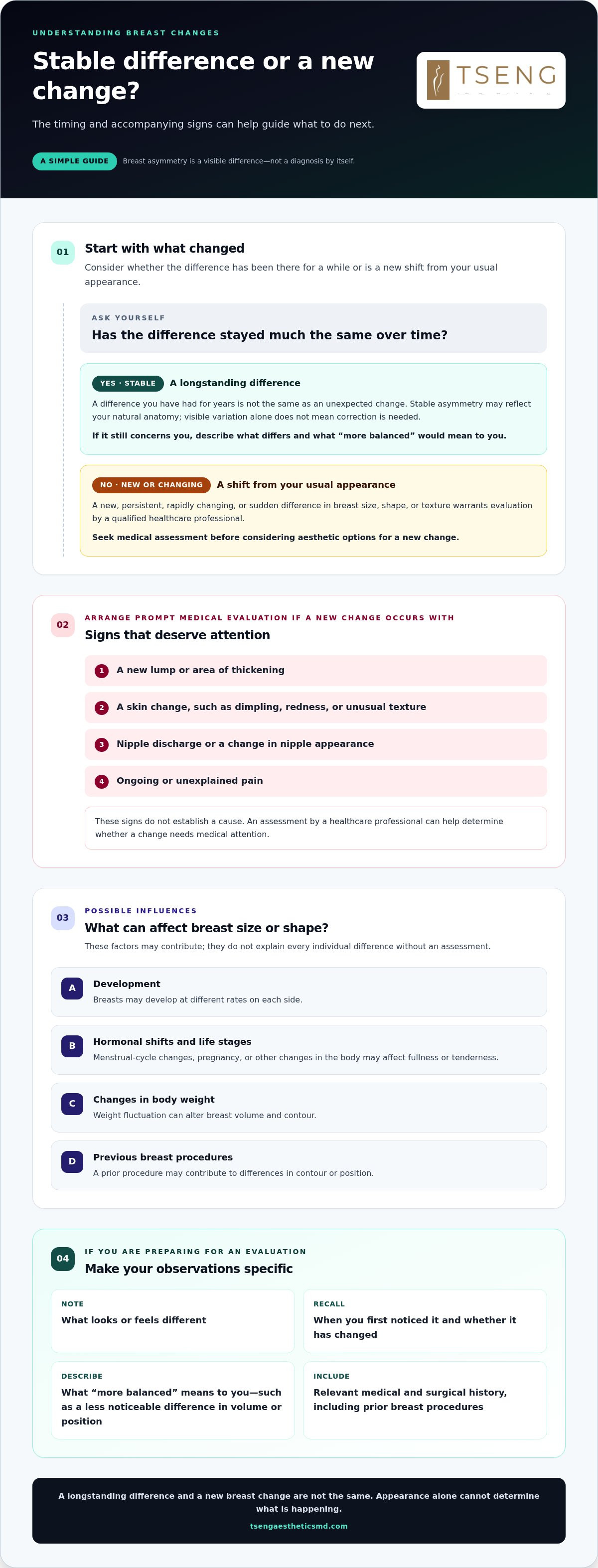
Breast asymmetry can be a longstanding difference, while a sudden breast change is a new or noticeable shift that warrants medical attention. The distinction matters: a difference you’ve had for years is not the same as an unexpected change in size, shape, or texture. Your concern is valid either way, but not every difference needs correction. Some people seek information or treatment because of comfort or appearance; others want reassurance about what they’re noticing.
There is no single breast shape or size that defines balance. If you’re wondering how to correct asymmetrical breasts, identify what differs and how it affects you. That can lead to a more useful conversation about your anatomy and goals, without assuming that one side needs to match the other exactly.
Which differences may be described as breast asymmetry?
Differences can involve breast volume, contour, or the position of the breast fold. Nipples may sit at different heights or point in different directions, and areolas may vary in size or appearance. Several differences can occur at once, with variation ranging from barely noticeable to more apparent. Describing the specific features you notice is often more useful than focusing on a general label.
Is breast asymmetry common?
Yes. Some degree of breast variation is common, although it looks different from person to person. A longstanding difference that has remained stable is distinct from a change that appears suddenly or develops over time. If you notice a new lump or a sudden change in breast size, shape, or texture, seek evaluation from a healthcare provider. An assessment can help determine whether the change needs medical attention before you consider aesthetic options.
Why Breasts May Be Asymmetrical and When a Change Needs Attention
Breast size and shape can shift through different stages of life, and sometimes the reason for a difference isn’t obvious. Development may occur at different rates on each side. Hormonal changes, pregnancy, or changes in body weight can influence breast volume and contour, and previous breast procedures may also affect appearance. These are possible influences, not a diagnosis or a complete explanation for any one person.
Stable asymmetry is a difference that has stayed much the same over time; a newly developing breast change is a shift from your usual appearance that deserves medical attention. This distinction can help you decide whether to focus on understanding your natural anatomy or arrange an evaluation for a change.
What factors can influence breast size or shape?
Breasts may develop at different rates, and their appearance can continue to evolve through life stages. Hormonal shifts associated with the menstrual cycle, pregnancy, or other changes in the body may affect fullness or tenderness. Weight fluctuation can also alter breast volume because breasts contain fatty tissue. A prior procedure may contribute to differences in contour or position. These factors can overlap, and none can be assumed to explain your individual experience without an assessment.
When should new breast asymmetry be medically evaluated?
Arrange prompt evaluation with a qualified healthcare professional if one breast develops a new, persistent, or rapidly changing difference. Pay particular attention if the change occurs with:
- A new lump or area of thickening
- A change in the skin, such as dimpling, redness, or unusual texture
- Nipple discharge or a change in nipple appearance
- Ongoing or unexplained pain
These signs don’t establish a cause, but they do warrant clinical attention. An educational article can’t assess or diagnose an individual concern, so don’t rely on appearance alone to determine what’s happening.
After a new change has been medically assessed, you can consider whether a longstanding difference still concerns you and what outcome feels appropriate. For background on surgical planning, the American Society of Plastic Surgeons discusses surgical options for correcting uneven breasts. If you’re exploring breast augmentation, an individualized discussion can relate your anatomy and goals to possible next steps. Learn more about individualized breast augmentation planning.
How Surgeons Assess Asymmetrical Breasts Before Discussing Correction
A useful evaluation starts with listening, then brings your concerns into focus through a review of your health history, anatomy, and desired degree of change. The goal isn’t to promise perfect symmetry. It’s to understand what contributes to the difference and discuss options that may suit your features and priorities.
What should you prepare before a consultation?
Before your appointment, note what looks or feels different, when you first noticed it, and whether it has changed. Be specific about what “more balanced” means to you, such as making a difference in volume or position less noticeable. Bring relevant medical and surgical history, including prior breast procedures, so it can inform the discussion.
How do anatomy and personal goals shape the plan?
Existing breast tissue, skin, shape, position, and overall proportions help guide planning, along with the degree of change you hope to see. Measurements or photographs may support the clinical assessment when appropriate. They are tools for understanding your anatomy, not promises of a particular result. If you’re exploring augmentation, review this breast augmentation guide.
A consultation can follow a straightforward sequence:
- Clarify your goals. Describe the differences that matter to you and the kind of balance you hope to achieve.
- Assess your anatomy. The surgeon considers volume, shape, position, skin, tissue, and proportions, alongside your health and procedure history.
- Discuss suitable options. The conversation should explain what may address your concerns, what may not, and why. Breast augmentation may be considered when added volume aligns with your anatomy and goals.
- Make an informed decision. Understand potential outcomes, limitations, risks, recovery, and follow-up before deciding whether to proceed.
Understanding how to correct asymmetrical breasts is less about pursuing an exact match and more about finding an approach that respects your anatomy. The American Society of Plastic Surgeons also outlines surgical options to achieve symmetry, offering broader context for topics a personalized discussion may address.
What Are the Options for Correcting Asymmetrical Breasts?
Options depend on what you’d like to change and what your anatomy can reasonably support. Some choices affect appearance only while you wear them; procedures can alter breast volume, shape, or position, but require individualized clinical assessment. Weigh potential benefits and trade-offs rather than assuming every difference needs treatment or that any approach can guarantee exact symmetry.
Can a bra or clothing create a more balanced appearance?
A properly fitted bra or removable insert can make breast volume look more even under clothing. These are reversible styling choices, not anatomical correction, and they’re optional. You don’t need to hide a difference unless that’s what feels right for you.
When might breast augmentation be discussed?
Breast augmentation may be considered when added volume aligns with your goals and the surgeon’s assessment of your anatomy. Implant planning is individualized, with potential benefits, limitations, risks, and follow-up discussed as part of informed decision-making. Augmentation isn’t suited to every type or degree of asymmetry, and adding volume alone may not address differences in breast shape or position.
Other procedure categories, such as reduction, a breast lift, or fat grafting, may be discussed in some clinical contexts. Each has a different purpose, and suitability depends on individual assessment. These examples aren’t recommendations for any particular person.
| Goal | General approach | Questions for consultation |
|---|---|---|
| Create a more even appearance under clothing | Fitted bra or removable insert | What fit or insert feels comfortable and works with your clothing? |
| Increase breast volume | Augmentation may be considered when appropriate | Would added volume suit my anatomy and goals? What are the implant-specific risks and follow-up needs? |
| Address differences in shape or position | A surgeon may discuss relevant procedure categories after assessment | Which features could an approach address, and what limitations should I expect? |
What limitations and trade-offs should patients understand?
Surgery involves recovery and potential complications, and results can’t be guaranteed. Even after treatment, natural anatomy may retain some asymmetry or change over time. Before deciding, discuss expected outcomes, recovery, risks, and follow-up in detail. If you’re considering added volume, schedule a breast augmentation consultation to discuss how your anatomy and goals may inform a personalized plan.
Planning Your Next Step Toward More Balanced Breasts
A clear next step can make a personal concern easier to approach. Start by noting what you’ve observed, when you first noticed it, and whether it has changed. If the difference is new or changing, arrange a medical evaluation before focusing on aesthetic correction. Then consider what “more balanced” means to you, and whether you want to learn about treatment or simply understand your options better.
Before making a decision, use a consultation to understand what may be realistic for your anatomy and priorities. Ask what a proposed approach could address, what differences may remain, and what recovery, risks, and follow-up involve. You can take time to consider the answers. Choosing no treatment is also a valid outcome of an informed discussion.
Questions to bring to an asymmetry consultation
Ask which differences are realistically addressable, which may remain, and why a particular approach might suit your anatomy. Discuss alternatives, expected recovery, potential risks, and follow-up. If augmentation is part of the conversation, ask how implant planning relates to your existing tissue, proportions, and desired degree of change. Clear answers can help you weigh possible benefits against limitations without feeling pressured to decide on the spot.
How Tseng Plastic Surgery approaches individualized breast goals
At Tseng Plastic Surgery, Dr. Mark H. Tseng brings more than 20 years of experience to individualized aesthetic planning. A breast augmentation discussion considers personal anatomy, preferences, and goals for balanced, natural-looking proportions. The focus is on exploring an approach that fits the individual, not promising a particular result. To learn more, explore breast augmentation with Tseng Plastic Surgery.
Ultimately, understanding how to correct asymmetrical breasts means weighing personal goals alongside medical guidance and the limits of each option. Whether you pursue treatment or decide that no change is right for you, a thoughtful process can help you move forward with greater confidence.
Choose a Next Step That Feels Right for You
Understanding how to correct asymmetrical breasts begins with recognizing what you’re noticing and what you hope to change. Breast differences can involve size, shape, or position, and a new or changing difference deserves medical evaluation before aesthetic decisions. If you explore treatment, a personalized assessment can connect your anatomy and goals with options that may be appropriate, while setting realistic expectations about outcomes and limitations.
There’s no obligation to pursue a procedure. Taking time to ask questions, consider recovery and risks, and decide what matters most can be an important part of choosing confidently. For those considering breast augmentation, Dr. Mark H. Tseng brings more than 20 years of experience to individualized planning focused on natural-looking, balanced results, without promising a specific outcome.
Explore a personalized breast augmentation consultation to discuss your anatomy, preferences, and goals. Whatever you decide, you deserve information and care that respect your individual vision.
Frequently Asked Questions
Is it normal for breasts to be asymmetrical?
Yes, some difference in breast size, shape, position, or nipple appearance is a common part of natural variation. The difference may be subtle or more noticeable, and it doesn’t automatically indicate a medical problem or mean treatment is needed. If your breasts have looked this way for a long time, that’s different from a sudden change. A new or changing difference should be assessed by a healthcare professional.
Can asymmetrical breasts be corrected without surgery?
Non-surgical choices can create a more even appearance while you’re dressed, but they don’t change breast anatomy. A properly fitted bra or removable insert may adjust how clothing fits or how volume appears beneath it. These are reversible, optional styling choices, not medical correction. If you’re considering a lasting change to breast volume, shape, or position, discuss your goals and appropriate options with a qualified surgeon.
What causes one breast to be larger than the other?
There isn’t one explanation for every person. Breast development may differ from side to side, and hormonal changes, pregnancy, weight fluctuations, or prior breast procedures may influence size or shape. These are possible factors, not a diagnosis. A healthcare professional can consider your history and examine a new difference. If the change is sudden, persistent, or accompanied by other symptoms, arrange an evaluation rather than assuming the cause.
Can breast augmentation correct asymmetrical breasts?
Breast augmentation may help address asymmetry when added volume aligns with a person’s anatomy and goals, but it isn’t appropriate for every type or degree of difference. A surgeon assesses breast volume, shape, position, existing tissue, and proportions before discussing whether augmentation may be suitable. If implants are considered, ask about expected benefits, limitations, risks, recovery, and follow-up. Planning is individualized, and a particular result can’t be guaranteed.
When should I see a doctor about breast asymmetry?
Arrange prompt evaluation if one breast develops a new, persistent, or rapidly changing difference. Seek medical advice for an accompanying lump, skin change, nipple discharge, or ongoing pain. These symptoms don’t establish a cause, but they warrant clinical assessment. An educational article can’t diagnose your concern. If a healthcare professional evaluates a new change and you also have longstanding aesthetic goals, you can discuss those separately at a personalized consultation.
Will surgery make my breasts perfectly symmetrical?
No surgery can promise perfect symmetry. Breasts naturally differ, and individual anatomy can limit how closely they can be matched. Treatment may aim for a more balanced appearance based on your goals, but some differences may remain, and appearance can change over time. Before deciding, discuss realistic expectations, recovery, potential complications, and follow-up with your surgeon. Choosing not to have surgery is also a valid decision after considering your options.

