Facelift Recovery: A Comprehensive Guide to Healing and Refined Results
By Tseng Plastic Surgery
The most critical phase of your aesthetic transformation isn't the hours spent in the operating room; it's the quiet, often misunderstood weeks where science and artistry converge to reveal your new profile. It's common to feel a flicker of apprehension when you first encounter the swelling and "weird" sensations that accompany early facelift recovery. You may worry about looking unnatural or feel overwhelmed by conflicting advice on when you can truly return to your social life without a second thought.
We understand that while you seek a refreshed appearance, the journey to get there requires both patience and a precise roadmap. This guide provides the reassurance you need by mapping out exactly what to expect from day one through your final reveal. You'll learn how modern, minimally invasive preservation techniques can streamline your healing process and discover professional strategies to optimize your results. We'll provide a clear, day-by-day map that turns post-surgical anxiety into a confident, well-informed transition toward your most refined and harmonious self.
Key Takeaways
- Prioritize the first 48 hours by managing blood pressure and maintaining a high-back resting position to facilitate essential lymphatic drainage.
- Navigate the facelift recovery timeline with confidence, focusing on the milestone of becoming socially presentable by the second week.
- Compare traditional methods with preservation techniques that protect natural retaining ligaments to ensure a faster, more refined healing process.
- Optimize your surgical outcome through dedicated post-operative care, including specific nutritional adjustments and non-negotiable sun protection for scar refinement.
- Benefit from a patient-first approach backed by over 20 years of surgical expertise to ensure you feel supported through every phase of transformation.
Preparing for Your Facelift Recovery: The Vital First 48 Hours
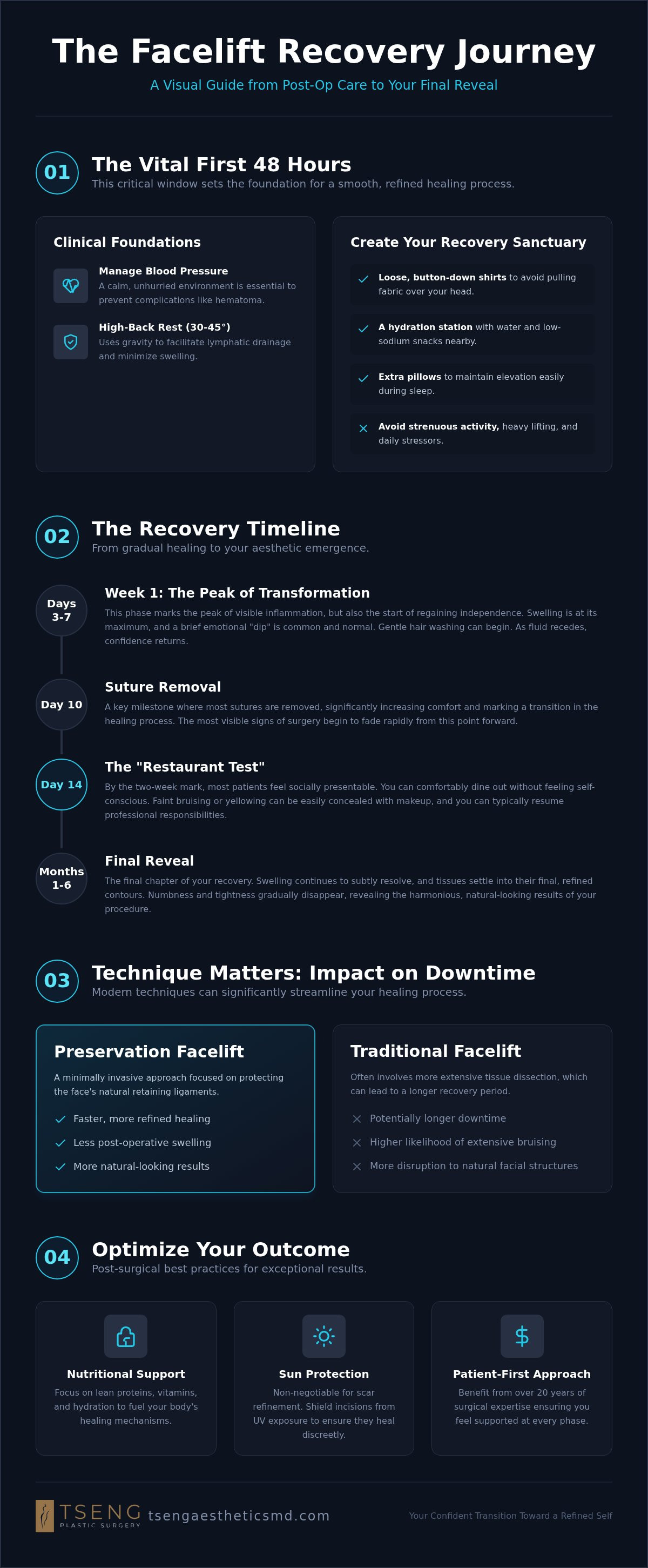
The initial window of facelift recovery is a period of profound physiological transition where precision care is paramount. During these first 48 hours, your body begins the intricate work of healing, making clinical stability our primary objective for every patient. We focus on two main pillars: controlling blood pressure and managing initial swelling through deliberate rest. High blood pressure can increase the risk of hematoma, so maintaining a calm, unhurried environment is essential for your safety and aesthetic success. You'll spend this time resting in a high-back position, usually at a 30 to 45 degree angle. This isn't just for comfort; it uses gravity to facilitate lymphatic drainage and minimize fluid retention around the delicate surgical sites.
You'll likely wear a soft surgical dressing that feels supportive yet snug, providing a sense of security as the tissues begin to settle into their new contours. During these critical early hours, your caregiver becomes an essential partner in your aesthetic journey. They provide the logistical support, from managing hydration to assisting with mobility, that allows you to focus entirely on your physical and emotional well-being. This phase is less about activity and more about allowing the artistry of the procedure to take hold in a stable, quiet environment. By prioritizing rest and following these clinical foundations, you set the stage for a recovery that is as refined as the surgical result itself.
The Clinical Foundation: Monitoring and Comfort
We manage post-operative medication with unhurried precision to keep your comfort levels stable and predictable. While a facelift (rhytidectomy) involves deep structural refinement, the early healing phase is manageable with proper support. The sensation of tightness is a natural part of the structural lift, indicating the successful repositioning of facial tissues. Contact our team immediately if you experience sudden, asymmetric swelling or persistent, sharp pain that deviates from our discussed expectations.
Setting Up Your Recovery Sanctuary
Your home environment should be a tranquil sanctuary that supports both physical rest and emotional calm. Prepare by gathering essential supplies before your procedure:
- Loose, button-down shirts to avoid pulling fabric over your head.
- A hydration station with water and light, low-sodium snacks.
- Extra pillows to maintain your 45-degree elevation during sleep.
It's essential to avoid any strenuous activity or heavy lifting, as these movements can strain delicate sutures and compromise your results. By eliminating daily stressors and focusing on quietude, you allow your body to direct all its energy toward the healing process.
The Facelift Recovery Timeline: From Day 3 to Month 6
Once you pass the initial 48-hour window, the rhythm of your facelift recovery shifts from immediate post-operative care to a phase of gradual aesthetic emergence. Days three through seven often represent the peak of visible inflammation. While this can be a period of minor discomfort, it's also when you'll begin to regain independence, transitioning from clinical dressings to gentle hair washing with lukewarm water. By the end of the first week, the most significant swelling begins to subside, paving the way for the refined contours that lie beneath. For a more granular look at the first month, many patients find value in reviewing a 30-day facelift recovery guide to align their expectations with clinical norms.
Week One: The Peak of Transformation
It's common to experience a brief emotional "dip" around day three or four. This is when swelling is at its maximum and the "newness" of the procedure can feel overwhelming. Rest assured, this is a standard physiological response; as the fluid recedes, your confidence typically returns in tandem with your emerging results. To ensure your healing environment is perfectly tailored to your unique anatomy, consider discussing a personalized recovery plan during your next visit.
Returning to the World: The 14-Day Mark
By day 14, most patients pass the "restaurant test." This is the point where you feel comfortable dining out without fearing that your recent surgery is the focus of attention. Most sutures are removed by day ten, and while some yellowing or faint bruising may remain, it's easily managed with high-quality camouflage makeup. You can typically resume professional responsibilities and light social engagements at this milestone, feeling refreshed rather than "operated on."
The journey doesn't end when you return to work. From month two to month six, your facelift recovery enters its most subtle and rewarding phase. This is the refinement period that many guides overlook. Incision lines, which may have appeared pink, begin to fade into fine, nearly invisible silver lines. Tissues soften, and the initial "tight" feeling gives way to a supple, natural sensation. This maturation process is essential for achieving the longevity and balance we strive for in every procedure, ensuring your results look as natural in motion as they do in repose.
Preservation vs. Traditional Techniques: Impact on Downtime
When considering a surgical rejuvenation, the method chosen by your surgeon dictates the biological cost of your healing. Traditional techniques often involve extensive skin undermining, which can disrupt the network of blood vessels and lymphatic channels. In contrast, the minimal invasive preservation face and neck lift focuses on maintaining these vital structures. By working beneath the deeper layers while leaving the skin's natural attachments intact, we reduce the initial trauma to the face. This strategic preservation translates directly into a more efficient facelift recovery, as the body spends less energy repairing collateral tissue damage and more energy on the refinement of the result.
The Science of Preservation
The core of the preservation philosophy lies in the meticulous handling of the retaining ligaments. Rather than severing these natural anchors, the surgeon makes targeted adjustments to the underlying layers. This approach maintains a robust blood supply to the skin, which is critical for preventing the "pulled" look and ensuring that scars heal into fine, inconspicuous lines. Because the lymphatic system remains largely undisturbed, the post-operative swelling follows a much shorter facelift recovery timeline than traditional procedures might require. Minimal invasive preservation techniques have become the gold standard for active individuals who require a sophisticated result without an extended departure from their professional lives.
Choosing Your Technique Based on Recovery Goals
Selecting the right technique requires a transparent dialogue about your social downtime budget and long-term aesthetic vision. While a traditional deep plane lift offers profound correction for significant laxity, many patients find that a preservation-focused approach provides the ideal balance of correction and speed. The trade-off often involves weighing the maximum possible depth of a traditional lift against the significantly reduced bruising and swelling of the preservation edge. Dr. Tseng leverages over 20 years of surgical experience to assess your unique tissue health, skin elasticity, and bone structure. This personalized assessment ensures that the chosen path aligns with your lifestyle. We don't believe in a one-size-fits-all model; instead, we prioritize the artistry of a quick recovery alongside the precision of a lasting transformation. By matching the technique to your specific biological profile, we ensure your journey is as comfortable as it is rewarding.
Optimizing Your Results: Post-Surgical Care Best Practices
Achieving a refined aesthetic result requires a partnership between surgical precision and diligent post-operative care. While the technical execution of your procedure sets the stage, your active participation during facelift recovery determines the longevity and quality of the final outcome. We emphasize a holistic approach that supports the body's natural regenerative processes. This begins with a high-protein diet to provide the essential amino acids required for tissue repair, paired with low-sodium intake to prevent unnecessary fluid retention. Managing your facial expressions is equally vital. Avoiding "over-animation" during the first three weeks protects the delicate internal sutures and allows the deep structural layers to stabilize without tension.
Lymphatic massage is another sophisticated tool we often recommend to accelerate the fading of residual swelling. Typically starting around the second week, these gentle, specialized movements help clear metabolic waste from the tissues. This process restores the natural contours of your face more quickly than rest alone. By adhering to these clinical best practices, you ensure that the transition from the "healing phase" to your "final reveal" is as seamless and efficient as possible.
The Role of Skin Care and Protection
Once your incisions have fully closed, transitioning back to a medical-grade skincare regimen is essential for maintaining the health of your skin. UV protection is the most critical factor in your long-term success. New scar tissue is highly sensitive to the sun; even brief exposure can lead to permanent hyperpigmentation or darkening of the incision lines. We recommend a high-potency mineral sunscreen and the use of silicone sheets or gels as directed. These professional-grade topicals provide a protective barrier that optimizes incision maturation, ensuring that your scars remain nearly invisible and fade into the natural shadows of the ear and hairline.
Lifestyle Adjustments for Lasting Harmony
The "glow" of a successful rejuvenation is deeply connected to your cellular health. Hydration and high-quality sleep are non-negotiable, as they facilitate the oxygenation required for tissue repair. We strictly advise against nicotine and alcohol during facelift recovery. Nicotine constricts blood vessels, which can significantly delay healing and compromise the integrity of the skin. Alcohol, conversely, increases the risk of inflammation and dehydration. As you move beyond the initial months, integrating non-surgical treatments like injectables or skin resurfacing can help maintain the surgical lift. To begin your personalized aesthetic journey, we invite you to schedule a private consultation with our clinical team.
Your Aesthetic Journey with Tseng Plastic Surgery
Choosing a practice for your transformation is a decision rooted in trust and a shared vision of refinement. At Tseng Plastic Surgery, we recognize that the success of your facelift recovery is built long before the first incision is made. It begins with a philosophy of care that prioritizes your individual journey, ensuring that you feel supported, heard, and meticulously cared for from your initial inquiry through your final follow-up. Dr. Mark H. Tseng brings over 20 years of surgical experience to every procedure, providing a legacy of expertise that offers patients a profound sense of security. Our "patient-first" mentality means you're never alone during the healing process; our clinical team provides a steady hand and compassionate guidance as your results emerge.
Expertise You Can Trust
Dr. Tseng operates as a master craftsman, blending the rigorous precision of medical science with the nuanced eye of an artist. This dual approach is essential for creating results that don't just look "repaired" but feel like a more vibrant, harmonious version of yourself. Every surgical plan is bespoke, tailored to the unique architecture of your face and your specific goals for rejuvenation. By choosing a practice with a deep specialization in advanced techniques, you gain the reassurance of having an expert guide who understands the subtle complexities of tissue maturation and long-term aesthetic balance. For those exploring the possibilities of a Facelift, our practice offers a level of personalized attention that reflects our commitment to excellence in every detail.
Beginning Your Transformation
Your journey begins with an unhurried consultation, which serves as the foundational roadmap for your entire experience. We don't believe in a one-size-fits-all approach; instead, we take the time to listen to your concerns and define a clear path forward together. During this initial meeting, we discuss more than just the surgical steps. We provide a detailed map for your facelift recovery, aligning your clinical needs with your personal lifestyle requirements. This transparency eliminates the anxiety of the unknown, replacing it with a sense of quiet confidence and anticipation. Our commitment to balanced, natural results ensures that your transformation stands the test of time, reflecting the best version of yourself. We invite you to take the next step toward a refreshed profile by connecting with our team. Schedule your personalized consultation with Dr. Tseng today.
Embracing Your Refined Future
Your journey through facelift recovery is a deliberate transition where clinical precision meets your personal vision of rejuvenation. By prioritizing the vital first 48 hours and choosing advanced preservation techniques, you ensure a healing process that's as efficient as it's effective. These methods protect your natural anatomy, allowing for a faster return to your social life while securing a result that feels entirely like you. It's about moving through the initial phases with the knowledge that each day brings you closer to the vibrant, harmonious version of yourself you've envisioned.
Dr. Mark H. Tseng brings over 20 years of expert surgical experience to every procedure, specializing in minimal invasive preservation techniques that minimize downtime and maximize harmony. This legacy of natural, refined results ensures your transformation is both subtle and enduring. We invite you to begin your journey to a refreshed, natural look with a consultation at Tseng Plastic Surgery. You've done the research and understood the healing timeline; now it's time to partner with a master craftsman who'll guide you toward a confident, beautiful reveal.
Frequently Asked Questions
How much pain should I expect during facelift recovery?
Most patients describe the sensation as a deep tightness or mild soreness rather than acute, sharp pain. This discomfort is typically most noticeable during the first three days and is precisely managed with prescribed medication. As the initial inflammation subsides, you'll find that the sensation of pressure yields to a more comfortable, natural feeling. It's a phase of temporary adjustment that paves the way for your refined aesthetic result.
When can I wash my hair after a facelift?
You may gently wash your hair 48 hours after your procedure, provided you use lukewarm water and a mild, non-medicated shampoo. It's essential to avoid scrubbing the incision lines or using high-heat blow dryers, which can irritate the delicate healing skin. Patting the area dry with a soft towel ensures that you maintain the integrity of the surgical site while regaining a sense of personal freshness.
How long until the scars from my facelift become invisible?
Incision lines typically reach their most refined, nearly invisible state between six and twelve months after surgery. While they may appear slightly pink during the first few months, they gradually fade into fine, silver lines that are discreetly tucked within natural facial contours. Consistent sun protection and the use of medical-grade silicone gels are vital for ensuring these marks mature into a state of beautiful, inconspicuous harmony.
Can I speed up the recovery process after my surgery?
You can certainly optimize your facelift recovery by adhering to a high-protein, low-sodium diet and strictly avoiding nicotine. These choices support cellular repair and minimize fluid retention, which helps the tissues settle more efficiently. Additionally, staying hydrated and following our specific lymphatic massage protocols can significantly reduce the duration of post-operative swelling, allowing your final results to emerge with greater clarity and speed.
When is it safe to fly or travel after a facelift?
We typically advise patients to wait at least two weeks before traveling by air to ensure their safety and comfort. The changes in cabin pressure can exacerbate swelling, and long periods of immobility are not ideal during the early stages of healing. If travel is necessary, we provide specific guidelines on hydration and movement to mitigate risks and ensure your aesthetic transition remains undisturbed.
Will I need to take a lot of time off work for a preservation lift?
Most patients returning from a minimal invasive preservation lift find they are ready for professional engagements within 7 to 10 days. Because this technique preserves the natural retaining ligaments and blood supply, the visible signs of surgery resolve much faster than traditional methods. This efficiency allows you to resume your career and social life with confidence, often requiring only a brief departure from your daily routine.
What should I do if I notice uneven swelling during the first week?
Noticing asymmetric or uneven swelling is a common and expected part of the facelift recovery process during the first two weeks. The body rarely heals with perfect symmetry; one side may retain fluid longer than the other due to sleeping positions or individual tissue response. This variance typically balances out by the third or fourth week as the lymphatic system restores its natural rhythm and flow.
When can I resume my exercise routine after a facelift?
While light, leisurely walking is encouraged from the first day, you should wait at least four weeks before resuming vigorous exercise or heavy lifting. Increasing your heart rate and blood pressure too early can lead to increased swelling or even strain the internal structural sutures. We'll monitor your progress during follow-up appointments and provide a personalized clearance for when it's safe to return to your full fitness routine.

