Breast Augmentation Revision Surgery: A Guide to Restoring Aesthetic Harmony
By Tseng Plastic Surgery
A second procedure shouldn't be viewed as a setback, but rather as a precise opportunity to reclaim the sophisticated, natural silhouette you originally envisioned. It's common to feel a sense of frustration or even deep anxiety when your initial results don't align with your expectations, especially if you're experiencing the physical discomfort of capsular contracture or the visual imbalance of shifting implants. You deserve to feel both comfortable and confident in your own skin, and it's understandable that the prospect of another surgery brings a mix of hope and hesitation.
By choosing breast augmentation revision surgery, you can address these concerns through a blend of clinical expertise and artistic refinement. This guide will help you discover how specialized revision techniques can correct implant complications and refine your silhouette for a more natural, balanced result. We'll explore the sophisticated methods used to restore symmetry, the latest safety standards for implant health, and the unhurried approach required to achieve long-term peace of mind and aesthetic harmony.
Key Takeaways
- Learn to recognize the clinical signs of implant complications, such as capsular contracture and malposition, to determine when a corrective procedure is necessary for your comfort and health.
- Explore how breast augmentation revision surgery utilizes advanced pocket repair and precise incision management to restore physical symmetry and refine your silhouette.
- Understand the nuanced role of implant shape and projection, specifically how teardrop designs can be used to create a more natural and balanced aesthetic result.
- Discover the importance of a thorough diagnostic consultation and specialized imaging in developing a customized surgical plan that addresses your unique anatomical needs.
- Identify the essential qualities of a revision specialist, focusing on the blend of surgical mastery and artistic vision required to achieve successful secondary outcomes.
Understanding Breast Augmentation Revision Surgery: Why the Second Journey is Different
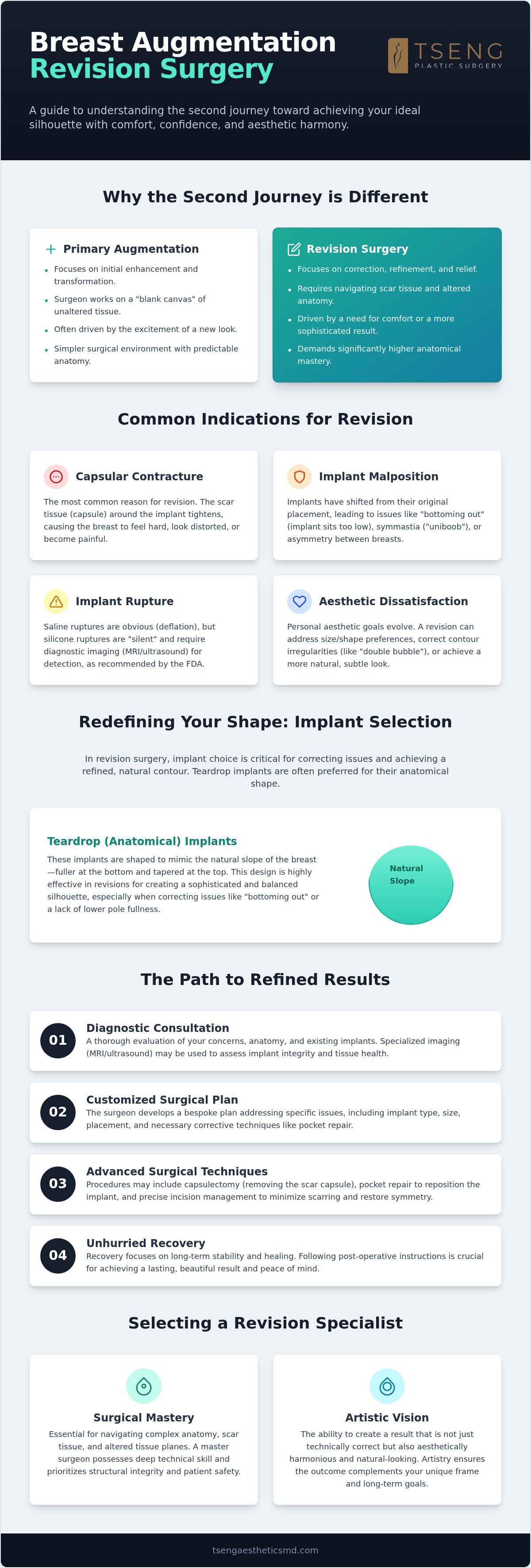
While a primary procedure focuses on initial enhancement—and those considering their first procedure can explore Breast Augmentation to learn about the process—breast augmentation revision surgery is a distinct and highly specialized discipline within aesthetic science. It requires a different mindset from both the surgeon and the patient. Your first journey was likely fueled by the excitement of transformation; this second journey is often defined by a desire for correction, relief, or a more sophisticated refinement. It isn't merely about replacing an implant. It's about restoring harmony to a silhouette that has changed due to time, biology, or surgical complications.
Achieving a successful outcome in a secondary procedure demands a significantly higher level of anatomical mastery than a primary augmentation. The surgeon isn't working with a "blank canvas" but must instead navigate existing scar tissue, altered tissue planes, and changes in the breast pocket. By Understanding Breast Augmentation Revision through a clinical lens, it's clear that the goal shifts toward creating a "final" result that balances long-term structural integrity with timeless beauty. This complexity requires a precise understanding of how to reinforce or repair the internal architecture of the breast while maintaining a gentle, patient-first approach.
The Evolution of Aesthetic Goals Over Time
As we age, our bodies and lifestyles naturally evolve, often changing how we view our initial aesthetic choices. What felt right a decade ago might no longer align with a more mature, refined sense of self. Fluctuations in weight, the effects of pregnancy, or the natural loss of tissue elasticity can alter how implants sit against the chest wall. Many patients transition from a preference for a noticeably "augmented" look to a more subtle, sophisticated profile that complements their current frame. A successful revision accounts for these changes in skin quality and volume, ensuring the new result feels like a natural extension of your body rather than a forced addition.
The Clinical Necessity vs. Aesthetic Desire
The decision to undergo a revision often stems from a mix of medical indications and personal aesthetic goals. You might be facing a clinical necessity, such as a confirmed implant rupture or the firm discomfort of capsular contracture. In other cases, the motivation is purely aesthetic, such as correcting asymmetry or "bottoming out" where the implant has shifted too low. Since your primary breast augmentation, surgical techniques and implant technologies have advanced significantly. Today's approach is entirely bespoke; it's a meticulously planned correction tailored to your current anatomy and future health, prioritizing safety alongside visual grace.
Indications for Revision: Addressing Capsular Contracture and Implant Malposition
Identifying the right time for breast augmentation revision surgery often begins with a subtle change in how your implants look or feel. While many patients seek a second procedure for aesthetic refinement, others are prompted by physical changes that impact their daily comfort. Understanding the clinical reasons for breast implant revision is the first step toward reclaiming your physical ease and aesthetic harmony. Whether you've noticed a slight firmness or a significant shift in position, these indicators serve as a roadmap for your corrective journey.
Beyond the common concern of capsular contracture, patients may encounter contour irregularities like the "double bubble," where the implant sits below the natural breast crease. Others might face the anxiety of a suspected rupture. In saline devices, a rupture is immediately visible as the breast deflates; however, silicone gel ruptures are often "silent." This is why the FDA recommends periodic imaging, starting at five to six years post-surgery, to ensure the ongoing integrity of your results. Addressing these issues early prevents further tissue distortion and simplifies the restorative process.
Capsular Contracture: Causes and Correction
Every patient develops a fibrous capsule of scar tissue around their implant, which is a natural part of the healing process. However, when this tissue becomes abnormally thick and begins to squeeze the implant, it leads to capsular contracture. This can range from mild firmness to visible distortion and persistent pain. While traditional smooth silicone implants have historically shown contracture rates between 9% and 20%, modern techniques and newer implant generations aim to minimize this risk. Correction typically involves a capsulectomy, where the thickened tissue is surgically removed, or a capsulotomy to release the tension. For those seeking a master craftsman's touch, a personalized consultation can provide clarity on the most effective surgical solution for your specific grade of contracture.
Correcting Implant Malposition and Shifting
Implant malposition occurs when the surgical pocket no longer provides adequate support, allowing the implant to migrate from its intended position. This can manifest in several ways:
- Bottoming Out: The implant slides too low, causing the nipple to appear as if it's pointing upward.
- Lateral Displacement: The implants shift toward the armpits, often most noticeable when lying down.
- Symmastia: The implants sit too close to the midline, creating a "breadloafing" effect where the cleavage gap disappears.
Correcting these shifts requires more than just replacing the device. It involves sophisticated pocket reinforcement and, in many cases, internal bra techniques using specialized sutures or mesh to recreate a secure internal architecture. By repairing the foundation of the breast, your surgeon can restore symmetry and ensure your results remain stable for years to come. This meticulous approach transforms a corrective necessity into an opportunity for true aesthetic refinement.
Teardrop vs. Round Implants: Redefining Your Shape in Revision
Selecting the right implant shape is a pivotal decision during breast augmentation revision surgery. It isn't just about size; it's about how the geometry of the implant interacts with your existing tissue to create a more harmonious profile. While your primary surgery may have utilized a standard round implant, your revision is an opportunity to re-evaluate whether a different shape better suits your current anatomy and aesthetic goals. As the American Society of Plastic Surgeons explains breast implant revision, the choice of implant is often central to correcting complications or dissatisfaction with the original result. This choice requires a blend of clinical precision and an artistic eye to ensure the final silhouette feels authentic to your frame.
The material of the implant also plays a crucial role in this redefinition. Many revision specialists prefer "Gummy Bear" silicone, a highly cohesive gel that maintains its shape over time. This material is essential for shaped implants, ensuring that the projection remains consistent and the risk of rippling is minimized, even in patients with less natural breast tissue. By matching the right material with a shape that complements your anatomy, you can achieve a result that balances longevity with refined beauty.
The Case for Teardrop Implants in Revision
Anatomically shaped, or teardrop, implants are often the preferred tool for correcting results that look "fake" or overly round at the top. These implants are designed to mimic the natural slope of the breast, with more fullness at the bottom and a gentle taper at the top. They're an ideal choice for revision candidates who have thin breast tissue or have experienced mild ptosis (sagging) over the years. By focusing on projection rather than just width, teardrop implants can help achieve a sophisticated c cup breast with proportions that feel balanced and authentic. They provide a structural correction that round implants sometimes cannot offer in cases of significant tissue thinning.
When Round Implants Remain the Superior Choice
Despite the rise of shaped options, modern round implants remain a versatile and reliable choice for many revision patients. They're particularly effective when placed in a submuscular position, as the muscle naturally flattens the top of the implant to create a soft, natural slope. Round implants are also frequently used to address "bottoming out," provided the surgical pocket is properly reinforced. Because round implants don't have a specific orientation, there's no risk of aesthetic distortion if the implant rotates within the pocket. Many patients also prefer the fluid movement and soft feel of modern round silicone, which can provide a more dynamic and youthful appearance in the upper pole of the breast.
The Revision Process: Surgical Mastery and Recovery Expectations
Executing a successful breast augmentation revision surgery requires more than technical skill; it demands a deep understanding of how your body has interacted with your previous implants over time. This isn't a standard redo. It's a bespoke surgical plan designed to correct past complications while setting a new standard for your aesthetic future. By focusing on the intricate details of pocket repair and tissue integrity, a specialist can transform a complicated clinical situation into a result that feels both natural and enduring. The goal is to reach a final destination where your physical comfort and visual goals finally align.
Preparing for Your Revision Surgery
A master craftsman's approach begins long before the first incision. It starts with an unhurried, thorough consultation where your surgical history is reviewed with meticulous care. Your surgeon will listen to your specific concerns and use advanced imaging to assess the current state of your implants and breast tissue. These measurements aren't just numbers; they're the scientific foundation for predicting how your new silhouette will settle and move. During this phase, you'll also discuss scar revision. Managing previous incision sites is essential for achieving a clean, refined look that minimizes the visual evidence of undergoing multiple procedures.
Navigating the Recovery Period
Many patients find that the recovery from a revision differs significantly from their initial augmentation experience. If the primary surgery involved placing implants under the muscle, the revision may involve less acute muscle discomfort, but it requires a more delicate approach to tissue healing. Your surgeon will provide a specialized timeline that prioritizes the stability of the new implant position. You'll need to follow specific instructions regarding support garments and activity levels to protect the newly reinforced surgical pocket. This unhurried healing process is vital for ensuring the internal architecture remains secure and symmetrical.
Long-term maintenance is the final pillar of a successful revision. Ensuring your results last for decades involves regular follow-ups and a commitment to monitoring your breast health through recommended imaging. This proactive approach gives you the peace of mind that your investment in yourself is well protected. If you're ready to move forward with a personalized correction and restore your confidence, schedule a consultation with our expert team to begin your journey toward aesthetic harmony.
Selecting a Revision Specialist: Why Mastery and Artistry Matter
Choosing the right surgeon for your breast augmentation revision surgery is the most critical decision you'll make in your restorative journey. While many practitioners offer primary enhancements, a revision specialist operates at a higher level of complexity, acting as both a master craftsman and a compassionate guide. This type of surgery isn't just about placing a new device; it's about navigating the intricate legacy of scar tissue and altered anatomy from previous procedures. You deserve a surgeon who possesses a deep commitment to safety and a refined aesthetic eye that prioritizes your individual vision over a one-size-fits-all approach.
Board certification remains the non-negotiable baseline for any surgical candidate, but true expertise is found in a legacy of experience. Dr. Mark H. Tseng brings over 20 years of surgical experience to every revision, treating each case as a unique puzzle that requires clinical precision and artistic intuition. By positioning the practice as a destination for those seeking subtle, high-quality improvements, we ensure that your second journey is your last. The focus is always on creating a natural, balanced result that feels authentic to your frame and provides long-term peace of mind.
The Philosophy of Quiet Confidence and Refinement
Our practice's philosophy centers on quiet confidence, avoiding the exaggerated or "over-done" looks that often lead patients to seek revision in the first place. Through conservative, expert adjustments, we work to restore the harmony of your silhouette without sacrificing the integrity of your breast tissue. This unhurried approach allows for a patient-centric experience where your goals are heard and respected. Understanding how much is boob augmentation is about recognizing the value of this artistry and the significant time required to achieve a refined, bespoke outcome that lasts for decades.
Taking the Next Step Toward Your Ideal Self
Empowering yourself with knowledge is the best way to prepare for your revision consultation. You should feel comfortable asking about the specific techniques used for pocket reinforcement or how the surgeon manages previous incision sites to minimize scarring. Restoring your physical comfort and aesthetic balance is a powerful transformation that often leads to a renewed sense of self-confidence. When you're ready to move beyond the frustration of unnatural results or physical discomfort, a specialized consultation is the first step toward reclaiming your silhouette and your peace of mind. It's an opportunity to finally achieve the graceful, natural proportions you've always wanted.
Reclaiming Your Confidence and Aesthetic Harmony
Restoring your silhouette is about more than just a corrective procedure; it's a path toward physical comfort and lasting self-assurance. Throughout this guide, we've addressed how breast augmentation revision surgery resolves complex clinical challenges like capsular contracture and implant shifting through meticulous pocket repair and artistic refinement. By selecting the ideal implant shape and material, you can transform past frustrations into a natural, balanced result that feels authentic to your frame and current lifestyle.
This second journey deserves the touch of a master craftsman who prioritizes your long-term safety and personal vision. With over 20 years of specialized surgical experience and board-certified expertise in complex aesthetic revisions, Dr. Tseng provides a legacy of natural-looking, sophisticated results. You don't have to settle for physical discomfort or unnatural proportions when a tailored, unhurried solution is within reach. Your path to restored harmony begins with a conversation centered on your unique goals and well-being.
Schedule your personalized revision consultation with Tseng Plastic Surgery today and take the first step toward the comfortable, confident results you deserve. It's time to feel like yourself again.
Frequently Asked Questions
Is breast augmentation revision surgery more painful than the first surgery?
Most patients find that a revision involves less acute muscle discomfort than their primary procedure because the surgical pocket has already been established. While you'll still experience some tenderness, the recovery is often more about managing tissue sensitivity than the intense pressure felt during the initial augmentation. Your surgical team will provide a tailored pain management plan to ensure your comfort remains a priority throughout the healing process.
How long do I need to wait after my first surgery before getting a revision?
It's generally recommended to wait at least six to twelve months before pursuing a second procedure. This unhurried timeline ensures that your breast tissue has fully healed, the implants have settled into their final position, and any internal scar tissue has matured. Operating too early on unstable tissue can lead to unpredictable results, so patience is vital for achieving a successful and lasting correction.
Can a revision surgery fix implants that have 'bottomed out'?
Yes, a revision can successfully correct "bottoming out" by reinforcing the lower portion of the surgical pocket. This technique often involves internal bra methods, where specialized sutures or surgical mesh are used to recreate a secure foundation and restore the natural breast crease. These structural repairs ensure the implants sit at the correct height, providing a more symmetrical and youthful appearance to the chest wall.
What are the most common reasons patients choose teardrop implants for a revision?
Many patients choose teardrop implants during breast augmentation revision surgery to achieve a more authentic, natural slope that mimics biological breast tissue. These anatomically shaped devices are particularly effective for those with thinning tissue or individuals who want to correct an overly rounded, unnatural look. They provide precise projection at the bottom of the breast while maintaining a sophisticated and subtle taper toward the upper pole.
Will I have new scars after my breast revision procedure?
In most cases, your surgeon will utilize your existing incision sites to avoid creating new visible marks. While the goal is to work through the original scars, complex pocket repairs or significant changes in implant size sometimes require slight extensions for better access. Your specialist will focus on meticulous closure techniques to ensure that any resulting marks remain as discreet and refined as possible after you've fully healed.
How much does breast augmentation revision surgery typically cost in 2026?
The investment for breast augmentation revision surgery varies based on the complexity of the correction and the specific techniques required, such as capsulectomy or pocket reinforcement. Because every revision is a bespoke procedure, factors like the surgeon's expertise, the type of replacement implants, and the length of the operation all influence the final value. A thorough consultation is the best way to receive a personalized estimate that reflects your unique anatomical needs.
Can I combine a breast lift with my implant revision?
Combining a breast lift with an implant revision is a very common approach for patients who want to address both volume and sagging. This dual procedure allows the surgeon to remove excess skin and reposition the nipple while replacing the implants, creating a more uplifted and youthful silhouette. It's an excellent way to achieve comprehensive aesthetic harmony and a more proportionate look in a single surgical session.
How do I know if my implant has ruptured and needs immediate revision?
A saline rupture is usually obvious because the breast deflates quickly as the harmless salt water is absorbed by the body. Silicone ruptures are often "silent," meaning they don't cause immediate changes in shape, though you might notice persistent tenderness or lumps. Because of this, the FDA recommends regular imaging via ultrasound or MRI to monitor the integrity of silicone implants and ensure your long-term health and safety.

