Botox for Hooded Eyes: When Eyelid Surgery May Be the Better Fit
By Tseng Plastic Surgery
The quickest-looking option isn’t always the one that addresses hooded eyes. Botox for hooded eyes may create a subtle brow lift when a low brow contributes to the appearance, but it can’t remove excess eyelid skin. If you’re weighing Botox against surgery, first consider what is causing the hooding.
It’s reasonable to wonder whether an injectable treatment could make a visible difference, how long the change may last, or whether surgery and recovery are worth considering. The right approach depends on your anatomy and goals, not simply on choosing the least invasive option.
This article explains how a Botox brow lift differs from eyelid surgery, what each approach may and may not address, and which factors can shape a thoughtful decision. Dr. Mark H. Tseng has more than 20 years of experience and offers both surgical and nonsurgical aesthetic care, with attention to facial balance and natural-looking results. Use the questions below to help guide a personalized consultation.
Key Takeaways
- Hooded eyes can reflect brow position, excess upper-eyelid skin, or eyelid muscle function. Identifying the cause helps clarify what to consider next.
- Botox for hooded eyes may subtly change brow position, but it does not remove excess eyelid skin.
- Compare nonsurgical approaches with eyelid surgery by considering the concern each addresses, how invasive it is, and whether its effects are temporary or longer-lasting.
- A personalized assessment can define your goals and explain how your brow and eyelid anatomy shape suitable options.
- Dr. Mark H. Tseng’s more than 20 years in practice inform an individualized perspective on facial balance and natural-looking results.
What Causes Hooded Eyes, and When Is It More Than a Cosmetic Concern?
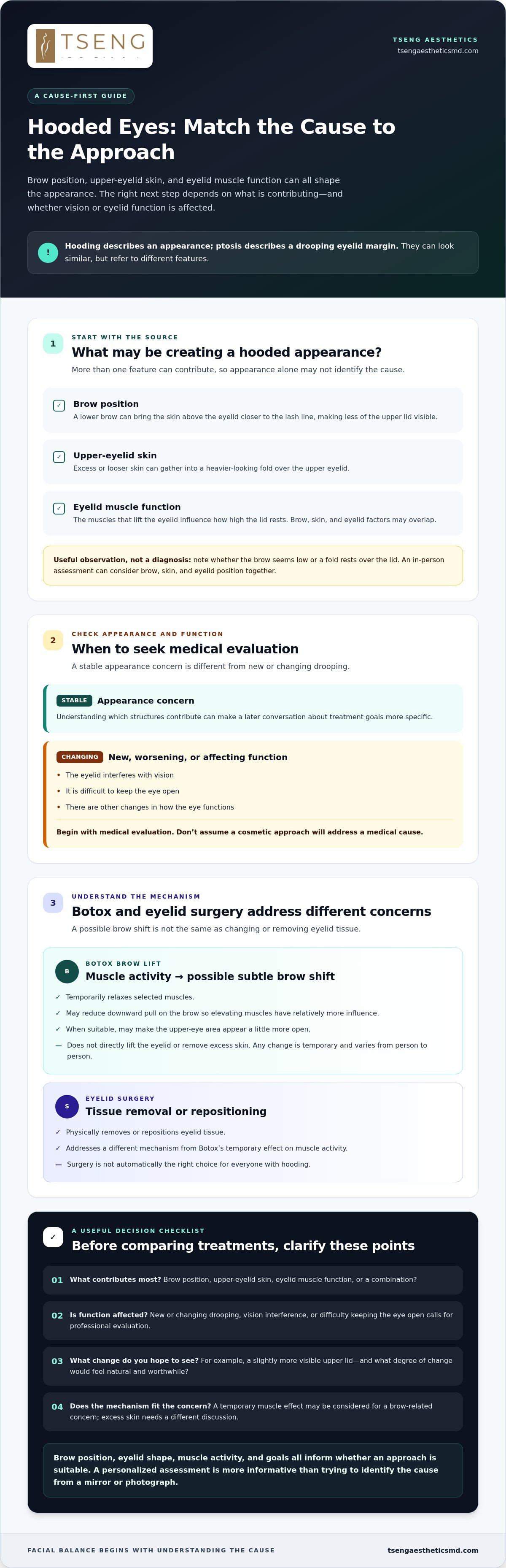
Hooded eyelids describe an appearance in which skin or the brow sits close to, or partly covers, the upper eyelid. Ptosis describes a drooping eyelid margin. The terms can look similar in the mirror, but they refer to different features. Hooding is often a description of appearance, not a diagnosis. It can reflect brow position, upper-eyelid skin, eyelid muscle function, or a combination of factors.
How can you tell what is creating a hooded appearance?
A lower brow can bring the skin above the eyelid closer to the lash line, making the upper lid seem less visible. Excess or looser upper-eyelid skin can also gather into a heavier-looking fold. Eyelid muscle function affects how high the lid rests. These factors can overlap, so appearance alone is not a reliable way to identify the cause.
Notice what concerns you, such as a brow that seems low or a fold that appears to rest over the lid. Treat those observations as useful context, not a diagnosis. An in-person assessment can consider the brow, skin, and eyelid position together. That distinction matters because Botox for hooded eyes is not a solution for every anatomical reason an eyelid may look heavy.
When should eyelid drooping be medically assessed?
A long-standing, stable hooded appearance may be an aesthetic concern, while new or changing drooping deserves medical attention. Seek professional evaluation if the eyelid interferes with vision, makes it difficult to keep the eye open, or comes with other changes in how the eye functions. A clinician can assess the concern; don’t assume a cosmetic approach will address a medical cause.
Ptosis refers to a drooping upper eyelid, often involving the position of the eyelid itself rather than simply skin resting over it. The overview of Ptosis (eyelid) offers background on the term, but it cannot determine what is causing an individual’s symptoms. That requires a clinical assessment.
Rather than asking only, “Do my eyes look hooded?” consider, “Which structures contribute to the appearance, and is anything affecting vision or eyelid function?” Brow position and skin can change the visible contour, while the lifting muscle influences the lid margin. Since these features may appear together, an evaluation is more informative than trying to identify the cause from photographs or a mirror.
If the concern is new, worsening, or affecting everyday function, begin with medical evaluation rather than choosing a cosmetic treatment. If it is a stable appearance concern, understanding the anatomy can make a later discussion of treatment goals more specific. Separating appearance from function is a useful first step toward an approach that respects facial balance and eye health.
How Botox for Hooded Eyes Works, and What It Cannot Correct
Botox works by temporarily relaxing selected muscles. For some people, carefully planned injections may reduce the downward pull of muscles that lower the brow, allowing the muscles that elevate it to have relatively more influence. When suitable, the result may be a subtle change in brow position that makes the upper-eye area appear a little more open.
The brow may sit differently, but Botox does not directly lift the eyelid or remove skin. A Botox brow lift changes muscle activity to potentially shift the brow; eyelid-skin removal physically removes or repositions tissue. These are different mechanisms, so one should not be described as a nonsurgical version of the other.
What kind of lift can Botox create?
The brow’s position reflects the balance between muscles that raise it and muscles that pull it downward. Relaxing selected muscles that lower the brow may allow a modest upward shift, but the response depends on individual anatomy, muscle activity, and treatment planning. Any change is temporary and varies from person to person. It is not the same as surgically lifting the eyelid itself.
For someone whose brow position contributes to a heavier-looking upper-eye area, even a small shift may affect the overall expression. The effect cannot be predicted from a photograph or a general description of hooded eyes. The starting position of the brow, eyelid shape, and desired degree of change all inform whether this approach is appropriate.
Why can Botox not remove excess eyelid skin?
Muscle relaxation and tissue removal address different concerns. Botox alters the activity of selected muscles; it does not excise, tighten, or reposition a fold of excess upper-eyelid skin. If that skin is the main source of fullness, it may remain after a brow-position change, even if the surrounding area looks somewhat different.
Surgery is not automatically the right answer for everyone with hooding. The relevant question is whether the concern comes mainly from brow position, skin, or a combination, and how much change would feel natural and worthwhile. A personalized clinical assessment can help distinguish those factors before treatment goals are set.
Placement and suitability require individualized clinical judgment. The muscles around the brow and eyes work in relation to one another, so a treatment plan should account for facial movement and the balance of surrounding features rather than follow a standard injection pattern. Describe the change you hope to see, such as a slightly more visible upper lid, so expectations can be considered alongside your anatomy.
When comparing options, keep the mechanism in view: a temporary muscle effect may be considered for a brow-related concern, while excess skin calls for a different discussion. An individualized perspective can help clarify those distinctions and keep facial harmony central. Explore an individualized aesthetic assessment to discuss your goals and possible approaches.
Botox vs. Eyelid Surgery for Hooded Eyes: What Is the Difference?
Botox and upper blepharoplasty are not interchangeable ways to achieve the same change. Botox works through temporary muscle relaxation that may subtly influence brow position. Upper blepharoplasty is a surgical approach that may address excess upper-eyelid skin. The more suitable path depends on what contributes to the hooded appearance, the change you hope to see, and an individualized clinical assessment.
| Factor | Botox brow lift | Upper blepharoplasty |
|---|---|---|
| Mechanism | Relaxes selected muscles, which may allow a subtle change in brow position. | Surgically removes or repositions tissue, as planned for the individual. |
| Target concern | May suit a concern where brow position contributes to the hooded look. | May be considered when excess upper-eyelid skin is a central concern. |
| Invasiveness | Nonsurgical injections, with placement guided by clinical assessment. | A surgical procedure requiring planning and recovery. |
| Nature of change | Temporary; repeat treatment may be needed to maintain an effect. | Generally longer-lasting, though natural aging continues. |
What concerns may lead someone to consider Botox?
Someone seeking a nonsurgical option may want a modest change to brow position, particularly if the brow contributes to the appearance of hooding. Botox doesn’t remove eyelid skin, and its effect is temporary, so maintaining a result may involve repeat treatment. Suitability and expected change depend on individual anatomy and assessment, not the label “hooded eyes” alone.
What concerns may lead someone to consider eyelid surgery?
If excess upper-eyelid skin is the main concern, upper blepharoplasty may be discussed as a surgical way to address that tissue. It involves procedural planning and recovery, so the decision includes more than the desired appearance. The surgical versus nonsurgical facelift guide offers broader facial-rejuvenation context, though eyelid decisions require attention to the specific anatomy involved.
Use the comparison as a starting point, not a treatment recommendation. If you hope to see more of the upper lid, clarify whether the concern is brow position, skin resting over the lid, or both. Botox for hooded eyes may relate to one source of the appearance, while surgery may be considered for another. Neither option is universally better, and their effects are not equivalent. A thoughtful discussion weighs anatomy, goals, your comfort with a procedure and recovery, and the kind of change that would feel balanced for you.
How to Decide Whether Botox for Hooded Eyes Fits Your Goals
Start with the concern you want to change, not a preferred procedure. Botox may suit some goals involving brow position, while excess upper-eyelid skin calls for a different discussion. Botox does not remove eyelid skin, and a general description cannot determine whether it is appropriate for you. A qualified clinician must assess your anatomy, medical history, and expectations before discussing suitability.
Decision rule: Match the approach to the structure contributing to the hooding. Consider a muscle-based option for a brow-position goal, and discuss a surgical approach if excess eyelid skin is central to your concern.
- Identify the concern. Describe what looks or feels different to you. Is your priority a subtle change in brow position, a more visible upper eyelid, or addressing skin that rests over the lid? These goals can point to different considerations.
- Clarify your desired change. Think about how noticeable you want the result to be and whether you’re comfortable with a temporary effect that may require repeat treatment. Consider whether avoiding a procedure or recovery is a major preference.
- Compare the approaches. Consider what each method changes, its limitations, and the nature of its effects. An injectable may offer a modest, temporary change for selected concerns; it cannot remove eyelid skin.
- Discuss an assessment. Bring your questions and priorities to a qualified clinician, who can evaluate your features and explain which options are realistic for your situation. The term “hooded eyes” alone cannot predict a result.
Which questions clarify your treatment goals?
Ask yourself whether you’re seeking a subtle brow change or hoping to address upper-eyelid skin itself. Consider what degree of change would feel worthwhile, how long you hope it will last, and whether you’re open to repeat treatments or procedural recovery. Share relevant medical history, medications, and any eye symptoms, including changes in vision or eyelid function. These details make the conversation more specific and patient-centered.
What should a personalized assessment consider?
An assessment considers brow position, eyelid skin, symmetry, and any functional concerns together, rather than treating one feature in isolation. This can clarify what contributes to the appearance and set realistic expectations about potential approaches and their limits. If drooping is new or affects vision, raise that promptly for appropriate medical evaluation.
You don’t need to arrive with a treatment choice already made. A thoughtful conversation can weigh your priorities alongside your anatomy, including whether a nonsurgical option aligns with your preference for a subtle change or whether another approach deserves discussion. To explore your options in a personalized setting, request a personalized consultation.
A Thoughtful Next Step for Hooded Eyes: Personalized Assessment
Understand what contributes to the hooded appearance before choosing a treatment. A conversation grounded in your anatomy and priorities can help distinguish a goal involving brow position from one involving upper-eyelid skin, while also considering whether anything affects comfort or vision. The aim is to identify which possibilities align with your features and preferences, not to fit everyone to the same option.
Dr. Mark H. Tseng has been in practice for over 20 years. His physician-owned aesthetic practice considers both surgical and nonsurgical approaches, supporting a balanced discussion of facial rejuvenation with individualized care and natural-looking harmony in view. For broader context on facial rejuvenation, the modern facelift guide explores how treatment planning can account for personal goals and facial balance.
What can you expect from a patient-centred discussion?
Start by describing what draws your attention and what you hope might look or feel different. You may want a subtle change around the brow, or be more concerned about skin covering the upper lid. A clinician can discuss how your anatomy relates to those goals, explain possible options and limitations, and review relevant trade-offs without promising eligibility or a particular result.
For a discussion of Botox for hooded eyes, useful questions include whether the proposed approach addresses the feature you want to change, what result is realistic, and whether its temporary nature suits your expectations. If surgery is part of the conversation, ask about planning and recovery considerations relevant to your circumstances. Raise any eye symptoms, medical history, or medications that may affect the assessment.
How can you take the next step with confidence?
Bring a short list of questions so the conversation covers what matters to you, not just a procedure. For example, ask about:
- The potential benefits and limits of each option for your concern.
- Relevant risks and what recovery may involve.
- How your brow, eyelid skin, and facial symmetry inform treatment planning.
- Whether waiting or choosing no treatment is also reasonable.
An informed decision doesn’t have to lead to treatment. Take time to reflect, compare possible trade-offs, and decide whether any change feels right for you. A measured discussion can clarify options while keeping your comfort, health, and sense of facial balance central. If you’re ready to explore your goals with an individualized perspective, begin a personalized conversation.
Choose a Next Step That Feels Right for You
A treatment decision doesn’t need to be rushed. Consider not only the change you hope to see, but also what feels comfortable in terms of treatment, maintenance, and recovery. If you’re still weighing Botox for hooded eyes, let your questions guide a personal conversation rather than treating an online description as a recommendation.
Dr. Mark H. Tseng brings more than 20 years in practice to individualized aesthetic care, with attention to natural-looking results and facial balance. A consultation is an opportunity to share what matters to you and discuss the considerations that may shape an appropriate next step. That conversation may help you decide to pursue an option, take more time, or make no change. Each can be a considered choice.
Explore a personalized consultation and take the next step at a pace that feels right. An informed decision can begin with a conversation.
Frequently Asked Questions
Can Botox lift hooded eyes?
Botox may create a subtle change in brow position for some people, which can make the upper-eye area appear more open. It doesn’t remove eyelid skin, so it won’t address every cause of hooding. Whether Botox for hooded eyes may suit your goals depends on your anatomy and an individualized clinical assessment. A clinician can discuss realistic expectations, including the possibility that the change may be slight.
Can Botox make hooded eyes worse?
Yes, an unwanted change in brow or eyelid position can occur after injections, including drooping that makes the eye area look heavier. The effect can depend on factors such as placement and individual anatomy, so discuss a concerning change promptly with a clinician. Seek medical advice sooner if drooping affects vision, worsens, or comes with other eye symptoms. Don’t try to correct a new change with additional treatment without professional guidance.
How long does Botox for hooded eyes last?
The effect is temporary, and how long it remains noticeable varies from person to person. If someone chooses to maintain a brow-position change, repeat treatment may be discussed with a clinician based on the individual response and goals. Maintenance isn’t the same as a lasting structural change: Botox doesn’t permanently alter eyelid skin or reposition tissue. Ask what signs of fading to expect and when reassessment would be appropriate for your situation.
Is Botox for hooded eyes FDA-approved?
Botulinum toxin products have FDA-approved indications for specific uses, but using them to create a brow-lifting effect for hooded eyes is considered off-label, not an FDA-approved indication for that purpose. Off-label use should not be described as approval. Product labeling can change, so a clinician can explain current FDA-approved uses and how they differ from the proposed treatment goal before you decide.
How much does Botox for hooded eyes cost?
There isn’t one fee that applies to every treatment plan. The amount can depend on the individualized plan and practice-specific factors, including the area being considered and the approach discussed. Ask for an explanation of the proposed plan and its associated fees during a consultation. That helps you understand what is being considered before deciding whether it fits your goals and budget.
Does Botox for hooded eyes work immediately?
No, a change isn’t immediate after treatment. The effect develops over time as the targeted muscles respond, and the timing and degree of change vary between individuals. Avoid judging the result right away or arranging additional treatment before the recommended review. Follow your clinician’s instructions about aftercare and when to assess the outcome, and contact them if you notice an unexpected or concerning change in brow or eyelid position.

