What to Eat After Facelift Surgery to Support Healing
By Tseng Plastic Surgery
After a facelift, easy-to-chew foods matter as much as the nutrients on your plate. Knowing what to eat after facelift surgery usually means starting with soft, protein-rich foods for the first few days, then choosing a soft, relatively low-sodium diet during the first week. Eggs, Greek yogurt, tender fish, mashed vegetables, and blended soups are gentle options while chewing feels uncomfortable.
It’s understandable to focus on foods that support healing, but knowing what to limit can make meal planning easier, too. Tough, crunchy, heavily salted, and highly processed foods may be uncomfortable or contribute to fluid retention. Pain medication can also slow bowel movements.
This guide covers practical foods to include, what to avoid during early recovery, and how fiber from foods such as lentils, whole grains, and apples may help with constipation. You’ll also learn why small, nourishing meals and adequate fluids can make eating more manageable as your comfort improves.
Key Takeaways
- Start with soft, protein-rich choices such as eggs, Greek yogurt, or blended soups, then adjust textures as chewing becomes more comfortable.
- Choose fruits and cooked vegetables for nutrients, and add fiber-rich foods like lentils or whole grains to support regularity.
- Limit tough-to-chew foods and heavily salted, processed options during early recovery; sip fluids regularly unless your doctor has advised otherwise.
- Pain medication can contribute to constipation, so notice changes in bowel habits and discuss next steps with your doctor if needed.
1. What Kinds of Foods Can Help You Heal After a Facelift?
If you’re deciding what to eat after facelift surgery, begin with soft, protein-rich choices that require little chewing. During the first few days, try Greek yogurt, scrambled eggs, tofu, cottage cheese, or a protein smoothie. Mashed potatoes, sweet potatoes, oatmeal, applesauce, and blended soups may also be easier to manage when jaw movement causes discomfort. During the first week, favor soft foods that are high in protein and relatively low in sodium, then gradually add textures as chewing becomes more comfortable.
Protein supports tissue repair, while a variety of fruits and cooked vegetables provide vitamins and minerals involved in healing. Add berries, carrots, broccoli, or sweet potatoes for nutrients, and include leafy greens when they’re comfortable to eat. Vitamin C-rich produce, such as berries, can complement meals, while eggs provide protein and antioxidants. Pair a soft protein with cooked vegetables rather than forcing yourself to eat raw, crunchy textures near sensitive incisions.
Anti-inflammatory and antioxidant-rich foods can add variety to a recovery menu. Consider soft salmon or trout, which provide omega-3 fats, along with avocado or a little olive oil. Blueberries, cooked leafy greens, turmeric, and ginger are other options; blend them into oatmeal, soup, or a smoothie if chewing is uncomfortable. These foods contribute nutrients, but no specific ingredient guarantees less swelling or bruising.
Dietary instructions can reflect both anesthesia and the procedures performed. Appetite may be low during the first 24 hours after surgery, so small, soft portions can be easier than a full meal; combined procedures may also come with procedure-specific eating instructions. Supplements or specific foods aren’t a proven shortcut for reducing swelling and bruising. Choose nutrient-rich foods such as berries and salmon, and use supplements only according to your surgical team’s instructions. During facelift recovery, limit heavily salted and processed foods, sugary drinks, candy, pastries, and fried foods. Excess sodium can affect fluid balance, while tough foods may increase chewing discomfort. Avoid treating all fats alike: avocado, olive oil, and fatty fish provide useful omega-3 fats.
2. What foods should I avoid during facelift recovery?
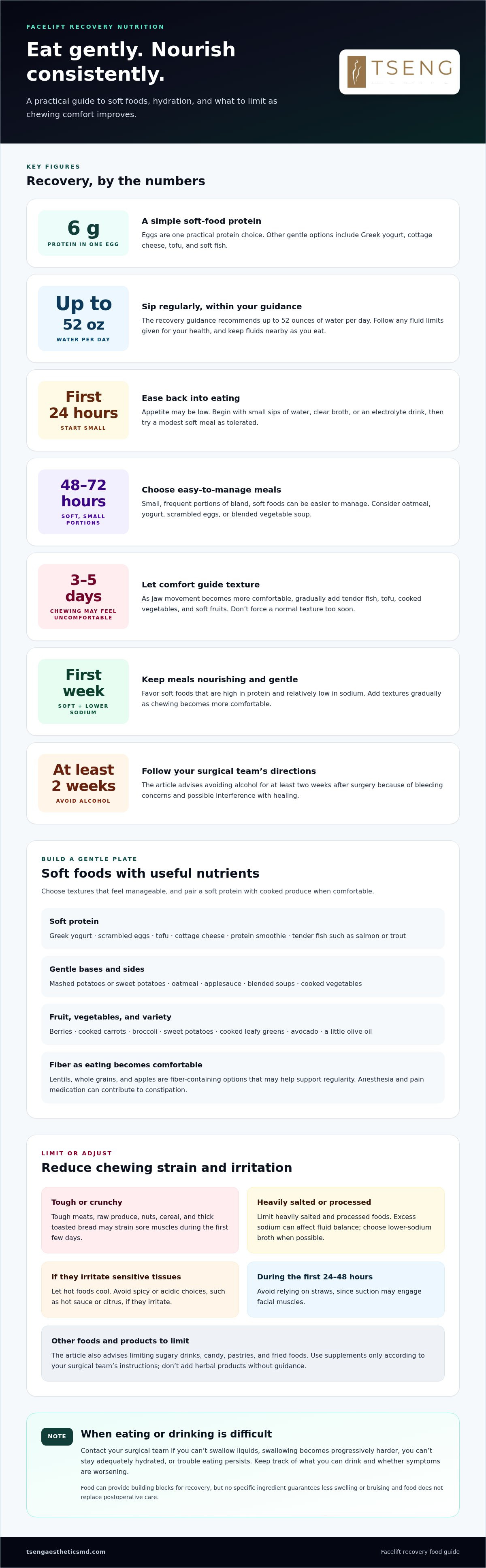
Eating can resume immediately after a facelift. Anesthesia and pain relief may reduce appetite during the first 24 hours. Begin with small sips of water, clear broth, or an electrolyte drink, then try a modest soft meal as tolerated. These options provide fluid without asking facial muscles to work hard. Keep water nearby and sip regularly, unless your doctor has restricted fluids.
Avoid alcohol because of bleeding concerns. Refrain from drinking it for at least two weeks after surgery, as it can thin the blood and interfere with healing. Follow your surgical team’s directions about pain medicine and supplements, since alcohol or supplements may affect your medication plan. Don’t add herbal products during recovery without guidance.
During the first few days, skip tough meats, raw produce, nuts, cereal, and thick toasted bread; chewing can strain sore muscles. Avoid relying on straws during the first 24–48 hours, since suction may engage facial muscles. Let hot foods cool, and avoid spicy or acidic choices, such as hot sauce or citrus, if they irritate sensitive tissues.
Hydration also matters for bowel regularity. Anesthesia and painkillers can contribute to constipation or nausea, so take regular sips and add fiber-containing foods as eating becomes comfortable. Water, herbal tea, clear soup, broth, coconut water, cucumber, and watermelon provide fluids in varied forms. Salty packaged soups can add sodium, so choose lower-sodium broth when possible.
Contact your surgical team if you can’t swallow liquids, swallowing becomes progressively harder, or you can’t stay adequately hydrated. Persistent trouble eating also merits a call. Keep track of what you can drink and whether symptoms are worsening. These signs need attention, not simply a change to another drink or texture.
3. Why nutrition matters during facelift recovery
Facelift recovery asks the body to repair incisions and surrounding tissue. Protein supplies amino acids used in tissue repair, while adequate nutrition helps support energy as healing progresses. Food won’t erase swelling or replace postoperative care, but a varied menu helps provide building blocks for recovery. A plastic surgery recovery plan should also account for comfort: chewing may feel uncomfortable during the first 3–5 days.
During the first 48–72 hours, small, frequent portions of bland, soft food can be easier to manage. Try oatmeal, yogurt, scrambled eggs, or blended vegetable soup; these choices reduce chewing effort while still providing nourishment. As jaw movement becomes more comfortable, add tender fish, tofu, cooked vegetables, and soft fruits. This gradual transition helps patients eat consistently without forcing a normal texture too soon.
Include a protein source with meals and, when possible, snacks. Eggs, Greek yogurt, cottage cheese, tofu, and soft fish offer practical options. One egg provides 6 grams of protein. There isn’t a single protein target for every patient in the available recovery guidance, so focus on including a source regularly rather than relying on one large meal. For fluids, the guidance recommends up to 52 ounces of water per day; follow any fluid limits given for your health.
Vitamins A, C, and E, plus zinc, support tissue repair and wound healing. Vitamin C also helps rebuild collagen and soft tissue at an incision site. Add cooked carrots or sweet potatoes for vitamin A, berries for vitamin C, and leafy vegetables for a wider range of nutrients. Keep heavily salted packaged foods limited, since excess sodium can affect fluid balance. Salmon provides omega-3 fats that may help with inflammation, while cooked vegetables and soft fruits add nutrients without demanding forceful chewing. Together, these choices support a smoother healing process while protecting comfort around the jaw and facial muscles.
4. Fiber for constipation from pain medication
Pain medication, anesthesia, and reduced movement after surgery can slow digestion. Constipation may make recovery less comfortable, so include fiber as eating becomes manageable. Lentils, whole grains, apples, and vegetables are useful sources. Fiber can support bowel regularity, especially as part of a routine that also includes fluids and small, nourishing meals.
Choose textures that feel comfortable around facial incisions. Soft-cooked lentils can be stirred into a smooth soup, while oatmeal provides whole grains without requiring much chewing. Soft apple slices or applesauce offer another way to include fruit, and cooked vegetables can add fiber to a meal. If your appetite is limited, try smaller portions throughout the day rather than forcing a large serving.
Increase fiber-containing foods gradually instead of adding large amounts all at once. Pair them with water, herbal tea, or broth, unless your doctor has restricted fluids. Staying hydrated supports digestion, while a varied menu supplies nutrients for tissue repair. Try adding one fiber source to a meal, then notice how your digestion responds before increasing the amount.
Track bowel movements alongside your medication schedule. If you haven’t had a bowel movement after a couple of days, ask your doctor whether a mild laxative is appropriate. Don’t stop or change prescribed medications on your own. If nausea, poor appetite, or difficulty drinking makes it hard to maintain fluids, tell your surgical team. Hydration supports digestion and the broader healing process.
Healthy eating after plastic surgery should be comfortable and practical, not a strain on your jaw. Prepare soft options before surgery, such as lentil soup, oatmeal, and cooked vegetables, so they’re available when cooking feels difficult. For guidance about care surrounding a facelift, explore facelift recovery care.
Tseng Plastic Surgery: Facelift
Tseng Plastic Surgery offers facelift surgery for people considering facial rejuvenation and seeking guidance on whether a surgical approach aligns with their goals. A discussion about a facelift can help clarify the changes you hope to address and how the procedure may fit your plans. The practice also offers a minimal invasive preservation face and neck lift, another surgical option for facial and neck rejuvenation.
Nutrition supports recovery, but it’s only one part of preparing for surgery and following postoperative instructions. If you’re exploring a facelift or want to discuss facial rejuvenation options, contact Tseng Plastic Surgery to learn about its approach.
Make your recovery plan part of your larger goals
Healing is a process, not a single decision made at the table. Choices around surgery can be part of a considered plan for your health, comfort, and desired appearance. Knowing what to eat after facelift surgery is one practical way to prepare, while your surgical team’s instructions guide care specific to your procedure and recovery.
If you’re considering facial rejuvenation, discussing your goals can help you understand which approach may suit you. Tseng Plastic Surgery offers facelift surgery and a minimal invasive preservation face and neck lift. The practice also offers liposuction for patients considering body contouring as part of a broader aesthetic plan.
Take the next step at your own pace. Contact Tseng Plastic Surgery to discuss your goals and facelift options. Thoughtful preparation can help you move forward with greater clarity and confidence.
Frequently Asked Questions
What foods should I avoid during facelift recovery?
Limit foods that are hard to chew, heavily salted, or irritating while your face feels tender. Examples include tough meat, crunchy snacks, hot sauce, citrus, and vinegar-based dressings. Avoid alcohol for at least two weeks after surgery because it can interfere with healing. Choose gentler options, such as soft-cooked foods or mild broth, and follow any food restrictions in your postoperative instructions.
Can chewing affect your recovery?
Yes. Firm or chewy foods can make eating uncomfortable when your jaw and nearby facial muscles are sore. During the first few days, cut food into small pieces and choose textures that require little chewing. If opening your mouth or eating becomes too painful, contact your surgical team rather than forcing yourself through a meal. Do the same if swallowing becomes difficult or worsens.
How can you care for yourself at home?
Follow your surgical team’s directions for incision care, dressings, medications, and activity. Keep your head raised for several days, including during sleep, using 2 or 3 pillows if instructed. Arrange help with meals and daily tasks while you rest, and avoid doing too much as your body heals. If you can’t swallow liquids or maintain hydration, contact your surgical team promptly.
How long does it take before you can eat completely normally again?
Most facelift patients can return to a completely normal diet, including foods that require more chewing or biting, around four to six weeks after surgery. Reintroduce firmer textures gradually as tightness and soreness ease. Start with a small portion rather than a full meal of crunchy or chewy foods, and stop if eating causes significant discomfort. Follow your postoperative instructions as you return to your usual meals.
What kinds of foods can help you heal after a facelift?
Soft foods with protein and a variety of nutrients are practical choices during early recovery. For example, pair scrambled eggs or tofu with mashed sweet potato, or blend Greek yogurt with berries for an easy snack. Small portions may be easier to manage if your appetite is low. As chewing becomes easier, add textures gradually instead of rushing back to your usual foods.
What nutrients help facelift healing?
Protein supports tissue repair, while vitamins A, C, and E and zinc are associated with tissue repair and wound healing. Omega-3 fats from foods such as salmon also provide a nutrient-rich option during recovery. You can get a range of nutrients from meals combining protein with fruits and cooked vegetables. Ask your surgical team before adding supplements, since instructions around surgery can vary.

