Using Your Own Fat as a Facial Filler While Fillers Are Still Present
By Tseng Plastic Surgery
Fat transfer may soften tear-trough hollows. Using your own fat as a facial filler involves harvesting fat from another area, purifying it, then placing it in the face. The procedure may take place in a surgeon’s treatment room or an operating room. It is a surgical approach, not simply an injection of an off-the-shelf filler.
Having existing filler does not automatically rule out fat transfer, but its location and remaining volume matter when planning treatment. You may also be considering a chin implant. These options address different concerns: fat restores soft-tissue volume, while an implant adds chin projection.
This article explains how fat grafting may address under-eye hollows, how existing filler factors into the decision, and how fat transfer compares with a chin implant. It also covers the practical difference between a treatment room and an operating room, so you can understand how the procedure’s setting fits into the overall plan.
Key Takeaways
- Understand how liposuction harvests fat from a donor area and why the fat is purified before facial placement.
- Distinguish the goals of fat transfer and a chin implant: restoring soft-tissue volume versus adding chin projection.
- Learn which details about existing filler matter when considering another approach to facial volume.
- Explore what influences tear-trough treatment planning and why the procedure’s setting is part of the discussion.
Chin Implant or Fat Transfer?
Fat transfer and a chin implant shape different contours: fat restores soft-tissue volume, while an implant adds chin projection. The key distinction is whether the concern is hollowing or chin shape.
For fat transfer, liposuction removes fat from a donor area such as the abdomen, thighs, or buttocks. The harvested fat is prepared for facial use, then injected into areas needing volume. Harvesting takes about 20 minutes; injection takes five to 20 minutes, depending on the areas treated. A chin implant doesn’t use harvested fat, so it doesn’t involve donor-area liposuction.
Fat Processing and Reinjection
Processing separates usable fat from unwanted material before it is reinjected into the face. After liposuction, the harvested fat is purified, then placed in small amounts where volume is needed. Because fat transfer involves both a donor site and a facial treatment site, the additional procedure at the donor area can mean more discomfort than an injectable filler alone.
Facial Areas for Fat Transfer
A person’s own fat can add volume to the cheeks, temples, lips, nasolabial folds, areas around the chin, and under-eye hollows. It may suit someone seeking broader volume restoration who has enough accessible donor fat. The treatment area shapes the plan: cheek hollowing differs from tear-trough indentation, while a chin implant addresses projection rather than soft-tissue volume.
Cost and Insurance Coverage
In the United States, facial fat-transfer cost varies by case, and a quote is provided after a quote request. Factors include donor-area liposuction, the facial zones treated, anesthesia, and the procedure setting. Insurance coverage depends on the plan and medical purpose. Elective cosmetic volume restoration is generally an out-of-pocket expense, while reconstructive treatment may be considered differently. Coverage is plan-specific.
Fat Transfer to Face While Fillers Are Still Present?
Existing filler does not automatically rule out fat transfer, but its location and remaining volume matter when planning treatment. The choice also depends on whether you prefer adjustable, temporary correction or longer-lasting volume restoration.
Fat Transfer Compared With Hyaluronic Acid Fillers
Fat transfer uses tissue harvested from your body, while hyaluronic acid fillers, including Juvéderm, are injectable products. This difference affects the treatment process and recovery. Hyaluronic acid results typically last six months to a year, depending on the product. Facial fat transfer can last longer, but results are less predictable. If filler is still present, its placement and the area being considered are important planning details.
Predictability of Results
Facial fat-transfer results vary because some transferred fat is reabsorbed as surviving cells establish a blood supply. The initial appearance may therefore be fuller than the settled result. Some people need more than one treatment to reach their desired volume. Hyaluronic acid filler results are temporary, and the type of filler affects how long correction lasts. Consider these differences when choosing between gradual, longer-term volume restoration and a temporary adjustment.
Recovery and Risks
Recovery after facial fat transfer can include swelling and mild bruising for 7-10 days. Bruising, redness, tenderness, or bleeding can also occur at treatment sites, and swelling or bruising may last longer than after a filler injection. Avoiding firm pressure on treated areas is advised during recovery. Because fat transfer involves liposuction as well as facial injections, it also involves a donor site and additional procedural steps.
Fat transfer can also add volume to other body areas, including the breasts and buttocks, but these are distinct goals from facial rejuvenation. If facial volume is your concern, focus on the specific area, such as the cheeks, and whether existing filler remains there. This comparison can clarify which approach aligns with your desired change and recovery.
Fat grafting for tear trough hollows
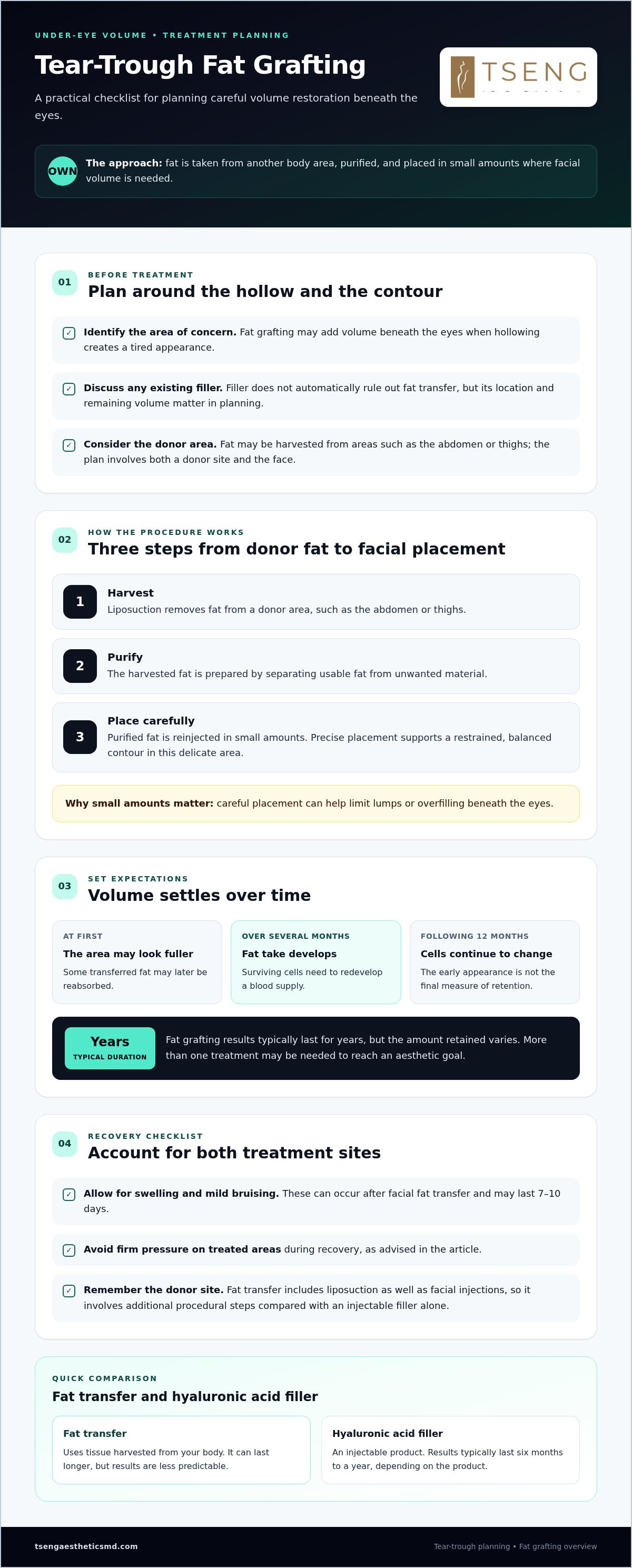
Fat grafting can add volume beneath the eyes when hollowing creates a tired appearance. The treatment combines harvesting fat from another body area with careful reinjection into the tear troughs. For those considering using your own fat as a facial filler, the under-eye area requires particular attention to placement and contour.
Facial Volume Loss
Facial volume loss can deepen hollows and make wrinkles or shadows more noticeable. Fat grafting moves a patient’s own tissue to areas that appear depleted, including beneath the eyes. Fat may be harvested from the abdomen or thighs, then placed in small amounts. Precise placement matters in the tear troughs, where this delicate area calls for a restrained, balanced contour.
Potential Benefits
Using a patient’s own fat can restore facial volume without relying solely on synthetic filler. Fat grafting can address more than one area, such as the cheeks and tear troughs, when the treatment plan calls for it. This approach may appeal to patients seeking broader volume correction, though it involves both a donor area and the face. Placing small amounts at a time can help limit lumps or overfilling beneath the eyes.
Fat Retention and Longevity
Some transferred fat may remain long term, but the amount retained varies among patients. Grafted cells need to redevelop a blood supply, so retained volume varies among patients. The initial result may look fuller as some fat is later absorbed. Careful placement helps balance the intended correction with this change in volume.
Fat grafting results typically last for years, but more than one treatment may be needed to reach an aesthetic goal. Fat take can develop over several months, with cells continuing to change over the following 12 months. This gradual settling means early appearance isn’t the final measure of retention. The choice of using your own fat as a facial filler should account for this settling period and the possibility of touch-ups.
Where the procedure may be performed
Facial fat transfer may take place in a surgeon’s treatment room or an operating room. The setting matters because the procedure combines fat removal from a donor area, such as the abdomen, with facial injections. It is not an injection-only appointment: the plan must account for both the donor site and the areas receiving volume.
An office procedure may be performed under topical and local anesthesia. This may be appropriate when the planned treatment is limited in scope and the surgeon determines an office setting fits. An operating room is another setting for fat transfer. The setting relates to the planned procedure and anesthesia, not to whether the goal is a refreshed appearance or correction of a hollow.
For tear-trough treatment, the plan includes both the under-eye area and the site where fat is harvested. A surgeon considers the number and location of treatment areas, the donor site, and the intended volume when planning the procedure. These details help explain why two facial fat-transfer plans may use different settings. The setting should suit the full scope of the procedure, not just the facial injections.
When choosing a qualified surgeon in your state, look for experience in facial fat grafting and a thorough review of your medical history, goals, potential risks, and expected outcomes. Discuss how the donor area, under-eye treatment, anesthesia, and setting fit together in your plan.
Before proceeding, make sure you understand where each part of the procedure will occur and what the setting means for your treatment. To explore facial rejuvenation options, consider how your goals and the procedure’s scope align.
Tseng Plastic Surgery: Facelift
Tseng Plastic Surgery can help you consider whether facial rejuvenation aligns with your concerns and goals. If tear-trough hollows are part of broader facial aging, a facelift or minimal invasive preservation face and neck lift may be relevant to discuss. Liposuction removes fat, rather than placing volume in the face.
These procedures address different concerns, so the next step is a personalized discussion about your facial appearance, existing filler, and desired change. Clarifying whether the concern is localized hollowing, skin laxity, or both can help frame the conversation without assuming one approach suits every goal.
Contact Tseng Plastic Surgery to discuss your facial rejuvenation goals and potential next steps.
Choose a Next Step That Reflects Your Goals
Before choosing a treatment, consider what you want to change and how you want your features to feel in balance. Using your own fat as a facial filler is one option for restoring volume, while concerns related to facial aging may call for a broader discussion about rejuvenation. Existing filler and your preferred degree of change are useful parts of that conversation.
Tseng Plastic Surgery offers facelifts, minimal invasive preservation face and neck lifts, and liposuction. These options address different concerns, so describe what you notice and which outcome matters most to you. Your features and goals will guide the discussion about an appropriate approach.
For a thoughtful discussion of your facial rejuvenation goals, contact Tseng Plastic Surgery. An informed conversation can help you move forward with greater clarity and confidence.
Frequently Asked Questions
Can I Use my Own Fat to Fill my Tear Troughs?
Yes, fat grafting can add volume to tear-trough hollows. The key consideration is whether the under-eye contour reflects a lack of volume that grafting can address. Treatment involves both a donor area and the delicate lower-eyelid region, so the planned placement and amount matter. Under-eye bags and hollowing are different concerns and may call for different treatment considerations.
How can fat injections be used as dermal fillers?
Fat injections use a person’s own harvested tissue to add volume in selected facial areas. After preparation, small amounts can be placed in areas such as the cheeks, lips, temples, or hollows around the eyes. Unlike an off-the-shelf dermal filler, the treatment includes fat removal from a donor area. Planning therefore considers both where fat is taken and where it is placed.
What Can You Do With the Harvested Fat?
Harvested fat can be purified and transferred to facial areas that need volume, such as the cheeks or tear troughs. Fat transfer can also address areas beyond the face, and hands may be treated alongside wrinkle correction when enough fat is harvested. The destination depends on the treatment goal: fat removed from a donor area is intended for planned grafting, not automatically used in every possible area.
What is facial fat transfer (autologous fat grafting) and how does it work?
Facial fat transfer, also called autologous fat grafting, moves a patient’s own fat from one body area to the face. Liposuction removes the donor fat, which is then purified and injected into areas needing volume. The transferred cells need to develop a blood supply to survive, so the final volume can change as the graft settles. The treatment therefore combines donor-site work with facial contouring.
What are the steps involved in facial fat transfer surgery?
The procedure follows a sequence: select a donor area, remove fat with liposuction, prepare the harvested tissue, then inject it into the planned facial areas. Beforehand, the surgeon reviews your medical history and discusses expectations, risks, and outcomes. Report prescription and over-the-counter medicines, as well as herbal supplements you use or have recently taken. Anesthesia may be used because fat is surgically removed from another area.
How long does facial fat transfer take to heal, and when are results visible?
Swelling and mild bruising may last 7-10 days, while the transferred fat continues to settle over a longer period. Fat take can develop over several months, and cells may continue changing over the following 12 months. Early fullness can shift as the body absorbs some injected fat, so the initial appearance differs from the later result. More than one treatment may be needed to reach the desired volume.

