Swelling and Bruising After Liposuction: When It Peaks
By Tseng Plastic Surgery
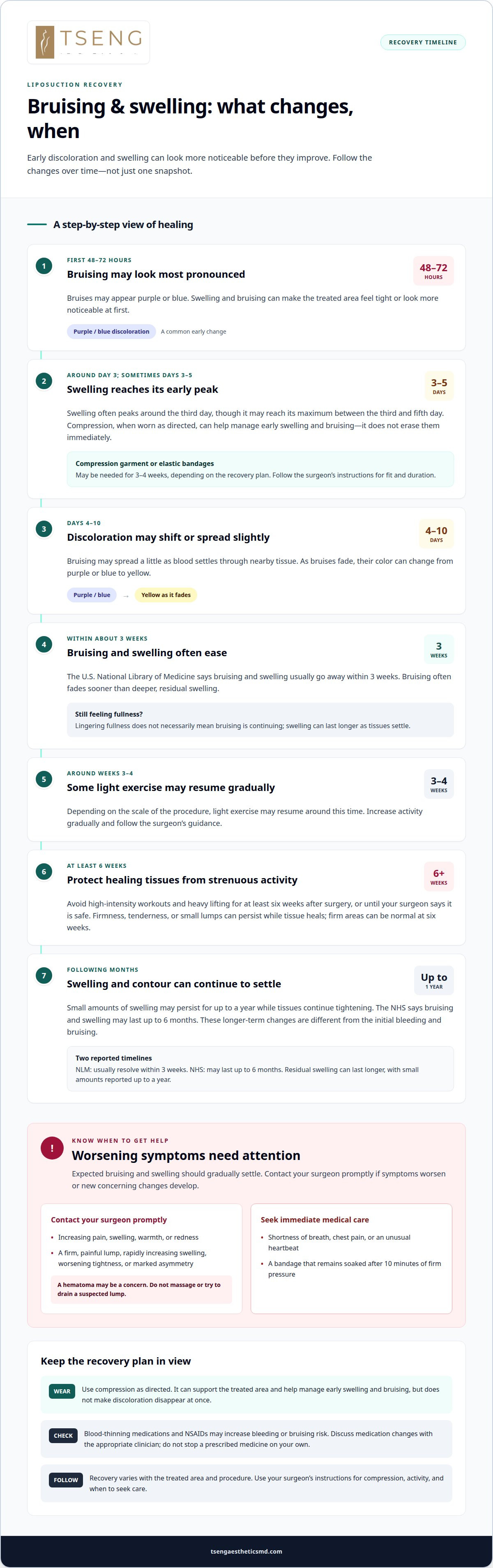
The first few days after liposuction can look worse before they look better. Swelling and bruising after liposuction often peak around the third day, although swelling may reach its maximum between the third and fifth day. Bruising can look especially pronounced during the first 48 to 72 hours.
It’s understandable to watch every change closely, especially when discoloration seems to spread or swelling makes the treated area feel tight. Bruising is a common part of recovery. Wearing a compression garment as directed can help manage early swelling and bruising, but it won’t make them disappear immediately.
Learn when swelling and bruising typically peak, how bruises usually fade, and how compression garments and surgical technique may affect recovery. You’ll also find out which changes are expected and which symptoms call for prompt medical attention, so you can follow your healing with a clearer sense of what’s normal.
Key Takeaways
- Track how discoloration and swelling change over the first days and weeks, rather than judging recovery by one snapshot.
- Wear compression as directed; its role is to support recovery and manage early side effects, not to erase bruising immediately.
- Bruising is a common part of healing, while swelling can linger longer. The article explains what timelines to expect.
- Learn how surgical approach may relate to recovery and which changes deserve prompt medical attention.
Can Compression Garments Reduce Bruising?
Yes. Wearing a compression garment as directed can help minimize bruising and manage early swelling. It supports the treated area during recovery, but bruising still fades gradually.
Garments During Recovery
A compression garment applies support to the treated area after liposuction. That pressure can help manage bruising, swelling, and discomfort while tissues heal. A garment or elastic bandages may be needed for 3 to 4 weeks, depending on the recovery plan. Wear it according to the surgeon’s instructions; consistent use matters more than wearing it beyond the prescribed period.
Compression can also support skin tightening during healing, but it won’t prevent every bruise or make discoloration disappear at once. For example, a garment may support the abdomen while visible bruising gradually fades. Follow the instructions for your procedure on how the garment should fit and how long to wear it.
Garments and Medication Guidance
Compression and medication guidance address different contributors to bruising. A garment supports the treated area, while blood-thinning medications may increase bleeding risk. Avoid these medications after surgery unless your surgeon approves them. Discuss any planned medication changes with the appropriate clinician rather than stopping a prescribed medicine on your own.
NSAIDs can increase the risk of bleeding and bruising around liposuction surgery. Discuss any changes to their use with your primary care physician and get approval before making them. A compression garment doesn’t cancel medication-related bleeding risk. Following garment instructions and individualized medication guidance helps coordinate recovery decisions.
Support Hose, Cold Compresses, and Walking
Support hose may be recommended after liposuction involving the calves or ankles, sometimes for about 6 weeks. This is different from a garment used on another treated area, so follow the instructions for the specific procedure. Cold compresses can also help manage discoloration and swelling; use them as directed during recovery.
Light walks support circulation after surgery. Start with a short walk and gradually increase the distance, adding a little more each day. Walking doesn’t replace compression, and compression doesn’t replace movement. Both measures can support recovery when they follow your surgeon’s directions.
For example, someone who has had their calves treated may wear prescribed support hose and take brief walks, gradually making them longer. Follow your recovery plan rather than adding compression or activity on your own.
Does Surgical Technique Influence Bruising?
Liposuction disrupts small blood vessels, lymphatic vessels, and fat cells, contributing to bleeding, bruising, and swelling. The treated area and extent of tissue disruption influence how recovery looks and feels. Different energy sources, including laser or ultrasonic energy, don’t significantly change tissue trauma or recovery.
According to the U.S. National Library of Medicine, bruising and swelling usually go away within 3 weeks, but some swelling may last several months after liposuction. Bruising often fades sooner than residual swelling, so a lingering fullness doesn’t necessarily mean bruising is continuing. The body’s timeline includes both visible discoloration and deeper tissue settling.
Return to activity gradually. Depending on the scale of the procedure, light exercise may resume around week three or four. Avoid high-intensity workouts and heavy lifting for at least six weeks after surgery, or until your surgeon says it’s safe. Increasing activity too quickly can strain healing tissues, even as surface bruising improves. For patients seeking structured support to safely restore mobility and manage discomfort as they heal, Singapore Physio Therapy Services | Find Physiotherapist Singapore provides specialized post-surgical rehabilitation and care.
Firmness, tenderness, or small lumps can persist while treated tissue heals. Firm areas beneath the skin can be normal six weeks after surgery. The area may feel different before its contour settles, so assess changes over time rather than judging recovery by how it looks on a single day.
Skin tightening and contour refinement continue beyond the early bruising phase. Residual swelling may obscure the final shape for a while as tissues gradually settle and soften. Small amounts of swelling can persist for up to a year, and tissues may continue tightening during that period. These later changes differ from the initial bleeding and bruising.
Understanding the procedure and its expected recovery can help set a measured timeline. For a personalized discussion of liposuction recovery planning, consider how the treated areas and your activity goals fit together.
Is Bruising Normal After Liposuction?
Yes. Bruising and swelling are common after liposuction, and the NHS says they may last up to 6 months. In the first few days, bruises can look purple or blue, then turn yellow as they fade. Bruising may also spread slightly during days 4-10, as blood settles through nearby tissue. Swelling can make the treated area feel tight or temporarily affect how clothing fits.
Changes that worsen rather than gradually settle deserve attention. Contact the surgeon promptly if pain, swelling, warmth, or redness develops or increases. A firm, painful lump, rapidly increasing swelling, worsening tightness, or marked asymmetry can signal a hematoma. Don’t massage or try to drain a suspected lump. If a bandage remains soaked after 10 minutes of firm pressure, seek immediate medical care.
Some symptoms require emergency attention. After surgery, seek immediate medical care for shortness of breath, chest pain, or an unusual heartbeat. For other concerning changes, contact your plastic surgeon promptly, especially if they’re getting significantly worse. Describe when the symptom began and how it has changed to help the surgical team understand your concern.
Showering and bathing follow different timelines. Patients may shower 24 to 48 hours after surgery if their doctor approves. Avoid baths during the first 2 weeks, or until the doctor says bathing is appropriate. For example, a patient with healing incision sites should follow the shower instructions rather than soaking in a bath. These precautions help protect the surgical area during early healing.
Swelling can temporarily affect the scale or the fit of clothing, so short-term weight changes don’t necessarily reflect your final contour. Track whether bruising, discomfort, and swelling are improving or worsening rather than relying on one observation. If a new symptom appears or a familiar one intensifies, contact your surgeon instead of trying massage or waiting it out.
When post-liposuction swelling and bruising peak
How swelling and bruising after liposuction peak can vary, but the earliest days are often the most noticeable. Bruising may look most intense during the first 48-72 hours after surgery, while swelling often peaks around day three. Some patients reach maximum swelling between days three and five. These timelines overlap, though bruising is visible discoloration and swelling can make the treated area feel fuller or tighter.
During the first week, inflammation and retained fluid may leave you feeling sore or tired. Temporary fullness can also affect how clothes fit or what the scale shows, rather than reflect your eventual body-contouring result. For example, a waistband may feel snug even as healing progresses. Your appearance at this early stage doesn’t show your final contour.
During liposuction, the cannula moves through treated tissue, and the procedure can disrupt small blood vessels and lymphatic vessels. Bruising and fluid-related swelling don’t necessarily peak on the same day. Compare the treated area over several days rather than relying on a single snapshot.
After symptoms peak, the overall trend is gradual improvement. Swelling and bruising may begin to resolve substantially during the first two weeks, while residual swelling can continue for weeks or months. Recovery also depends on the treated area and the extent of the procedure.
The peak in swelling and bruising after liposuction is only one phase of healing, not a measure of the final result. Most swelling may be gone within the first 3-4 weeks, although it can take longer to disappear completely. Small amounts may persist for up to a year, as tissues continue to settle.
To discuss how the expected peak and recovery timeline relate to your procedure, schedule a liposuction recovery discussion.
Tseng Plastic Surgery: Liposuction
Tseng Plastic Surgery offers liposuction for people considering changes to their body contour. Once you understand how bruising and swelling can evolve, consider your goals, the areas you hope to address, and the recovery period involved. These details can help frame an informed discussion about whether liposuction aligns with your priorities.
Turn to Tseng Plastic Surgery when you’re exploring liposuction or want to discuss how recovery may fit your plans. A consultation can address your questions and clarify what matters most to you, while recognizing that goals and healing experiences vary.
To discuss liposuction and your goals, contact Tseng Plastic Surgery.
Move Forward With a Clear Recovery Plan
Understanding swelling and bruising after liposuction can help you approach healing with patience. The next step is to connect recovery expectations with your own goals. A thoughtful conversation can cover the areas you hope to treat, your questions about the procedure, and how recovery may fit your daily life.
Tseng Plastic Surgery offers liposuction, as well as facelift and minimal invasive preservation face and neck lift procedures. Each addresses a different aesthetic goal, so the conversation should start with what you want to change rather than a one-size-fits-all plan.
Your individual healing experience may differ, and discussing your priorities can help you make an informed decision. Contact Tseng Plastic Surgery to talk about your goals and possible next steps. A considered conversation is a positive place to begin.
Frequently Asked Questions
How can you care for yourself at home?
Follow your postoperative instructions, wear your compression garment as directed, and take short, gentle walks. Cold compresses may help manage discoloration and swelling, while drinking plenty of water supports hydration. For example, keep walks brief at first and gradually make them longer instead of attempting a demanding workout. Don’t add massage or other treatments unless they’re part of your surgeon’s plan.
Should I Avoid NSAIDs Before or After Surgery?
Discuss NSAID use with your surgical team before surgery, and don’t change a prescribed medication without appropriate medical approval. NSAIDs can increase bleeding and bruising risk around liposuction. After the procedure, avoid blood-thinning medications unless your surgeon approves them. If you take an NSAID regularly, tell the appropriate clinician which medication you use and why, so any changes can be considered safely.
What Colors Are Normal During Healing?
Bruises may look purple or blue at first, then turn yellow as they fade. Color can vary across the treated area: one patch may look yellow while another remains darker. A bruise may also seem to shift or spread slightly as blood settles through nearby tissue. Pay attention to the overall trend, and report worsening symptoms rather than focusing on color alone.
When Should You Be Concerned About Bruising?
Seek prompt medical advice if bruising comes with worsening pain, rapidly increasing swelling, warmth, redness, or a firm, painful lump. These changes need more attention than a bruise’s color alone. Don’t massage a painful lump or try to drain it. If the treated area becomes increasingly tight or noticeably asymmetrical, contact your surgical team promptly for guidance.
When should you call for help?
Contact your surgeon promptly if a symptom concerns you or becomes significantly worse. Continued bleeding that soaks a bandage after 10 minutes of firm pressure requires immediate medical care. Shortness of breath, chest pain, or an unusual heartbeat after surgery also warrant immediate attention. If you’re describing a change by phone, explain when it started and whether it’s progressing.
Why Do Some People Bruise More Than Others?
Bruising varies because liposuction disrupts blood vessels, lymphatic vessels, and fat cells, while the treated area and procedure affect the tissue response. As a result, bruising can differ between people and across body areas. Medication use can also matter, since NSAIDs may increase bleeding and bruising risk around surgery. Share your medication history with your care team before the procedure.

