Stubborn Belly Fat After Weight Loss: What It Means and What Can Help
By Tseng Plastic Surgery
What if the belly that remains after weight loss isn’t stubborn fat at all? It can be frustrating when the scale changes but your abdomen still looks or feels fuller than expected. Stubborn belly fat after weight loss may be part of the picture, but loose skin, changes in the abdominal wall, or another cause can also affect your shape.
Understanding what may be behind the fullness can help you avoid pursuing more weight loss when it may not address your concern. This article explains common reasons the abdomen may remain prominent, when it’s sensible to seek a medical assessment, and what questions can help clarify your options.
You’ll also learn how weight stability, skin quality, and personal goals inform next steps. For appropriate patients with localized fat, liposuction may be considered as a body-contouring procedure, not a weight-loss method. An individualized assessment can help distinguish a contouring concern from a medical one and guide a realistic plan based on your health and goals.
Key Takeaways
- Stubborn belly fat after weight loss may reflect more than one factor, so appearance alone can’t identify the cause.
- Learn how fat beneath the skin, loose skin, and abdominal wall changes can contribute to persistent fullness.
- Compare lifestyle measures and contouring options, including what each may address and what it cannot change.
- Use a step-by-step approach that puts health assessment, stable weight, and personal goals before elective contouring decisions.
- An individualized assessment can help determine whether liposuction may suit your anatomy and aesthetic goals.
Why Can Stubborn Belly Fat Remain After Weight Loss?
It can feel discouraging when your weight decreases but your abdomen doesn’t change as you expected. That difference doesn’t mean your effort has failed. Weight loss reflects an overall change, while abdominal appearance is influenced by several factors, including fat distribution, skin, abdominal structure, and sometimes health conditions.
“Persistent abdominal fullness” describes an appearance or sensation, not a diagnosis. Body fat, also called adipose tissue, has different forms and functions, and its amount and distribution vary from person to person. Stretched skin, changes in the abdominal wall, or temporary bloating may also affect how the area looks. These factors can overlap, and appearance alone can’t identify the cause.
Why the scale and abdominal appearance may not change together
Weight loss doesn’t happen evenly across the body. One person may notice changes first in the face or limbs, while another sees a difference in the abdomen sooner. Even as overall weight changes, a localized contour concern may remain because each person’s pattern of fat storage and skin response is different.
Losing more weight doesn’t necessarily change one specific area in the way you hope. The scale can show a real change in body weight without revealing whether abdominal fullness relates to fat beneath the skin, loose skin, abdominal structure, or another factor. Looking at your health and weight trends alongside your specific concern provides more useful context than focusing on either alone.
When abdominal changes deserve medical attention
If fullness is new, unexplained, painful, or changing rapidly, discuss it with a clinician rather than assuming it’s a cosmetic concern. The same applies if it occurs with digestive symptoms or other changes in your health. A medical assessment can help determine whether further evaluation is needed before considering an aesthetic approach.
If the concern is longstanding and mainly about contour, an individualized assessment can help clarify what may be contributing and whether a body-contouring discussion is appropriate. A surgical consultation can also help distinguish a potential contouring concern from one that calls for medical assessment.
Takeaway: Appearance alone cannot diagnose the cause of abdominal fullness.
Fat, Loose Skin, or Abdominal Wall Changes: What Might Be Contributing?
Several features can create a similar appearance, and more than one may be present at once. A soft area that seems to pinch may involve fat beneath the skin, while folds or creasing may reflect skin laxity. A deeper bulge or a change in abdominal function may point to a different concern. These are possible clues, not ways to diagnose yourself.
Subcutaneous fat is the layer directly beneath the skin. Visceral fat sits deeper in the abdomen around internal organs, so it isn’t the same as a pinchable surface layer. Harvard Health Publishing explains the health risks associated with visceral fat. A visual assessment alone can’t reliably distinguish fat types or establish what’s causing fullness.
How residual fat and loose skin can look different
Localized fullness may appear as a rounded or soft area, while loose skin may drape, fold, or show creasing, especially when bending or sitting. These features can overlap: folds may contain underlying fat, and a fuller contour doesn’t necessarily mean excess fat is the only factor.
Skin response varies with individual characteristics and weight history. Changes in skin appearance aren’t a personal failing, and exercise or weight loss can’t be relied on to remove loose skin. A visible area alone also can’t establish which contouring approach, if any, is appropriate.
Could abdominal wall separation or another condition be involved?
Diastasis recti is a separation of the abdominal muscles along the midline and is one possible abdominal wall concern. A bulge, discomfort, or concern about how your abdomen functions deserves clinical assessment, particularly if symptoms are new or changing. Medical history and a physical examination help put visible changes in context and determine whether further evaluation is appropriate.
A contour concern describes how the abdomen looks; it isn’t a medical diagnosis. If your interest is primarily aesthetic, a personalized discussion can help clarify whether the concern appears related to localized fat and whether liposuction may be suitable. For people considering stubborn belly fat after weight loss, an assessment should account for anatomy, health, and expectations rather than appearance alone. Learn more about individualized body contouring as one possible aesthetic option, not a substitute for medical evaluation.
Lifestyle Changes, Liposuction, or Tummy Tuck: How Do Options Differ?
Choosing an approach starts with matching it to the concern, not simply trying to make the scale move further. Sustainable activity, nourishing eating habits, and maintaining a stable weight support overall health and can help preserve weight-loss progress. They can’t direct the body to lose fat from one selected area. Claims that a particular exercise or diet will reliably flatten only the abdomen aren’t a dependable treatment promise.
If your weight is still changing, it may be helpful to focus first on your health and long-term stability before discussing elective contouring. Procedures are intended to refine shape, not replace weight management or serve as a method for losing weight.
How body-contouring procedures differ in purpose
Liposuction removes selected localized fat deposits to refine contour in appropriate patients. It doesn’t remove excess skin, address every cause of abdominal fullness, or substitute for weight loss. Suitability depends on an individualized medical assessment of anatomy, health, and expectations. The principle of targeting a particular area for contouring also applies elsewhere on the body. See this guide to arm liposuction for an example.
A tummy tuck is a different surgical option that may be considered when excess abdominal skin is the primary concern. It involves surgical removal of skin and requires its own assessment of potential benefits, limitations, and risks. It isn’t interchangeable with liposuction, and neither procedure is appropriate for everyone. Yale Medicine’s overview of body contouring procedures describes surgical approaches used for concerns that can remain after weight loss.
These distinctions can help frame a discussion about stubborn belly fat after weight loss. The most suitable next step depends on what is contributing to the contour and what you hope to change. A physical assessment can clarify whether a concern appears related to localized fat, excess skin, or another factor, and whether medical evaluation should come first. An informed conversation should consider your overall health and weight stability, not appearance alone.
There’s no universal sequence that guarantees a particular result. Lifestyle measures remain valuable for health, while surgical contouring may be an option for selected concerns after careful evaluation. Understanding the purpose and limits of each approach helps keep decisions realistic and aligned with your priorities.
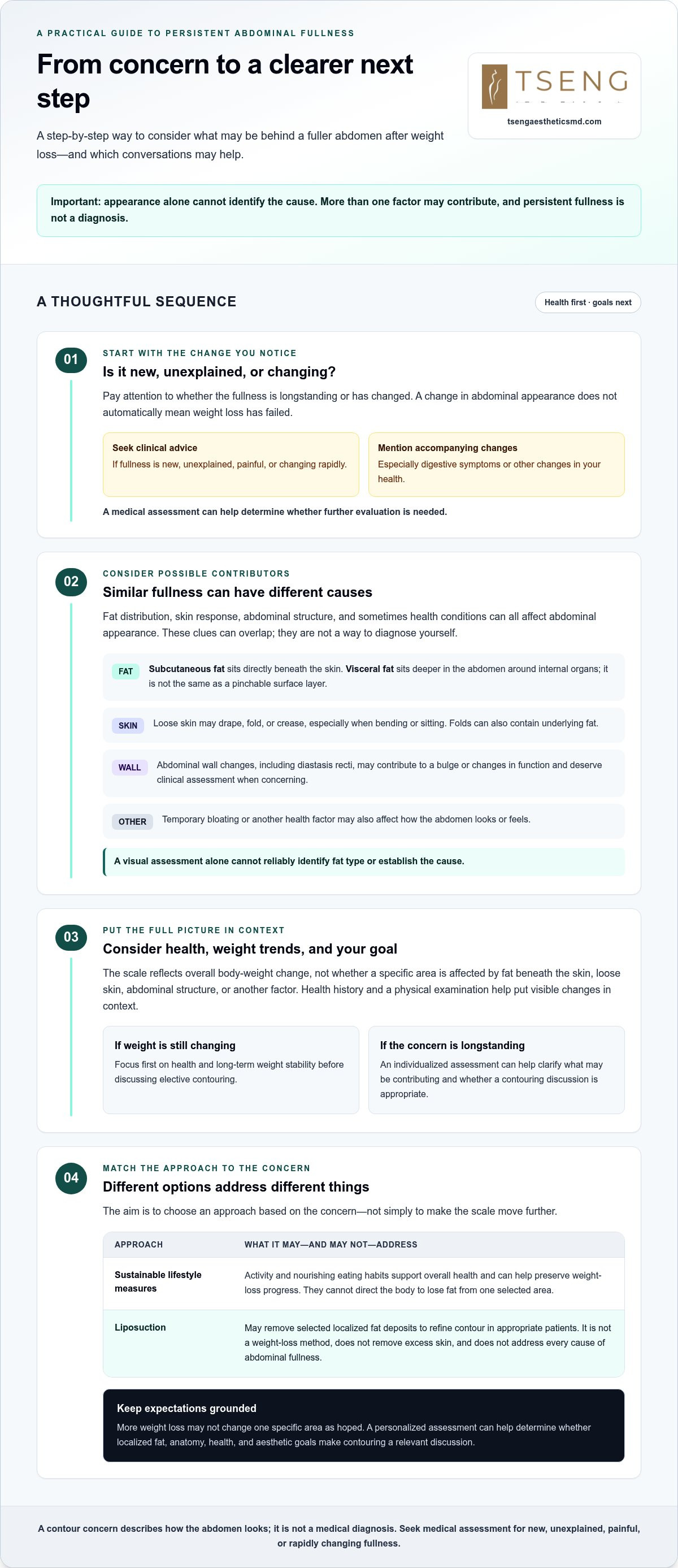
How to Address Stubborn Belly Fat After Weight Loss
A considered next step begins with understanding the concern, not assuming that more weight loss or a particular procedure is the answer. This sequence can help you organize what you’ve noticed, address health questions, and have a more focused discussion about your goals.
- Address new or unexplained changes first. If abdominal fullness is painful, changing quickly, or accompanied by digestive symptoms or other health changes, discuss it with an appropriate clinician. Clarifying possible medical concerns should come before an elective contouring conversation.
- Describe what you notice. Consider whether the main concern seems to be localized fullness, skin that folds or hangs, a change in abdominal function, or a combination. These observations can guide a conversation, but they can’t establish a diagnosis on their own.
- Consider stability and overall health. Note whether your weight and abdominal appearance have been relatively consistent or are still changing. Your health history and current circumstances matter when discussing elective options, so share relevant conditions, medications, and past procedures with your clinician.
- Define your personal goal. Be specific about what you hope to change, such as a particular contour or the way clothing fits. Consider which changes matter most to you and what would feel like a realistic outcome.
- Discuss whether an option fits. Suitability and procedure selection depend on an individual assessment of anatomy, health, expectations, and the concern being addressed. A recommendation should explain what a procedure may address, as well as its limitations.
Questions to prepare for a body-contouring consultation
A short list of questions can help ensure the discussion covers both your goals and practical details of care. For example, ask:
- Which specific concern is the recommended procedure intended to address?
- What limitations should I understand, and what result is realistic for my anatomy?
- What potential risks, recovery considerations, and alternatives should I weigh?
- How do my health history, weight stability, and personal goals inform the recommendation?
It can also help to describe how long you’ve noticed the concern and whether it changes with posture, activity, or other circumstances. This context supports a more individualized assessment and helps distinguish an aesthetic goal from a concern that may need medical evaluation.
If you’re considering options for stubborn belly fat after weight loss, a consultation with Tseng Plastic Surgery can help clarify whether the concern is primarily about contour and whether liposuction may align with your anatomy and goals. Read more about body-contouring options as you consider possible next steps.
Personalized Body Contouring: A Thoughtful Next Step
Understanding what may contribute to abdominal fullness can make an aesthetic conversation more focused, but it doesn’t mean surgery is necessary. Some people decide to continue with their current health habits; others want to explore whether a specific contouring concern may be addressed. The right next step depends on your priorities, health, and individual anatomy.
What an individualized contouring discussion should address
A thoughtful assessment begins with listening. It should consider what you’d like to change, your health and surgical history, the characteristics of the area, and whether your weight and goals are stable. Those details help distinguish a concern that may be suitable for aesthetic contouring from one that calls for medical evaluation.
At Tseng Plastic Surgery, Dr. Mark H. Tseng offers liposuction and tailored body contouring based on each patient’s anatomy and aesthetic goals. Dr. Tseng has been in practice for more than 20 years. The discussion should also set realistic expectations: a recommendation is personal guidance, not a promise of a particular result. Understanding a procedure’s limitations and potential risks is part of making an informed choice.
Exploring whether liposuction fits your goals
Liposuction may be considered for selected concerns involving localized fat, but it is a contouring procedure, not a weight-loss method. An assessment can help clarify whether the area you want to refine is appropriate for this approach, or whether another concern or option deserves attention. Discuss alternatives, potential risks, and recovery considerations before deciding whether to proceed.
If your concern is stubborn belly fat after weight loss, focus the conversation on the change you hope to see, what the procedure can realistically address, and how your overall health informs the decision. A considered plan respects both your aesthetic vision and the limits of treatment. Choosing not to pursue surgery is also a valid outcome of an informed discussion.
Explore personalized body-contouring consultations to learn about discussing your goals and realistic options.
Choose a Next Step That Fits Your Goals
Persistent abdominal fullness after weight loss can reflect different factors, including localized fat, loose skin, or abdominal wall changes. Because these concerns can overlap, appearance alone can’t tell you what’s causing the fullness. A medical assessment is appropriate for new, unexplained, painful, or rapidly changing symptoms.
For an aesthetic concern, the useful next step is an individualized discussion, not assuming that further weight loss or surgery is the answer. Liposuction may be considered for selected contouring goals, but it isn’t a weight-loss method, and its suitability depends on your health, anatomy, and expectations.
At Tseng Plastic Surgery, Dr. Mark H. Tseng brings more than 20 years in practice to discussions about liposuction and individualized body contouring. If you’re considering options for stubborn belly fat after weight loss, discuss your concerns and realistic goals in a personalized consultation. Schedule a personalized consultation to explore whether body contouring fits your goals.
Frequently Asked Questions
Is stubborn belly fat after weight loss normal?
Some people notice persistent abdominal fullness after losing weight, but appearance alone can’t determine whether it’s expected or identify its cause. Remaining fat, loose skin, body structure, or other health factors may contribute, sometimes in combination. If the fullness is new, unexplained, painful, or accompanied by other symptoms, discuss it with a qualified clinician rather than assuming it’s simply stubborn fat.
Can exercise get rid of belly fat in one specific area?
No, exercise can’t reliably direct fat loss from one chosen area. Regular physical activity can support overall health and contribute to changes in body composition, but abdominal appearance may also reflect loose skin or other factors that exercise doesn’t address. Focus on sustainable activity and broader health goals rather than expecting a specific exercise to remove fullness from your abdomen. Seek individualized medical advice if the change concerns you.
What causes loose skin after significant weight loss?
After substantial weight changes, skin may not fully retract, and the degree varies from person to person. Age, skin characteristics, and the amount and duration of weight change can influence how the area looks. Loose skin differs from remaining fat, although both can be present together. A clinician can assess the concern and discuss appropriate options, including their limitations, without promising a particular result.
How do I know whether I have belly fat or loose skin?
You may not be able to tell from appearance alone, especially since localized fat and loose skin can coexist. A physical assessment considers the skin, underlying tissue, medical history, and your goals to better understand the concern. If fullness is new, painful, or changing, discuss it with a clinician first. Online images and self-tests can’t reliably diagnose what’s contributing to your abdominal appearance.
Is liposuction a weight-loss treatment for stubborn belly fat?
No. Liposuction is a body-contouring procedure that may address localized fat deposits in selected patients; it isn’t a substitute for weight loss or a solution for every cause of abdominal fullness. Suitability depends on your anatomy, health, and goals. A consultation should cover the procedure’s intended benefits and limitations, potential risks, recovery considerations, and alternatives so you can make an informed decision.
Can a tummy tuck address loose skin after weight loss?
A tummy tuck may be considered for certain concerns involving excess abdominal skin, but it’s a distinct surgical procedure and isn’t appropriate for everyone. The cause of fullness, your health history, anatomy, and goals all matter when assessing suitability. A qualified surgeon can explain whether this approach or another option may fit your needs, and discuss potential risks, limitations, and recovery before you decide.
Should I wait until my weight is stable before considering body contouring?
Stable weight is commonly an important consideration before elective body contouring, because ongoing changes may affect abdominal appearance and the planning process. The right timing depends on your health, weight history, goals, and the procedure being considered. Discuss readiness and relevant medical factors during an individualized consultation, and treat general guidance as a starting point rather than a substitute for personalized advice.

