Stopping Medications Before Plastic Surgery: What to Review
By Tseng Plastic Surgery
The safest approach to stopping medications before plastic surgery isn’t to stop everything on a standard schedule. Some medicines and supplements can affect bleeding, anesthesia, or healing, while abruptly stopping a prescription can also carry risks. Review your full list with your surgeon, anesthesia team, and prescribing clinicians before making changes.
It’s understandable to want a clear timeline, especially if you take blood thinners, psychiatric medications, or weight loss drugs. Timing depends on the medication and your health needs, so don’t stop a prescription on your own.
This article explains why blood thinners and common supplements need careful review, how psychiatric and weight loss medications may affect anesthesia, and when to involve the clinician who prescribed a medication. You’ll also learn what to include in a complete medication list so your surgical team can plan with a fuller picture of your care.
Key Takeaways
- Review blood thinners and over-the-counter pain relievers with your surgical team; stopping or continuing them can affect bleeding risk.
- Share a complete list of prescriptions, supplements, vitamins, and other substances so the care team can spot potential interactions.
- Discuss psychiatric and weight loss medications with both your surgeon and anesthesia team, since they may affect anesthesia planning.
- Coordinate medication changes with the prescribing clinician, especially for medicines that manage ongoing health conditions.
Blood thinners and bleeding risk
Prescription and over-the-counter medicines can affect blood clotting, so reviewing them is part of surgical planning. The appropriate medication plan depends on the drug, the procedure, and why you take it.
Medications That Affect Blood Coagulation
Medications that affect blood coagulation change the body’s ability to form or dissolve clots. Before surgery, this can influence bleeding risk and how medicines are managed. Aspirin and ibuprofen are common over-the-counter examples, and prescription drugs can also affect clotting. Tell the surgical team each product’s name, dose, and schedule, including occasional pain relievers.
Blood-Thinning and Antiplatelet Medications
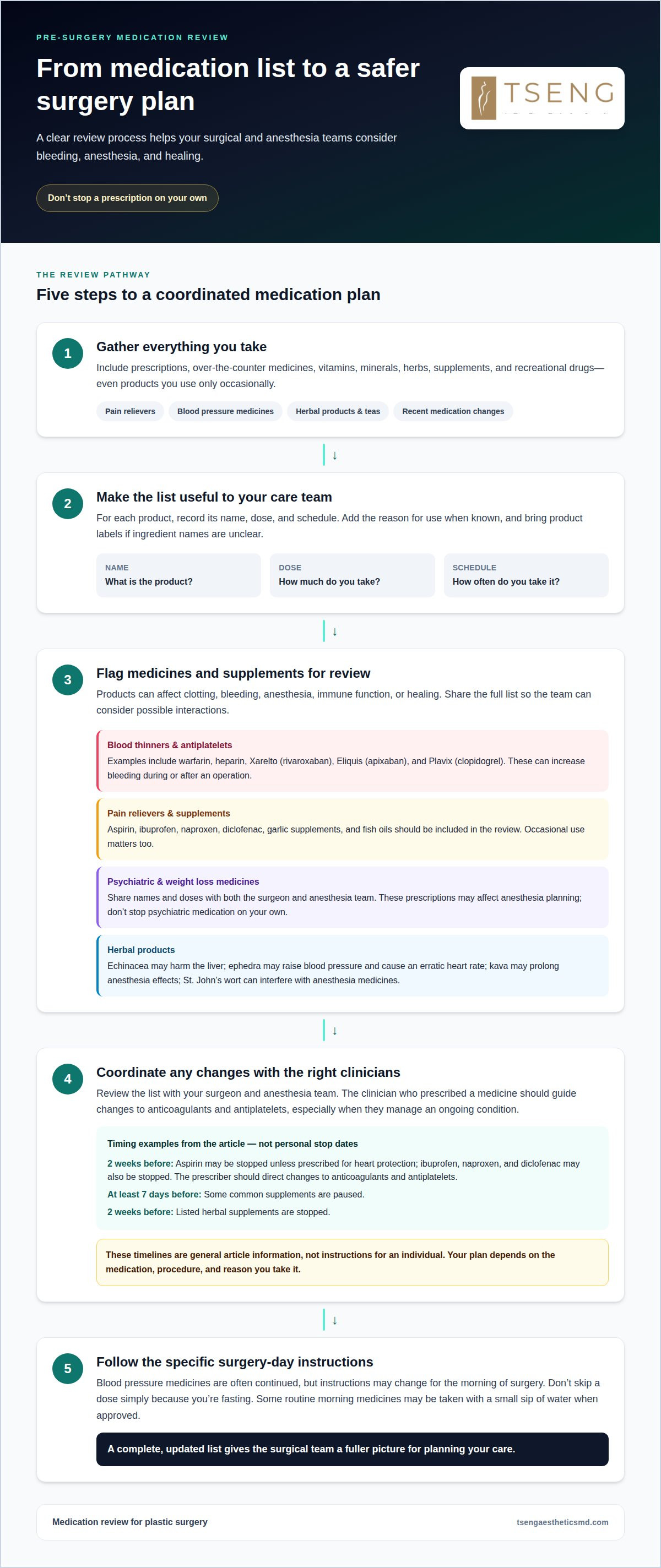
Blood thinners such as warfarin, heparin, Xarelto (rivaroxaban), and Eliquis (apixaban), as well as antiplatelets such as Plavix (clopidogrel), reduce clotting or platelet activity. This can increase bleeding during or after an operation. Aspirin may be stopped two weeks before surgery unless prescribed for heart protection. Ibuprofen, naproxen, and diclofenac may also be stopped two weeks before surgery. These are not personal stop dates: the prescribing physician should direct any changes to anticoagulants and antiplatelets.
Blood pressure medicines are handled differently. Most are often continued, though instructions may change for the morning of surgery. Share each medicine’s name and usual dose, then follow the specific day-of instructions. Don’t skip a dose simply because you’re fasting. Some routine morning medicines may be taken with a small sip of water when approved.
Interactions Between Blood Thinners and Other Medications
Interactions occur when another medicine affects clotting, bleeding, or the action of blood-thinning treatment. Over-the-counter pain medicines and supplements matter alongside prescriptions, since adding or stopping a product can affect the overall plan. Include occasional medicines, such as ibuprofen taken for a headache. If warfarin or another blood thinner is prescribed for a heart condition or stroke prevention, its prescriber should guide the timing. Some patients may need bridging therapy or an alternative medication.
Sharing a complete medication and supplement list with the surgical team
Give your surgeon and anesthesiologist a current list of prescriptions, over-the-counter medicines, vitamins, herbs, and other supplements. Common supplements are paused at least seven days before surgery; listed herbal supplements are stopped two weeks before surgery.
Keeping a Current Medication and Supplement List
A current list records everything you take, including occasional products and recent changes. It helps the surgical team assess possible effects on bleeding, anesthesia, immune function, and healing. Include each prescription, pain reliever, vitamin, mineral, herbal product, and recreational drug. Add the dose, schedule, and reason for use when known. Include blood pressure medicines, even if they seem unrelated to surgery.
Update the list when a clinician changes a prescription or you add a supplement. Bring it to your surgical discussion and share it with the anesthesia team. Patients sometimes overlook products used only when symptoms arise, such as an anti-inflammatory drug or acetaminophen. Listing these helps the team understand your medication use and can help prevent medication-related complications.
Supplements and Anesthesia or Bleeding
Supplements can affect clotting or interact with medicines used during surgery, so their ingredients matter. Garlic supplements, for example, may increase bleeding risk; fish oils should also be included on the list you disclose. Supplements to review include vitamins E, C, K, and B, multivitamins, and herbal products. Some common supplements are paused at least seven days before surgery, while listed herbal supplements are stopped two weeks before surgery.
Don’t assume a product is harmless because it’s sold over the counter. The FDA regulates dietary supplements less heavily than prescription and over-the-counter medicines. Share the product name and, when available, its ingredient label. The surgical team can consider the supplement alongside your other medicines and planned anesthesia.
Herbal Supplements and Medication Interactions
Herbal products can interact with medicines or affect the body’s response to anesthesia. Echinacea may harm the liver; ephedra may raise blood pressure and cause an erratic heart rate during surgery. Kava may prolong anesthesia effects, and St. John’s wort can interfere with anesthesia medicines and prolong their effects.
Tell the surgeon and anesthesiologist about every herbal remedy, including teas or products you take intermittently. Don’t start or stop a prescription without the prescribing clinician’s knowledge. A complete list helps the team assess interactions alongside blood pressure medicines, anti-inflammatory drugs, and other treatments. Bring product labels to the preoperative discussion if ingredient names aren’t clear.
Psychiatric and weight loss medications
Psychiatric and weight loss prescriptions need review because they can interact with anesthetic medicines. Share medication names and doses with both your surgeon and anesthesia team; don’t stop psychiatric prescriptions on your own.
That review includes medicines used for anxiety, depression, and other psychiatric conditions, as well as weight loss drugs. The concern is how each prescription may interact with anesthesia and affect the perioperative plan. Don’t change a medication that supports mental health or diabetes care without guidance from its prescriber and the surgical team; adult telehealth practices like New Age Psychiatry can help patients navigate psychiatric medication management alongside other medical care.
Weight loss medicines also require attention to their effects on digestion. Semaglutide mimics GLP-1, a hormone that helps the body produce more insulin and lower blood sugar. It can slow digestion, leaving the stomach full longer. During surgery, stomach contents may enter the lungs, a complication called aspiration that can cause pneumonia, lung damage, or death.
Some anesthesiologists require patients to stop weight loss medications two to three weeks before general anesthesia. Others may use longer fasting instructions or rapid sequence intubation for patients taking injectable weight loss medication. The anesthesia plan, medication, and aspiration concern shape those decisions. Some surgeons may also recommend pausing weight loss medication after surgery to support nutrition for wound healing.
Instructions can differ for general and local anesthesia because the anesthesia plan and aspiration considerations differ. Some anesthesiologists require a two-to-three-week pause before general anesthesia; instructions for local anesthesia depend on the medicines and any sedation planned.
Phentermine is another weight loss medication to disclose. Medication lists say products containing phentermine should be stopped 7 days before surgery, but prescription changes need prescriber guidance. Tell the team about other drugs too, including aspirin, NSAIDs, and herbal products. Their effects may influence the overall plan, even when they’re taken for a reason separate from weight loss or diabetes.
Medications requiring prescriber or surgeon guidance
Stopping medications before plastic surgery should be coordinated, not treated as a blanket rule. Decisions depend on the medication, procedure, anesthesia plan, and reason for treatment.
Decisions About Stopping Prescription Medications
There isn’t one stop list for every patient. Blood thinners, some pain medicines, weight loss drugs, and supplements may need review, while other prescriptions can continue if they won’t affect surgery. The timing for stopping medications before plastic surgery depends on the drug’s purpose and possible effects on bleeding or anesthesia. Never stop a prescription independently; involve its prescriber and your surgical team.
Share each medicine’s name, dose, and purpose. Include Xarelto, aspirin, vitamins, nonprescription products, and medicines you take only occasionally.
Blood Thinner Timing and Advice
Blood-thinner timing depends on the specific medication and why it was prescribed. Apixaban is usually stopped 2-3 days before surgery; a prescribing physician determines warfarin timing. The prescriber should direct changes to anticoagulants and antiplatelets. Some patients taking blood thinners for heart conditions or stroke prevention may need bridging therapy or an alternative medication, so an interruption needs a coordinated plan.
Tell the surgical team about any recent clot. Clot risk is higher when surgery takes place within 3 months of one.
Diabetes Medications, Insulin, and GLP-1 Drugs
Diabetes medication instructions depend on the specific drugs, dosages, fasting plan, and surgery-day schedule. Insulin glargine (Lantus) is reduced by 50% before surgery. Sliding-scale or quick-acting insulin isn’t taken on surgery day. SGLT2 inhibitors other than ertugliflozin are stopped 3 days before surgery; ertugliflozin is stopped 4 days before surgery.
Some diabetes medicines may be held or reduced, while pioglitazone may not need to be stopped. Develop a surgery-day plan with an endocrinologist or primary care physician. For guidance about planning plastic surgery, discuss your procedure and medication considerations with the surgical team.
Tseng Plastic Surgery
Tseng Plastic Surgery is a natural next step when you’re considering an aesthetic procedure and want to discuss how your medications fit into surgical planning. Bring your current medication and supplement list to conversations about a facelift, minimal invasive preservation face and neck lift, liposuction, or breast augmentation. Naming prescriptions, over-the-counter medicines, and supplements helps frame the discussion around your procedure and anesthesia plan.
Coordinate medication changes with the clinicians who prescribe them and your surgical team rather than making changes independently. If you’re exploring surgery, raise questions about timing, ongoing prescriptions, and prior medication instructions early in the planning process. Contact Tseng Plastic Surgery to discuss your procedure and medication questions with the team.
Make your next step a considered one
Planning for surgery is also an opportunity to align your health needs with your personal goals. Treat stopping medications before plastic surgery as a coordinated decision, not a last-minute checklist. A clear conversation about your procedure and the medicines you rely on can help you move forward with a plan that reflects your circumstances.
Keep your prescribing clinicians involved as your surgical plan takes shape, and raise medication questions early enough for the appropriate teams to discuss them. You don’t need to make these decisions alone. Talk through your goals and preparation with Tseng Plastic Surgery.
Contact Tseng Plastic Surgery to begin that conversation. With clear information and a coordinated plan, you can approach the next stage with greater confidence.
Frequently Asked Questions
How long before plastic surgery should aspirin, ibuprofen, or naproxen be stopped?
Aspirin, ibuprofen, and naproxen are commonly paused two weeks before surgery, but aspirin prescribed for heart protection is an important exception. Don’t stop prescribed aspirin based only on a general timeline. Tell the surgical team whether you use each medicine regularly or occasionally, why you take it, and when you last took it. If surgery is approaching and you’re unsure, contact the care team for instructions.
Should blood pressure medications be taken on the day of plastic surgery?
Most blood pressure medicines are often continued, but instructions for the morning of surgery can differ. The specific medicine and your surgical plan matter. During preoperative planning, write down each drug’s name, dose, and usual time, then confirm which doses to take that morning. Don’t change the schedule because you’re fasting without receiving instructions. If you miss a dose, tell the care team rather than doubling the next one.
What are the risks of stopping medications without a doctor's approval?
Stopping a prescription without guidance can disrupt treatment for the condition it manages, while continuing some medicines can complicate bleeding or anesthesia planning. For example, abruptly interrupting a blood thinner prescribed after a clot or for stroke prevention may leave an important health risk unmanaged. The decision requires balancing the medicine’s purpose against surgical considerations. Contact the prescribing clinician and surgical team before changing a dose or schedule.
What medication list and preoperative instructions should patients confirm with their surgeon and anesthesiologist?
Confirm that your list includes prescriptions, nonprescription medicines, vitamins, minerals, herbs, supplements, and recreational substances. Record each name, dose, frequency, and reason for use, including medicines taken only as needed. Ask which products to continue, pause, or adjust; when to take approved morning doses; and what fasting instructions apply. Mention recent medication changes, and bring packaging or ingredient labels when product names or contents are unclear.

