Non-invasive skin tightening procedures and what they cost
By Tseng Plastic Surgery
A firmer-looking complexion doesn’t always require surgery. Non-invasive skin tightening procedures use energy to stimulate collagen in deeper skin layers, offering a gradual approach to mild or moderate skin laxity. These treatments are best viewed as refinement rather than an immediate, dramatic change.
It’s understandable to want to know what treatment involves, how much recovery it may require, and whether the cost fits your goals. The right approach depends on the technology, treatment area, and degree of skin laxity. This article explains how non-invasive skin tightening procedures work, compares common options, and outlines what affects cost.
Key Takeaways
- Understand why people consider non-surgical tightening and how treatment goals relate to the degree of skin laxity.
- Learn how ultrasound energy stimulates collagen and why visible changes develop gradually.
- See how the treatment area, technology, and number of sessions can shape overall costs.
- Explore when a minimal invasive preservation face and neck lift may be a relevant next step for facial or neck concerns.
Treatment costs
Cost depends on the technology, treatment area, and number of sessions, so compare complete plans rather than single-session estimates. Before treatment, discuss medicines with the medical professional; afterward, follow the care instructions and use SPF 30+ daily.
Factors in Treatment Costs
Treatment cost reflects the technology used, the area treated, and whether the plan involves one visit or a series. A face treatment and a body treatment may require different approaches, so a quote should specify the areas and sessions it covers. This makes it easier to understand the total cost rather than focusing on a per-session figure alone.
These figures describe different treatment types, not a like-for-like comparison. The cost of a specific plan depends on the individual case; the estimate reflects the technology, treatment area, and number of sessions.
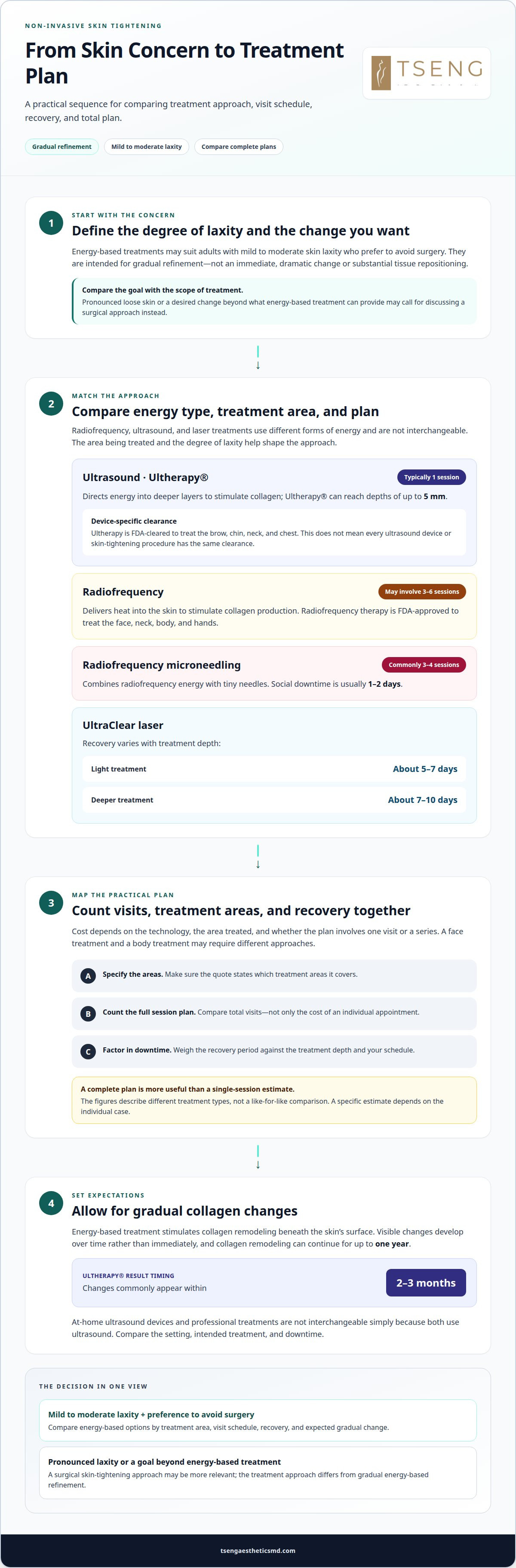
Session needs affect the overall budget. Radiofrequency skin tightening may involve 3-6 sessions, while ultrasound treatment is typically described as one session. Compare the total number of visits and the treatment area when considering options, not just the cost of an individual appointment.
Radiofrequency and Microneedling
Radiofrequency delivers heat into the skin to stimulate collagen production, while radiofrequency microneedling combines energy with tiny needles. The distinction matters because the treatment method can affect the plan, cost, and recovery. Radiofrequency microneedling commonly involves 3-4 sessions, and social downtime is usually 1-2 days. Ask how the proposed session series fits your goals and schedule.
Suitability depends on the degree of skin laxity, the area being treated, and your desired result. A medical professional can consider these factors alongside recovery and whether a collagen-focused treatment suits your needs. When comparing radiofrequency with ultrasound, for example, consider the treatment area, expected visit schedule, and downtime together, rather than choosing on cost alone.
What Are the Best Non-Invasive Skin Tightening Treatments?
No single treatment suits every concern. Ultrasound and laser options differ in target areas, session plans, and recovery. For mild to moderate skin laxity, compare these practical details with the degree of change you want.
Ultrasound skin tightening directs energy into deeper layers, where it stimulates collagen. Ultherapy® can reach depths of up to 5 mm and is typically performed in 1 session. Changes develop gradually, with results commonly appearing within 2 to 3 months. This timing matters for patients planning treatment around an event or assessing whether a gradual effect fits their goals.
Ultherapy is FDA-cleared to treat the brow, chin, neck, and chest. This clearance applies to that device and those treatment areas; it does not mean every ultrasound device or skin-tightening procedure has the same clearance. Consider the treatment area, degree of laxity, and expected recovery when comparing professional options.
UltraClear laser treatments offer another approach, with recovery varying by treatment depth. A light treatment has a recovery period of about 5 to 7 days, while a deeper treatment has a recovery period of about 7 to 10 days. That difference can help patients weigh the intended treatment against time available for downtime.
At-home ultrasound devices and professional treatments aren’t interchangeable simply because both use ultrasound. Compare the setting, intended treatment, and downtime instead of assuming a home device will produce the same outcome.
For facial or neck laxity that calls for surgery rather than gradual energy-based treatment, a minimally invasive preservation face and neck lift may be an option to consider. The key difference is the treatment approach, not simply the device or session schedule.
Why consider non-surgical skin tightening?
Energy-based treatments may suit adults with mild to moderate skin laxity who prefer to avoid surgery. They offer gradual refinement, but the technology and degree of change differ from surgical skin tightening.
How Non-Surgical Tightening Works
Non-surgical tightening uses controlled energy to stimulate collagen remodeling in deeper skin layers. As collagen changes, skin may look firmer over time rather than immediately pulled into a new position. Collagen production begins to decline by about 1% every year starting in the mid-20s, so treatments appeal to people seeking a measured response to early looseness.
Radiofrequency therapy is FDA-approved to treat the face, neck, body, and hands. Energy-based treatments target tissue beneath the skin’s surface, which helps explain why visible changes develop gradually. Collagen remodeling can continue for up to one year, so the result isn’t judged solely by how the skin looks immediately after treatment.
Available Tightening Technologies
Radiofrequency, ultrasound, and laser treatments use different forms of energy, but each aims to encourage collagen changes. The treatment area and degree of skin laxity help determine which approach may be relevant. Someone concerned about the neck, for example, may need a different plan from someone focused on loose body skin after weight loss.
These technologies differ in how they deliver energy and how treatment is structured. Consider those differences when weighing the desired refinement against appointments and recovery. A treatment plan should match the chosen technology to the concern, rather than treating every device as interchangeable.
Surgical and Non-Surgical Options
Non-surgical treatments suit a different goal from surgery: gradual improvement for mild to moderate laxity, rather than substantial tissue repositioning. Surgery may be more relevant when loose skin is pronounced or the desired change goes beyond what energy-based treatment can provide.
Choosing between these approaches means balancing the degree of laxity and desired result with your willingness to undergo surgery and recovery. A non-surgical facelift is another option for facial rejuvenation, while surgical skin tightening takes a distinct approach. Compare the scope of each treatment, not just whether it involves an operation.
How energy-based skin tightening works
Energy-based therapy delivers controlled energy beneath the skin’s surface to stimulate collagen production. Radiofrequency, ultrasound, and laser devices use different forms of energy, but each aims to encourage collagen remodeling. They address mild laxity and wrinkles through gradual tissue changes, rather than mechanically lifting sagging skin.
Collagen provides structural support in the skin, and remodeling is the body’s response to controlled energy. Treatment doesn’t instantly replace lost collagen or create an immediate lift. Instead, the intended change develops as the skin responds over time. If you’re considering radiofrequency, understand that it is designed to stimulate collagen, not directly reposition loose tissue.
Different technologies deliver energy in distinct ways. Radiofrequency therapy heats tissue, while ultrasound directs focused energy into deeper layers. Laser treatments use light-based energy; the choice depends on the concern and treatment area. These devices aren’t interchangeable: a plan for facial wrinkles may differ from one addressing laxity on the neck or body.
Timing is part of the process. Collagen remodeling can continue for up to one year, so judging a treatment only by the skin’s appearance immediately afterward misses its gradual response. The energy, depth, and treated area all shape the process. Match the technology to the concern, then assess changes over the period the treatment is intended to work.
For a discussion of which approach aligns with your goals, schedule a skin-tightening consultation and explore how energy-based therapy fits your concerns.
Tseng Plastic Surgery: Minimal invasive preservation face and neck lift
Tseng Plastic Surgery offers a minimal invasive preservation face and neck lift for people considering a surgical approach to facial or neck concerns. Energy-based treatments aim for gradual refinement, while a lift is a distinct option to discuss when your goals involve more noticeable changes than those treatments are intended to address.
A useful next step is to describe the areas you want to improve and the kind of change you hope to see. This helps frame whether a minimally invasive preservation face and neck lift or another approach, such as a facelift, better aligns with your priorities. The decision should reflect your goals, not just a comparison of treatment names.
Contact Tseng Plastic Surgery to discuss your face and neck rejuvenation goals.
Choose the approach that reflects your goals
Your next step is to clarify what you want to change and how much change feels right. Choosing among non-invasive skin tightening procedures starts with deciding whether gradual refinement matches your priorities or whether you want to discuss surgery.
The value of non-invasive skin tightening procedures depends on how well an approach fits your concerns. Tseng Plastic Surgery offers facelifts, minimally invasive preservation face and neck lifts, and liposuction, each suited to different goals.
Discuss how non-invasive skin tightening procedures compare with your preferred approach by contacting Tseng Plastic Surgery. A considered conversation can help you move forward with greater clarity and confidence.
Frequently Asked Questions
What Are the Types of Skin Tightening Procedures?
Common options include radiofrequency, ultrasound, laser, and radiofrequency microneedling. They deliver energy in different ways, and microneedling also uses tiny needles. Thread lifts and surgical lifts are other approaches, but they differ from non-invasive energy treatments. For example, someone seeking gradual skin refinement may explore energy-based options, while more pronounced looseness may prompt a discussion of surgery.
Does it work?
Skin-tightening treatments can improve the appearance of mild to moderate laxity by encouraging collagen remodeling. They’re designed for gradual refinement, not the degree of tissue repositioning that surgery can provide. The outcome depends on the treatment area, technology, and starting degree of laxity. To assess whether a treatment fits, match the expected scale of change to your specific concern.
Does loose skin ever tighten back up?
Loose skin may look firmer over time, but it doesn’t always return to its previous appearance. Skin quality, degree of laxity, and the cause, such as weight loss, all affect what improvement is realistic. Energy-based treatment aims for gradual collagen-related change; pronounced excess skin may call for a discussion of surgery. Consider whether your priority is modest refinement or a more substantial change.
How long do results typically last?
Results from non-surgical skin tightening can last 1 to 3 years with maintenance and appropriate skin care. The duration isn’t identical for every technology or treatment area. For instance, the plan for facial skin may differ from one addressing the neck or body. Maintenance treatments and consistent care can support results, while ongoing aging continues to affect skin firmness.
How long does it take to see visible results?
Visible changes often develop over 2 to 6 months, as collagen remodeling takes time. Ultrasound results may appear within 2 to 3 months, while other collagen-stimulating approaches can take longer. This gradual timeline matters if you’re planning around a specific occasion: treatment shortly beforehand may not allow enough time for the intended change to emerge.
How many sessions will I need for optimal results?
The session count depends on the technology and treatment goal. Radiofrequency skin tightening is commonly planned across 3-6 sessions, while radiofrequency microneedling often involves 3-4. Ultrasound treatment is typically described as a single session, and laser or IPL tightening may involve 3 to 5 sessions. These differences make the treatment type central to planning time and follow-up.

