Neck Lift Cost: What Affects the Price and Insurance Coverage
By Tseng Plastic Surgery
A neck lift’s cost depends on the surgical plan and related fees, including the surgeon’s fee, anesthesia, and the operating facility. If you’re asking how much a neck lift costs, compare the complete treatment plan rather than a single headline figure. Most health insurance plans don’t cover neck lift surgery because it’s generally considered cosmetic.
It’s also natural to wonder whether treating the neck alone is the right approach. If your concerns extend to the lower face, combining a neck lift with a facelift may create a more balanced result, though the treatment plan and total cost will differ from surgery focused only on the neck.
This guide explains the factors that shape the total expense, what insurance coverage usually means for an elective procedure, and how combining a neck lift with a facelift can affect the treatment plan. Understanding these points helps you assess cost in the context of your goals and the areas you want to address.
Key Takeaways
- Compare the full surgical estimate, including the surgeon’s fee, anesthesia, and facility costs, rather than focusing on one line item.
- Understand how the procedure’s scope, location, and surgical setting can affect the total cost.
- Neck lifts are generally considered cosmetic, so health insurance typically doesn’t cover them; financing arrangements vary.
- When concerns involve both the neck and lower face, combining procedures may shape a more comprehensive treatment plan and its overall cost.
How much does a neck lift cost?
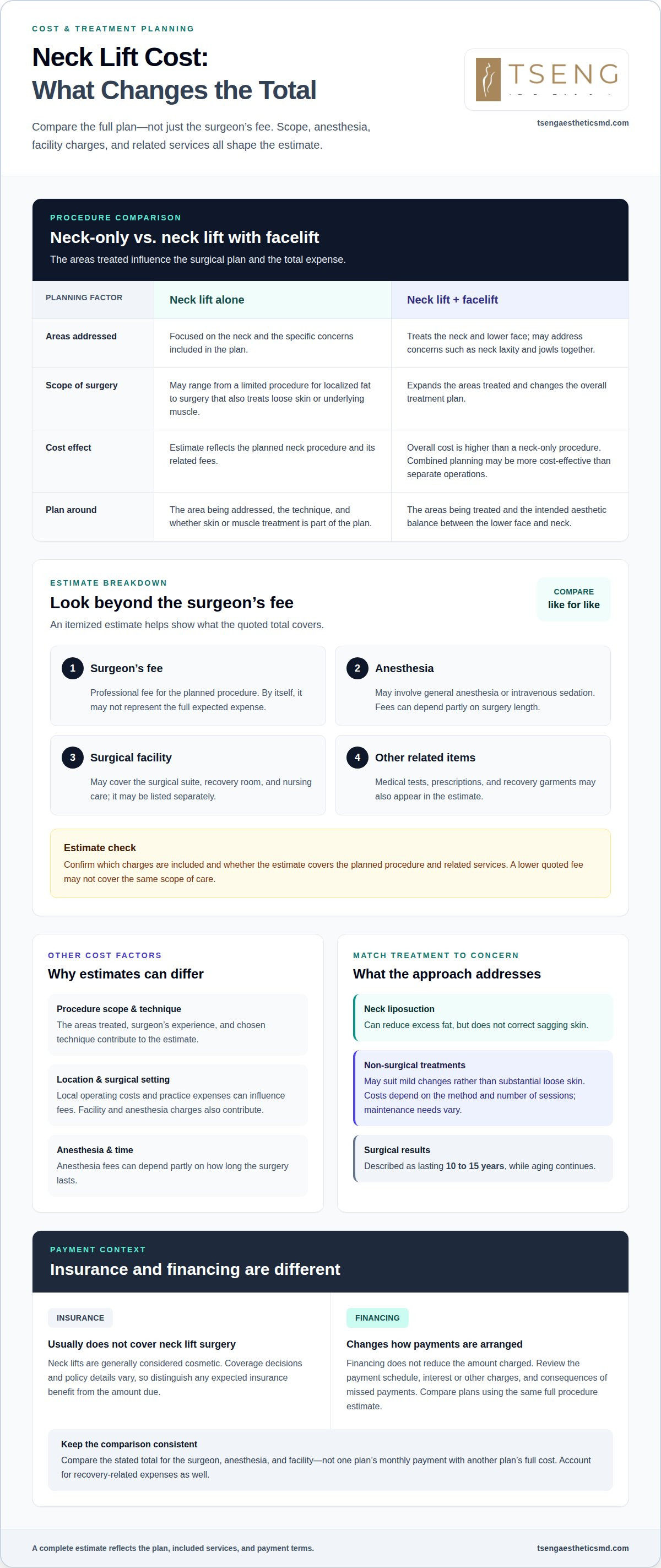
The total depends on the surgical plan, anesthesia, and facility. A quoted surgeon’s fee may not include the operating room, anesthesia, medical tests, prescriptions, or recovery garments, so compare itemized estimates rather than headline figures. The charges included depend on the procedure and care setting.
The scope of surgery matters. A limited procedure addressing localized fat differs from surgery that also treats loose skin or underlying muscle. Neck liposuction can reduce excess fat, but it doesn’t correct sagging skin. The treatment plan reflects the area being addressed and the technique involved. Combining a neck lift with a facelift also changes the scope and total expense because more areas are treated.
Anesthesia and facility charges are separate parts of the overall cost. Neck lift surgery may use general anesthesia or intravenous sedation, and anesthesia fees can depend partly on the length of surgery. Facility fees may cover the surgical suite, recovery room, and nursing care. Ask for an estimate that separates these charges from the surgeon’s fee so you can see the full expected cost.
Surgical results are described as lasting 10 to 15 years, though aging continues. This longevity can help frame the decision, but it doesn’t make surgery directly comparable with recurring non-surgical treatment. Non-surgical neck rejuvenation may include injectables or other treatments, each with its own pricing structure and maintenance needs. A lower initial expense may not represent the total cost over repeated sessions.
If your concern doesn’t call for surgery, a non-surgical approach may better suit your goals, particularly for mild changes rather than substantial loose skin. Costs depend on the method and number of sessions. Financing, when available, changes how payments are arranged, not the procedure’s total cost. Compare the treatment plan, included fees, and expected maintenance together.
Factors that affect neck lift costs
A neck lift estimate reflects the surgeon’s fee, the scope of the procedure, and the surgical setting. Reviewing these elements together helps explain why plans for similar concerns can have different totals.
What Procedure Estimates May Include
A procedure estimate itemizes the professional and care-related charges associated with surgery. This matters because the surgeon’s fee alone may not represent the full expected expense. An estimate may include medical tests, anesthesia, the surgical facility, prescribed medication, and post-surgery garments. Review how each item is listed and whether the total covers the planned procedure and related services. For example, the facility charge may be separate from the surgeon’s fee.
Practice Location and Costs
Practice location can influence a surgeon’s fee and overall estimate. Local operating costs and practice expenses contribute to price differences. When comparing estimates from different areas, treat location as context, not a substitute for comparing the treatment plan and included services. A lower quoted fee may not cover the same scope of care.
The procedure’s scope also shapes the estimate. A plan addressing excess skin and changes along the jawline may involve different surgical work than one focused on a narrower area. The surgeon’s experience and chosen technique are additional cost factors. General anesthesia and operating-room facilities also contribute to the total, while anesthesia fees can depend on the length of surgery.
Combining a neck lift with a facelift or lower facelift expands the areas addressed, increasing the overall procedure cost. For someone concerned about both neck laxity and jowls, treating the lower face and neck together may create a more cohesive plan. The combined expense may be more cost-effective overall than separate operations, though it remains higher than a neck-only procedure. Combined procedure planning should reflect the areas being treated and the intended aesthetic balance.
Does Health Insurance Cover Neck Lifts?
Most health insurance plans don’t cover neck lift surgery or its complications. The procedure is generally considered cosmetic, as it is intended to refine appearance rather than address a medical need. If you’re considering elective cosmetic surgery, plan to pay for the procedure yourself rather than assuming insurance will contribute. Coverage decisions and policy details vary, so distinguish any expected insurance benefit from the amount due for surgery.
Insurance and financing serve different purposes. Insurance pays eligible medical expenses under a plan, while patient financing is a payment arrangement for expenses the patient owes. Since neck lift surgery is usually elective, financing may be relevant even when insurance doesn’t cover the procedure. Financing doesn’t change the purpose of surgery or reduce the amount charged; it changes how you pay.
Many plastic surgeons offer patient financing plans for neck lift surgery. These arrangements can divide a surgical expense into scheduled payments, but the terms determine the payment amount and total repayment. Before choosing an option, review the payment schedule, interest or other charges, and consequences of missed payments. These details show whether the arrangement fits your budget during recovery, when time away from work or other personal costs may also affect finances.
Compare financing options using the same procedure estimate. For example, compare the stated total for the surgeon, anesthesia, and facility, not one plan’s monthly payment with another plan’s full cost. Confirm which charges are included, then consider how the payments fit alongside recovery-related expenses. A lower monthly payment doesn’t necessarily mean a lower total amount owed.
Keep insurance and payment questions separate. First establish whether your health plan covers any part of the planned surgery or related complications. Then assess the remaining expense and any financing terms. This distinction helps you understand what insurance may pay, what remains your responsibility, and how a payment plan affects the overall cost of pursuing a cosmetic change.
Combining a neck lift with a facelift
A neck lift and facelift can address related signs of aging across the lower face and neck. A neck-only procedure focuses below the jaw, while adding a facelift extends treatment to facial tissues. If you’re concerned about jowls and neck laxity together, a combined plan can create a more cohesive transition between these areas.
The reason to combine procedures is aesthetic continuity, not simply having two operations at once. For example, tightening the neck while leaving pronounced jowls untreated may not address the full concern. A facelift can treat the lower face as part of the same plan, while the neck procedure addresses the contour below the jaw. The appropriate scope depends on the changes you want to address.
Combining procedures raises the overall cost because the surgical plan covers more areas and may involve additional operating time. However, it may cost less overall than undergoing separate procedures because some associated costs can be shared. Compare estimates for the combined plan with those for the procedures performed separately, and review which surgeon, anesthesia, and facility charges each estimate includes.
Planning also means considering recovery as part of the decision. A combined operation brings the recovery period for both procedures into one surgical episode, rather than scheduling them separately. The surgeon should explain how the proposed medical plan addresses facial and neck concerns together. A board-certified plastic surgeon’s experience and your comfort with that surgeon matter alongside cost; credentials alone don’t establish whether a particular approach suits your goals.
The practical takeaway is to assess the face and neck as a connected area, then compare the total plan rather than isolated procedure fees. If both regions concern you, discuss a combined facelift plan and how its scope aligns with your desired appearance.
Tseng Plastic Surgery: Facelift
Tseng Plastic Surgery offers facelift and minimal invasive preservation face and neck lift options for people considering changes across the lower face and neck. If your concerns include both jowls and neck laxity, discussing these areas together can help clarify which approach aligns with your aesthetic goals.
A focused conversation about your priorities can help distinguish whether you want to address the face, the neck, or both. The right scope depends on the changes you want to address and the surgical plan designed around them.
For a personalized discussion of facelift options, contact Tseng Plastic Surgery or visit tsengaestheticsmd.com.
Make Your Next Step Personal
Knowing how much a neck lift costs is only one part of deciding whether surgery fits your goals. Consider what you want to change, how you feel about recovery, and whether your concerns involve the neck alone or extend to the lower face. Discussing these priorities can make the treatment plan more meaningful than a price comparison alone.
Tseng Plastic Surgery offers facelift, minimal invasive preservation face and neck lift, and liposuction procedures. Discussing the areas you want to address can help clarify which option aligns with your aesthetic goals and whether a broader approach makes sense for you.
Contact Tseng Plastic Surgery to discuss your goals and take an informed next step toward a plan that feels right for you.
Frequently Asked Questions
How do I get rid of turkey neck?
Treatment depends on whether your concern is loose skin, excess fat, or both. A neck lift can address sagging skin, while neck liposuction removes fat but doesn’t correct loose skin. Non-surgical treatments may suit some appearance goals, but they don’t take the same approach as surgery. Identifying your main concern helps narrow the options to discuss with a qualified plastic surgeon.
What Are My Financing Options?
Patient financing may be available through a surgeon or an outside lender. Compare the full repayment amount, interest, fees, payment schedule, and consequences of missed payments, not just the monthly installment. For example, a lower monthly payment may extend repayment and increase the total owed. Review the written agreement before deciding how to fund elective surgery.
What Are the Potential “Hidden” Costs?
Costs can be overlooked when an estimate emphasizes only the surgeon’s fee. Anesthesia, facility charges, medical tests, prescriptions, and post-surgery garments may appear as separate items. Check whether the quoted total includes both the operating facility and anesthesia or lists them separately. An itemized estimate helps distinguish planned surgical expenses from personal costs, such as transportation or time away from work.
What Is the Procedure Like?
A neck lift is surgery performed with general anesthesia or intravenous sedation, often alongside local anesthetic. The procedure is commonly described as involving three incisions, though the exact approach depends on the surgical plan. After surgery, recovery guidance may include resting, keeping your head elevated, and avoiding bending or lifting during the initial period. Your care instructions outline the appropriate recovery plan.
What’s Typically Included in the Price?
A surgical estimate may combine the surgeon’s professional fee with charges for the operation and related care. Review the document for separate line items, then clarify which planned services are included in the stated total. For example, a quote may list the surgeon’s fee while showing anesthesia and facility costs elsewhere. Understanding the estimate’s structure makes it easier to see the expected expense.
Who Is a Good Candidate?
Candidacy depends on your health, skin elasticity, the neck changes you want addressed, and your expectations for surgery. Age alone doesn’t determine whether surgery is suitable; people in their seventies or eighties may also be considered based on health and other factors. For example, someone with excess fat and elastic skin may have different treatment considerations from someone primarily concerned about loose skin.

