Maintaining Facelift Results: A Practical Guide to Long-Term Care
By Tseng Plastic Surgery
A facelift can refresh your appearance, but it can’t pause the natural process of aging. If you’re wondering what you can do to help your results last, the answer isn’t a complicated routine or a single treatment. Maintaining facelift results is about consistent, thoughtful care that supports your skin and overall health over time.
It’s understandable to wonder whether everyday habits are enough or how aging may change the improvement you’ve achieved. No routine can stop those changes, but sensible skin care, healthy habits, and appropriate follow-up can help you care for your results. The right approach depends on your procedure, healing, and individual concerns, so your surgeon’s guidance is more useful than a one-size-fits-all checklist.
This guide covers daily habits that support skin health, when to ask your surgeon about a new concern, and how to think about skin care or nonsurgical treatments as your needs evolve. It also offers a realistic perspective on how facelift results change with time, so you can make informed choices without expecting surgery to stop aging.
Key Takeaways
- Understand what a facelift can improve, and why facial changes continue naturally over time.
- Build a simple daily routine that supports skin health, including thoughtful sun protection.
- Consider skin treatments or injectables only for concerns they’re suited to address; they don’t replicate a facelift.
- For maintaining facelift results, follow your surgeon’s recovery instructions and attend recommended follow-up visits.
- Prepare questions about your goals, skin care, and possible future treatments so guidance can be tailored to you.
What Maintaining Facelift Results Really Means Over Time
Maintaining facelift results means supporting facial skin health and caring for the surgical improvement while allowing for natural changes over time. It doesn’t mean keeping your face unchanged or following a routine that prevents aging. A thoughtful long-term approach focuses on healthy habits, appropriate follow-up, and guidance tailored to your procedure and concerns.
What a facelift can and cannot do
A facelift is designed to improve selected signs of facial aging by addressing and repositioning underlying tissues and, when appropriate, adjusting skin. The details vary by technique and individual needs. For a general overview of the procedure, see Rhytidectomy (facelift).
The improvement can create a more refined, balanced appearance, but a facelift doesn’t address every aspect of facial aging. Changes in skin texture, pigmentation, or fine lines may remain. Surgery also doesn’t prevent future changes related to aging, sun exposure, or other personal factors. View it as an improvement, not a promise of a permanent appearance or a specific duration.
Why results change gradually
Facial appearance can continue to evolve after healing is complete. Facelift surgery does not stop natural aging. Skin quality, genetics, age, lifestyle, and sun exposure can all influence how the face looks over time, and their effects vary from person to person.
That gradual evolution doesn’t automatically mean the surgical improvement has disappeared. The face continues to change around the result, much as it would have without surgery. Your starting features, the tissues addressed, and individual healing also shape the outcome, so there is no single timeline or maintenance plan for everyone.
In practice, maintaining facelift results is less about chasing an unchanged reflection and more about caring for your skin and understanding what has changed. If a concern develops, your operating surgeon can help distinguish normal evolution from an issue that deserves assessment. Don’t assume every new line or shift calls for treatment. Personalized guidance helps set realistic expectations while leaving room to discuss options that fit your goals.
A Daily Routine That Supports Facelift Results
Everyday care can support skin health, but it can’t replace surgery or individualized medical advice. After recovery, a simple routine you can follow consistently is often more practical than a long list of products or treatments. No daily habit can freeze the surgical result in place, but thoughtful care helps you look after your skin as your face continues to change.
Sun protection and skin care after recovery
Consistent sun protection helps limit avoidable UV-related skin damage and supports skin health over time. Build protection into daily life with shade, protective clothing, and sunscreen used according to its label. Reapply as directed, particularly when spending extended time outdoors. These measures support the skin; they don’t guarantee that facelift results will last longer or prevent every visible effect of aging.
Keep the rest of your routine gentle and manageable. Cleanse without scrubbing, and use products according to their instructions. Don’t assume that a product you used before your procedure is appropriate during healing. Ask your surgeon or clinician when you can resume your usual products and whether a new product is suitable. Your surgical team’s instructions take priority over general skin-care advice.
The American Society of Plastic Surgeons offers further guidance on habits that may prolong your facelift results. Use general recommendations as a starting point, not as a personalized postoperative plan.
Habits that support overall skin health
Think of lifestyle habits as part of your general well-being, not as a way to preserve a surgical result by themselves. Regular sleep, balanced meals, and physical activity can support overall health, while avoiding unnecessary sun exposure can help reduce one source of skin damage. Don’t assume a particular food, supplement, or device will extend facelift results without individualized clinical advice.
If you smoke, speak with a healthcare professional about cessation and how it relates to your health and care. Don’t start or stop a medication or supplement based on general maintenance advice. If a new routine causes irritation or raises questions during recovery, check with your surgical team rather than trying to manage the issue on your own.
For maintaining facelift results, consistency matters more than complexity. Choose sustainable habits, follow product and clinician instructions, and discuss your specific concerns with a qualified professional. If you’d like guidance shaped around your procedure and goals, you can discuss your facelift care questions with the practice.
Do Skin Treatments or Injectables Help Maintain Facelift Results?
They may be appropriate for selected concerns, but no additional treatment is automatically necessary after a facelift. Skin care, injectables, and surgical review serve different purposes. A facelift addresses specific tissues; it doesn’t stop aging or treat every change in skin quality, fine lines, or facial volume. Nonsurgical options may address certain concerns, but they don’t replicate the structural changes of surgery.
Use this comparison as a starting point for a conversation, not as a treatment plan. Any recommendation depends on assessment by a qualified clinician, including consideration of your recovery, goals, and individual health.
| Option | Potential purpose | What to keep in mind |
|---|---|---|
| Routine skin care | Support everyday skin health | It can’t reposition facial tissues or replace surgical care. Follow product directions and your clinician’s guidance. |
| Injectables or other nonsurgical options | Address selected concerns that a clinician considers suitable | Effects, limitations, risks, and timing vary. These treatments don’t produce the same structural change as a facelift. |
| Surgical review | Discuss changes in appearance and whether a surgical option fits your goals | A conversation is an assessment, not an automatic recommendation for another procedure. |
When nonsurgical treatments may be discussed
If a particular concern remains or develops after recovery, a clinician can help determine whether an injectable or another nonsurgical option may be relevant. Candidacy, timing, possible risks, and expected effects need individual discussion, especially after surgery. There’s no universal schedule, and a treatment that suits one person may not suit another. Before deciding, ask what concern an option is intended to address and what it cannot change.
Maintaining facelift results doesn’t require adding procedures. A measured approach can help you avoid pursuing a treatment that doesn’t match your concern or expectations.
When to revisit surgical options
Consider a surgical review if you want to discuss a noticeable change or reassess your goals. Whether surgery is suitable depends on factors such as anatomy, health, previous procedures, and personal preferences. A consultation can clarify those considerations and available options; it doesn’t commit you to treatment. For an overview of procedure fundamentals, read this modern facelift guide.
A Step-by-Step Plan for Caring for Facelift Results
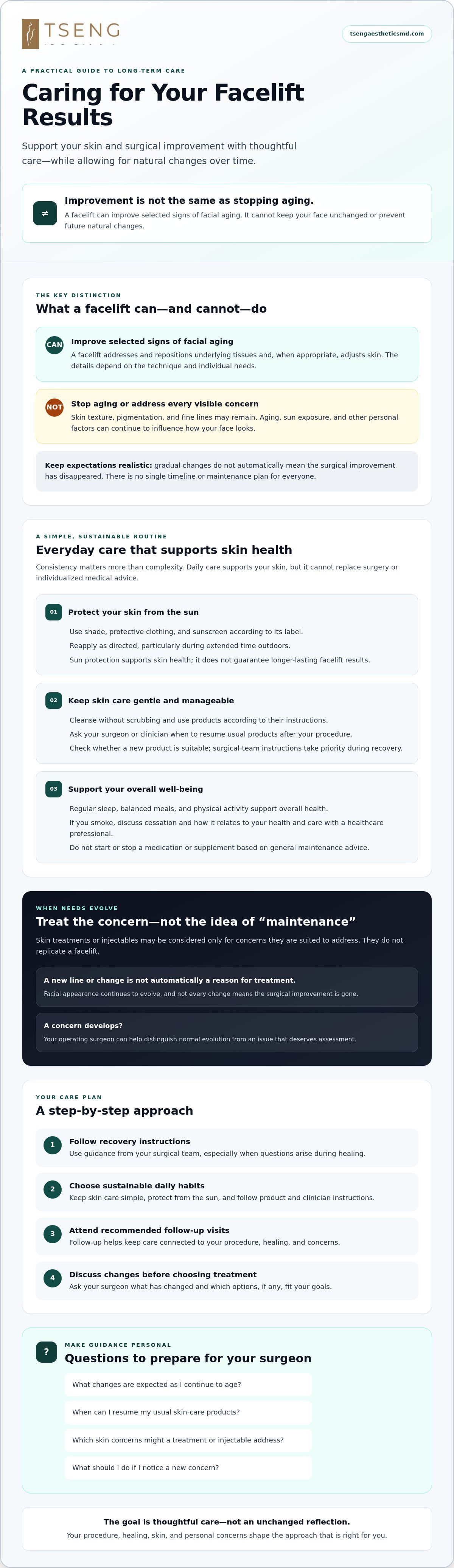
A clear sequence can make long-term care feel manageable: prioritize healing, stay connected with your surgical team, then settle into routine skin and health habits once your surgeon says they’re appropriate. Your operating surgeon’s recovery instructions take precedence over general advice in this article. They’re based on your procedure and should guide your care.
- Follow your postoperative instructions. Use the care plan provided by your surgical team, and contact them if an instruction is unclear. Don’t add products, treatments, or activities based on general advice without checking first.
- Attend recommended follow-up appointments. These visits allow your surgeon to assess your healing and respond to questions. Keep track of concerns or changes so you can describe them clearly at your appointment.
- Return to routine care with guidance. After your surgeon confirms that it’s appropriate, maintain simple skin-care and sun-protection habits. Ask before restarting previous products or considering injectables or other treatments.
Follow-up care and changes worth discussing
Bring questions about healing, appearance, or future care to the follow-ups your surgeon recommends. It can help to note when a change began, whether it has continued, and what you’d like clarified. If you notice a new or concerning symptom, contact your surgical team for direction rather than trying to diagnose or treat it yourself. Seek urgent medical care for symptoms that feel urgent or severe.
Aftercare is different from long-term maintenance
Immediate postoperative care is specific to recovery; long-term maintenance begins only when your clinician advises that routine habits or treatments can resume. Don’t restart skin products or schedule a treatment without appropriate guidance. For questions about healing and what to expect during recovery, see this facelift recovery guide.
Over time, maintaining facelift results is less about following a rigid checklist and more about staying attentive to your skin, keeping recommended appointments, and seeking advice when something changes. Individualized follow-up is more useful than assuming the same routine suits every patient. If you have questions about care after your procedure, discuss your facelift care with the practice.
Personalized Guidance for Maintaining Facelift Results
Consistent care can support skin health and help you make informed choices about your appearance, but it can’t stop individual aging. The most useful plan for maintaining facelift results isn’t a fixed checklist; it reflects your procedure, health, priorities, and how your face changes over time. Dr. Mark H. Tseng brings more than 20 years of experience in plastic surgery to personalized facial rejuvenation care, with an emphasis on natural-looking, balanced results. That experience can inform a discussion, but no particular treatment or outcome can be assumed in advance.
Questions to bring to a facelift consultation
A focused conversation helps you understand what applies to your circumstances. Consider writing down your questions before an appointment, including:
- Which daily habits and follow-up recommendations are appropriate for my procedure and health?
- What changes in my appearance may occur over time, and which changes should I bring back for reassessment?
- Would any nonsurgical option address a concern I have, and what are its risks, limitations, and likely effects?
- How should my personal goals and preferences guide decisions about future care?
These questions can help you distinguish general maintenance advice from guidance specific to your needs. If you’re unsure whether a change is part of gradual aging or deserves attention, describe what you’ve noticed and ask the clinician to assess it rather than choosing a treatment on your own.
Explore individualized facial rejuvenation options
Possible next steps depend on clinical evaluation, anatomy, goals, health, and previous procedures. Some people may benefit from discussing nonsurgical options; others may simply want advice about skin care or follow-up. Additional surgery or nonsurgical treatment isn’t necessary for everyone, and a consultation is an opportunity to explore suitable choices without assuming a particular recommendation.
Thoughtful care pairs realistic expectations with decisions that feel right for you. If you’d like to discuss your concerns and explore personalized facial rejuvenation options, explore facial rejuvenation care.
Make Long-Term Facelift Care Your Own
Thoughtful care can support skin health, but it can’t stop natural aging or preserve a completely unchanged appearance. The most useful approach to maintaining facelift results combines consistent, manageable habits with your surgeon’s postoperative instructions and recommended follow-up. Skin care and nonsurgical treatments may suit particular concerns, but they aren’t essential for everyone and can’t reproduce a facelift.
Your needs and goals are personal, so a maintenance plan should be as well. Dr. Mark H. Tseng has been in practice for over 20 years, and Tseng Plastic Surgery offers surgical and nonsurgical facial rejuvenation options. A conversation with the practice can help you discuss changes you’ve noticed, ask questions about skin care and follow-up, and understand which options may be appropriate, without assuming a particular treatment is needed.
Discuss your facial rejuvenation goals with Tseng Plastic Surgery. With realistic expectations and individualized guidance, you can make considered choices about your care over time.
Frequently Asked Questions
How can I maintain my facelift results?
Support your facelift results with consistent skin care, sun protection, and follow-up recommended by your surgeon. Once your surgeon says it’s appropriate, keep your routine gentle and manageable, and use products according to their instructions. Healthy habits support overall well-being, but they can’t stop natural aging or guarantee a particular appearance. If you’re considering injectables or another treatment, discuss your goals and medical history with a qualified clinician first.
How long do facelift results last?
There’s no single timeframe that applies to everyone. A facelift creates a surgical improvement, but facial appearance continues to change as you age. Skin quality, genetics, age, lifestyle, sun exposure, and individual factors can influence how those changes appear. Rather than expecting a permanently unchanged face, think of the procedure as an improvement that evolves over time. Your surgeon can discuss what may be realistic based on your procedure and circumstances.
Can sun exposure affect facelift results?
Sun exposure can contribute to UV-related skin damage, which may affect skin quality and appearance over time. Sun protection, such as seeking shade, wearing protective clothing, and using sunscreen as directed, supports skin health, though it can’t stop aging or guarantee that surgical results will last longer. During recovery, ask your surgeon when sun exposure and sunscreen are appropriate, and follow their specific instructions for your healing and care.
Do I need injectables after a facelift?
No, injectables aren’t necessary for everyone after a facelift. A facelift addresses selected tissues, while injectables may be considered for particular concerns a clinician determines are suitable. They don’t replicate the structural changes of surgery, and their potential effects, risks, and timing depend on individual assessment. If you’re interested, discuss your goals, health, recovery, and preferences with a qualified clinician before deciding. You can also choose not to pursue additional treatments.
What should I do if my face changes after a facelift?
Contact your surgeon or surgical team if you’re concerned about a change in your appearance, especially if it’s new or troubling. Note when you first noticed it and any questions you’d like answered, then ask for guidance rather than self-diagnosing or starting treatment. Facial appearance can evolve over time, but a clinician can assess your particular concern. For symptoms that feel urgent or severe, seek urgent medical care.
When can I restart my regular skin-care routine after a facelift?
Ask your operating surgeon when to resume each product, since the appropriate timing depends on your procedure and recovery. Don’t assume products you used before surgery are suitable during healing, and avoid restarting treatments or adding new products without clinician guidance. Follow the postoperative instructions you were given, and check with your surgical team if a product causes concern or you’re unsure whether it’s appropriate. Their advice takes precedence over general guidance.

