Lymphatic Massage After Liposuction: Benefits, Timing, and Safety
By Tseng Plastic Surgery
Could a massage intended to support healing be too much, too soon? If you’re considering lymphatic massage after liposuction, conflicting advice about timing and technique can make recovery feel less certain. Massage isn’t a universal requirement, and the right approach depends on your procedure, healing, and surgeon’s instructions.
Lymphatic massage is generally intended to support fluid movement and ease swelling, but evidence that it is necessary or improves final contour remains limited. It’s an adjunct to recovery, not a replacement for follow-up with your surgeon or a guarantee of a particular result. More pressure or more frequent sessions aren’t automatically better.
This guide explains what postoperative lymphatic massage may and may not do, how Manual Lymphatic Drainage differs from general massage, and why recommendations about timing and frequency vary. You’ll also find questions to discuss with your surgeon and symptoms that call for prompt medical attention. At Tseng Plastic Surgery, liposuction and body-contouring care is planned around each patient’s needs. Dr. Mark H. Tseng has more than 20 years of practice experience.
Key Takeaways
- Lymphatic massage after liposuction uses gentle techniques that differ from deep-tissue massage. Pressure and technique matter during healing.
- Understand how the proposed role of Manual Lymphatic Drainage differs from outcomes that have been clearly demonstrated after liposuction.
- Massage is one possible recovery approach, not the only path. Weigh its potential goals and uncertainties against following your surgeon’s usual plan.
- Before starting, follow your discharge instructions, discuss massage with your surgeon, and proceed only with their clearance.
- Your procedure and healing are individual, so your surgeon’s assessment should guide whether massage belongs in your recovery plan.
Lymphatic Massage After Liposuction: What It Is and What It May Help With
After liposuction, swelling can make the treated area feel tender, firm, or temporarily uneven. That can be unsettling when you’re focused on healing, but swelling is a common part of the body’s response to surgery. Lymphatic massage is sometimes discussed as one way to support recovery. It isn’t automatically necessary, and whether it belongs in your plan depends on your surgeon’s assessment and instructions.
How lymphatic drainage relates to swelling after liposuction
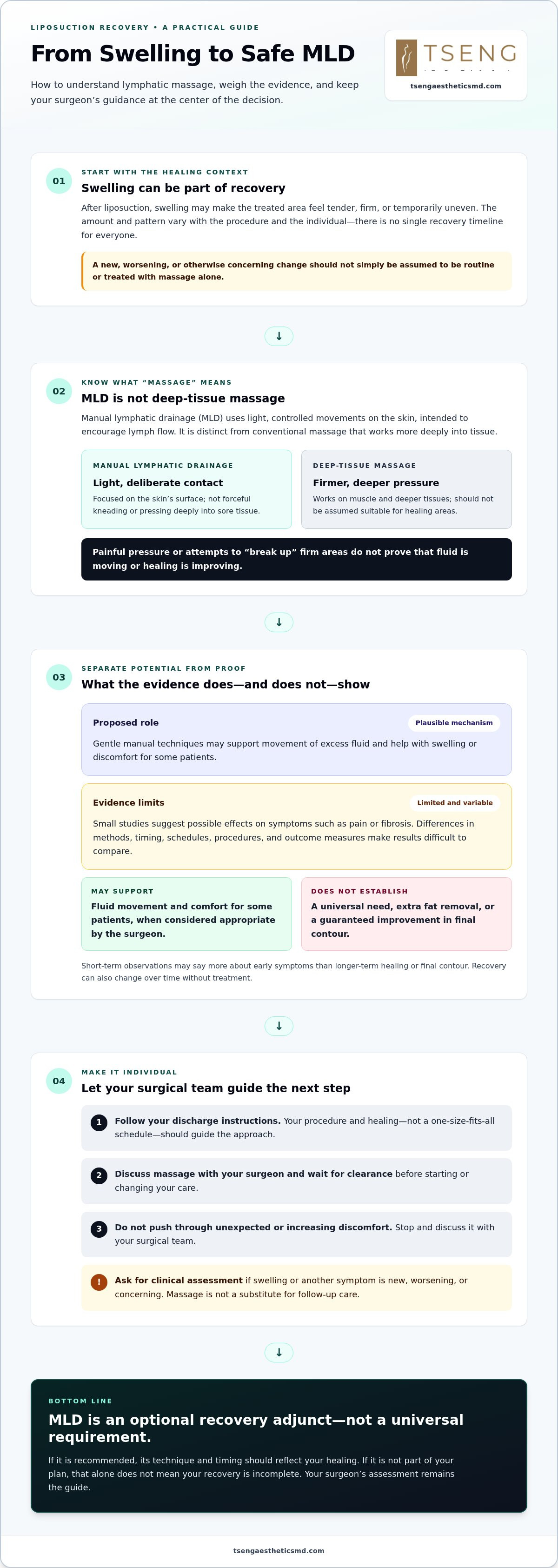
The lymphatic system is a network of vessels and tissues that collects excess fluid from around the body’s cells and returns it to the bloodstream. Manual lymphatic drainage (MLD) uses light, controlled movements on the skin intended to encourage lymph flow. It’s different from deep-tissue massage: the pressure is gentle, not forceful kneading or an attempt to work deeply into sore tissue. The overview of Manual lymphatic drainage describes this as a distinct technique rather than conventional massage.
After liposuction, fluid and tissue changes contribute to swelling as the body heals. The amount and pattern can vary with the procedure and the individual, so there isn’t one recovery timeline for everyone. Some swelling may be expected, but a new, worsening, or otherwise concerning change shouldn’t be assumed to be routine or treated with massage alone. Your surgical team can assess whether a symptom fits your recovery or needs clinical attention.
What lymphatic massage can and cannot do
The proposed rationale for lymphatic massage after liposuction is that gentle manual techniques may support the movement of excess fluid and help with swelling or discomfort. Some small studies suggest potential benefits such as reduced pain or fibrosis, but the overall evidence for routine massage and improved final liposuction results remains limited. A plausible effect on fluid movement isn’t proof that every patient needs treatment or that massage changes the final contour.
- It may support: fluid movement and comfort for some patients, when the surgeon considers it appropriate.
- It cannot: remove additional fat, replace follow-up care, or guarantee a smoother result.
- It should not: be treated as a reason to apply deep pressure or massage an area without clearance.
Manual lymphatic drainage is an optional, clinician-directed recovery adjunct, not a universal requirement after liposuction. If your surgeon recommends it, the technique and timing should reflect your healing rather than a one-size-fits-all schedule. If massage isn’t included in your plan, that alone doesn’t mean your recovery is incomplete. Follow the aftercare instructions for your procedure, and raise questions about swelling, tenderness, or massage with your surgical team before changing your care.
How Manual Lymphatic Drainage Works, and What Evidence Supports It
Manual lymphatic drainage is based on a straightforward physiological idea: gentle movement of the skin may encourage fluid to travel through superficial lymphatic vessels toward areas where it can re-enter circulation. This differs from trying to press fluid out of tissue with force. The proposed mechanism is plausible, but an explanation of how a technique might work is not proof that it improves recovery after liposuction.
Manual lymphatic drainage versus deeper massage
MLD uses light, deliberate contact at the skin’s surface. Deep-tissue massage applies firmer pressure to muscle and deeper tissues. Healing areas may be tender, swollen, or sensitive to touch, so don’t assume ordinary massage techniques are suitable after surgery. Don’t try to reproduce a treatment from online instructions. Get your surgeon’s clearance and guidance first.
This distinction matters because “massage” can mean very different things. A treatment described as lymphatic work should not automatically involve forceful kneading, painful pressure, or attempts to break up firm areas. Those sensations don’t establish that fluid is moving or healing is improving. If an approach causes unexpected or increasing discomfort, stop and discuss it with your surgical team rather than pushing through.
What studies can, and cannot, tell patients
Research on lymphatic massage after liposuction is limited. Small studies have suggested possible effects on outcomes such as pain or fibrosis, but findings from a small group of patients can’t establish that the same benefit applies to everyone. Results are also difficult to compare when treatment methods, timing, session schedules, surgical procedures, and outcome measures differ.
Follow-up matters, too. A study that observes patients for a short period may offer insight into early symptoms without showing whether massage changes longer-term healing or final contour. Swelling and tenderness can also change as part of recovery, so it can be difficult to separate improvement associated with treatment from improvement that would have happened over time anyway.
Evidence summary: “Small studies suggest lymphatic massage may help some early recovery symptoms after liposuction, but the evidence is too limited and variable to establish a universal need or a guaranteed effect on final results.” That uncertainty doesn’t prove massage is ineffective. It means the decision should rest on your situation and your surgeon’s assessment, not broad promises or a standard protocol.
If you’re planning liposuction, discuss recovery expectations, including whether massage may be appropriate, as part of individualized liposuction planning. That conversation can account for your procedure and healing while keeping any supportive treatment secondary to surgical aftercare.
Lymphatic Massage vs. No Massage: How to Think About the Options
Choosing whether to include lymphatic massage after liposuction isn’t a choice between “doing recovery correctly” and falling behind. The practical comparison is between adding surgeon-directed massage to your care and following your surgeon’s usual recovery plan without it. Neither approach is automatically best for everyone, and massage isn’t a prerequisite for a good surgical result.
The right plan considers your procedure, current healing, symptoms, and medical history. Use the comparison below to frame a discussion with your surgeon, not as a substitute for individualized advice.
| Approach | Potential goal | Considerations and uncertainties | Clearance |
|---|---|---|---|
| Surgeon-directed massage | May be considered to support fluid movement or address swelling-related concerns. | Evidence for benefit after liposuction is limited; the technique and timing must suit the healing area. | Proceed only when the surgical team approves it and provides appropriate guidance. |
| Usual recovery plan without massage | Prioritizes the surgeon’s standard instructions and follow-up without adding massage. | Not receiving massage does not mean recovery is incomplete. Healing and swelling vary, and massage is not established as necessary for every patient. | Continue the plan provided for your procedure; report concerns rather than self-treating them. |
When a surgeon may consider massage as part of recovery
A surgeon may discuss massage when swelling is substantial or after a more extensive procedure, but those factors don’t make it automatically appropriate. The treatment area, stage of healing, medical history, and symptoms all matter. A recommendation should be specific to your recovery, not based only on a general rule or another patient’s experience.
When massage may need to wait or be avoided
If you have a new or worsening symptom, increasing discomfort, or a concern about how an area is healing, pause plans for massage and contact your surgical team for assessment. Massage isn’t a way to investigate a possible complication. Don’t try to address a concerning change by increasing pressure or arranging treatment independently.
Before deciding, consider asking your surgeon: Is massage appropriate for my procedure and healing so far? What signs should make me pause and call? If massage is recommended, what technique and provider qualifications do you expect? Clear answers help distinguish a tailored recommendation from a blanket claim that everyone needs sessions.
Recovery care should support sound surgical planning, not compete with it. If you’re considering liposuction, discussing aftercare expectations as part of individualized liposuction planning can help you understand which measures may suit your needs and which are optional.
When to Start and How to Approach Lymphatic Massage Safely
There isn’t one start date that suits every patient. Recommendations vary, and appropriate timing depends on your procedure and how your body is healing. For lymphatic massage after liposuction, use this sequence rather than relying on a generic schedule or advice from someone with a different recovery experience:
- Follow your discharge instructions. Treat the written plan from your surgical team as your guide. Don’t add massage or change prescribed aftercare based on general advice.
- Discuss it with your surgeon. Ask whether massage suits your procedure, healing stage, symptoms, and medical history before arranging treatment.
- Proceed only if cleared. If your surgeon approves it, follow their guidance on appropriate technique, who should perform it, and when to pause or stop. Don’t assume a standard session schedule applies to you.
Questions to discuss with the surgical team
A focused conversation can help make the decision clearer. Ask whether massage is appropriate for the area treated and your current healing, what qualifications or training the person performing it should have, and which technique is suitable. Clarify what sensations or changes should prompt you to stop and report a concern. Also ask how massage fits with compression garments and other prescribed instructions, so one part of your care doesn’t conflict with another.
Keep the plan individualized. A recommendation should reflect your surgeon’s assessment, not a promised number of sessions, a fixed start date, or pressure to follow another person’s routine.
Symptoms that should prompt medical attention
Some swelling, tenderness, and bruising may occur during recovery, but symptoms that are new, worsening, or concerning deserve attention rather than experimentation with massage. Contact your surgical team promptly about increasing pain or swelling, spreading redness or warmth, drainage from an incision, fever, or new pain and swelling in one leg. These signs don’t identify a diagnosis on their own, but they should be assessed by a clinician.
- Seek emergency medical care for chest pain, sudden difficulty breathing, fainting, or severe sudden symptoms. Don’t try massage or wait for a routine follow-up to address them.
- Contact your surgical team promptly for new or worsening symptoms, or if you’re unsure whether a change is expected.
- Pause massage plans while a concerning symptom is being assessed, unless your clinician gives you different instructions.
When in doubt, tell your surgical team what has changed and when it began. To discuss recovery questions alongside your procedure, explore liposuction planning with Tseng Plastic Surgery.
Liposuction Recovery: Make Massage One Part of Individualized Surgical Care
Questions about massage are part of a larger conversation: what procedure is planned, what recovery may involve, and which instructions apply to you. The areas treated and the extent of surgery can influence postoperative guidance, while your medical history and healing progress help shape decisions. Your surgeon’s assessment, rather than a standard massage schedule, should guide whether lymphatic massage after liposuction belongs in your recovery plan.
How the surgical plan shapes recovery decisions
Liposuction is planned around a patient’s body-contouring goals and the areas being treated. Recovery advice should be just as considered. Your surgeon can assess how your procedure and healing relate to concerns such as swelling or comfort, then explain which aftercare measures are appropriate. Massage may be discussed as an option, but it shouldn’t replace prescribed care or be presented as a promise of faster healing or a particular contour.
Dr. Mark H. Tseng has more than 20 years of practice experience. That experience informs the importance of individual evaluation and thoughtful surgical planning, while your postoperative instructions remain specific to your care. Even patients who undergo similar procedures may have different needs and recovery experiences.
Preparing for a liposuction recovery conversation
Bring your questions to a consultation or follow-up, and describe what matters to you as clearly as you can. If your priorities include a particular body area, comfort during healing, or uncertainty about massage, say so. You might ask how swelling will be monitored, how to use any prescribed compression garment, and whether massage is appropriate for your procedure and current healing. If it is, clarify the recommended technique, who should perform it, and what changes mean you should pause and call your surgical team.
It can also help to ask what your usual recovery plan involves if massage isn’t recommended. That gives you a clear point of reference and can prevent online advice or another person’s experience from taking the place of instructions tailored to you. If you’re considering treatment of the arms, questions about the treated area and recovery expectations can be part of the same planning discussion.
Thoughtful preparation supports a more useful conversation about both aesthetic goals and the practical details of recovery. Massage remains one possible adjunct, not a measure of whether you’re healing correctly. Your surgeon’s evaluation and individualized aftercare plan should lead.
If you’re considering liposuction, discuss your liposuction goals and recovery expectations as part of a personalized conversation about care.
Take the Next Step With a Recovery Plan That Fits You
Your recovery plan should leave room for clear questions, not pressure to follow a one-size-fits-all routine. If you’re weighing lymphatic massage after liposuction, bring the decision into a conversation about your goals, health history, and expectations for healing. Ask what your surgeon recommends for your procedure, how to recognize changes that need attention, and which aftercare instructions should remain your priority.
A thoughtful discussion can help distinguish what may be appropriate for your recovery from what is simply popular advice. At Tseng Plastic Surgery, liposuction and body-contouring procedures are planned with attention to each patient’s needs. Dr. Mark H. Tseng brings more than 20 years of practice experience to surgical planning, helping patients consider their options with an informed perspective.
When you’re ready to explore your goals and discuss a plan tailored to you, discuss your liposuction goals.
Frequently Asked Questions
Is lymphatic massage necessary after liposuction?
No, lymphatic massage isn’t automatically required for every patient, and it shouldn’t be viewed as essential to achieving a good result. Some surgeons may recommend it for an individual recovery, while others may not include it in their usual plan. Follow the instructions from the surgeon who performed your procedure. If another source recommends massage, discuss that advice with your surgical team before adding it to your care.
When can I start lymphatic massage after liposuction?
There’s no universal day or week to begin. Timing depends on the procedure, the areas treated, and how your healing is progressing, so wait for explicit guidance from your surgical team before scheduling a session. If your instructions don’t address massage, ask before starting rather than using a general timeline. A friend’s experience or an online schedule may not apply to your surgery or recovery.
Does lymphatic massage reduce swelling after liposuction?
It may be intended to support fluid movement and ease swelling, but that rationale doesn’t guarantee a measurable benefit for every patient. Research directly examining massage after liposuction remains limited, so it can’t establish that massage speeds recovery or changes the final contour. Swelling can also fluctuate as healing progresses. Report a change that concerns you to your surgical team instead of relying on massage to interpret or treat it.
Can lymphatic massage hurt or damage healing tissue after liposuction?
Massage without clearance, or pressure that’s too forceful for healing tissue, may be inappropriate and can increase discomfort. If a session causes new or worsening pain, swelling, or another concerning change, stop and contact your surgical team rather than trying to diagnose the cause yourself. Don’t assume that discomfort means the technique is working. Your surgeon can advise whether the symptoms need assessment and whether massage should be paused.
How many lymphatic massage sessions do you need after liposuction?
There’s no universal number of sessions or schedule that applies after liposuction. If massage is recommended, the appropriate frequency should reflect your surgeon’s assessment and your progress, not a generic package or a routine promoted online. Before agreeing to a series, clarify the goal, how improvement will be evaluated, and when to pause or stop. More sessions aren’t automatically more beneficial, especially if your care plan doesn’t call for them.
Can I perform lymphatic massage on myself after liposuction?
Don’t begin self-massage unless your surgeon has cleared it and explained what is appropriate for your procedure. Lymphatic techniques are distinct from ordinary rubbing or kneading, and pressure and handling matter during recovery. Ask your surgical team whether self-treatment is suitable, which areas should be avoided, and what symptoms mean you should stop. Until you receive clear guidance, follow your prescribed aftercare rather than practicing a technique from a video or written guide.
What symptoms after liposuction mean I should contact my surgeon instead of getting a massage?
Contact your surgical team promptly about worsening pain or swelling, spreading redness or warmth, incision drainage, fever, or new pain and swelling in one leg. These symptoms need clinical assessment, not massage experimentation, and they don’t identify a diagnosis on their own. Sudden difficulty breathing, chest pain, fainting, or severe sudden symptoms require emergency medical care. If you’re unsure how urgent a change is, describe it to your care team without delaying emergency help for severe symptoms.

