How to Sleep After a Neck Lift With Your Head Propped Up
By Tseng Plastic Surgery
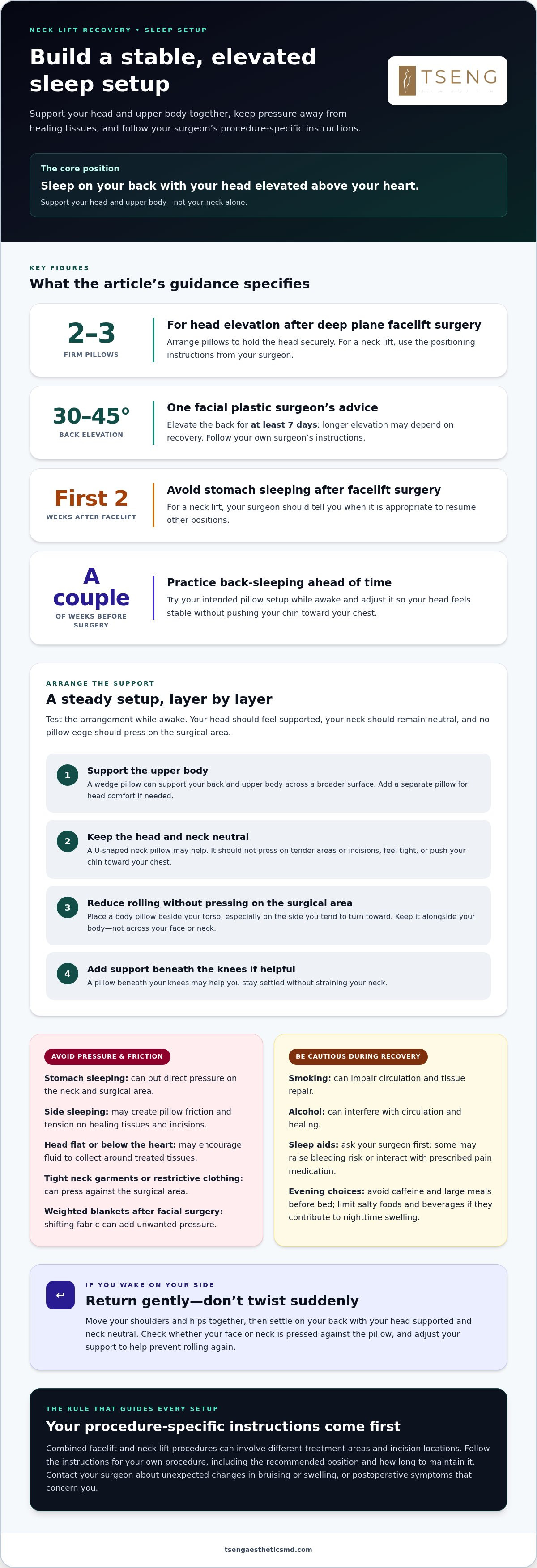
After a neck lift, sleep on your back with your head elevated above your heart. Support both your head and upper body rather than propping up your neck alone. Knowing how to sleep after a neck lift also means avoiding stomach sleeping, which can put direct pressure on the healing area. A reclined position or supportive pillows can help you stay comfortably in place while following your surgeon’s instructions.
Adjusting to a new sleeping position can take time, especially when you’re also managing tenderness and swelling. This guide explains how to arrange pillows for steady support, which habits and items to avoid, and why your surgeon’s procedure-specific directions should shape your routine. You’ll also find practical ways to make bedtime more comfortable without putting unnecessary pressure on healing tissues.
Key Takeaways
- Arrange pillows to support your head and neck together, and use a body pillow to help you stay comfortably positioned.
- Keep pressure and friction away from the healing area by avoiding stomach sleeping and restrictive bedding or clothing.
- Make your surgeon’s procedure-specific sleep instructions the guide for your position and how long to maintain it.
- If you wake on your side, gently return to your back and adjust your pillows to help prevent rolling again.
2. Using supportive pillows, including a neck pillow after a neck lift
Knowing how to sleep after a neck lift starts with supporting your head and upper body, not stacking pillows beneath your neck alone. After deep plane facelift surgery, two or three firm pillows can elevate the head. For a neck lift, follow your surgeon’s positioning instructions. Arrange the pillows so your head rests securely without tipping sharply forward or backward, which can strain healing tissues.
A U-shaped neck pillow may help keep your neck neutral while supporting your head. Position it gently around your neck, then check that its sides don’t press on tender areas or incisions. If it pushes your chin toward your chest, reposition it or choose a different shape. The support should feel comfortable, not tight or compressive.
To discourage rolling onto your stomach or side, place a body pillow beside your torso, especially on the side you tend to turn toward. Keep it alongside your body, not across your face or neck. It creates a soft boundary and helps you stay in position without pressing directly on the surgical area.
A wedge pillow can support your back and upper body across a broader surface. Place it beneath your upper body, then add a separate pillow for head comfort if needed. If you’re deciding how to sleep after a neck lift, test the arrangement while awake: your head should feel supported, your neck should remain neutral, and no pillow edge should press on the surgical area. Adjust the height and firmness until the setup feels stable. Repeating the same arrangement each night can make your routine easier and reduce unnecessary shifting during healing.
3. Behaviors and items to avoid during recovery
Keep sleeping on your back during early healing and avoid turning onto your stomach, which can put direct pressure on your neck and surgical area. Side sleeping can also create friction between your face and the pillow, putting tension on healing tissues and incisions. After facelift surgery, avoid stomach sleeping during the first two weeks. After a neck lift, follow your surgeon’s instructions on your recovery and when to resume other positions.
Don’t sleep with your head flat or lower than your heart during recovery. This position may encourage fluid to collect around treated tissues, while elevation can help limit swelling. Avoid tight neck garments and restrictive clothing in bed, as they can press against the surgical area. Leave weighted blankets aside after facial surgery, too: shifting fabric can apply unwanted pressure to your face while you sleep.
Avoid smoking during recovery. Cigarette smoke contains hundreds of toxic chemicals, and smoking can impair circulation and tissue repair. Alcohol can also interfere with circulation and healing, so avoid it during recovery. Speak with your surgeon before taking an over-the-counter sleep aid. Some products may increase bleeding risk or interact with prescribed pain medication, so don’t take an unreviewed dose at bedtime.
Small evening choices can affect rest, too. Avoid caffeine and large meals before bed, and limit salty foods and beverages if they contribute to nighttime swelling. If discomfort makes it difficult to settle, don’t add a sleep aid or change your position without guidance. Instead, follow the written post-operative instructions and use the consultation to discuss any persistent sleep difficulty. For guidance about neck lift recovery care, keep your surgeon’s instructions central to your routine.
4. Following the surgeon’s post-operative sleep instructions
Your surgeon’s written instructions should guide your sleeping position and how long you maintain it. After facial surgery, patients are generally advised to sleep on their backs with their heads elevated during initial healing. One facial plastic surgeon advises elevating the back 30-45 degrees for at least 7 days, with longer elevation depending on recovery. A wedge pillow can support your upper body evenly, while a pillow beneath your knees may help you stay settled without straining your neck.
Do sleeping instructions differ when a neck lift is combined with a facelift? They can, because the procedures may involve different treatment areas and incision locations. Follow the specific instructions for your combined surgery rather than relying on general guidance for a single procedure.
Sleep supports healing by helping blood flow between tissues and cells, aiding incision and tissue repair. Rest can also help curb inflammation and make pain feel less intense. Maintain your surgeon’s recommended elevated position throughout the night. Shortening that period may increase bleeding and swelling or interfere with healing. After head and neck surgery, the amount of bruising and swelling can affect how long elevation remains important.
If back-sleeping feels unfamiliar, practice for a couple of weeks before surgery. Try your intended setup while awake, including a wedge pillow or support beneath your knees, and notice whether your head stays stable. Adjust the arrangement to prevent rolling without forcing your chin toward your chest or pulling at your neck.
What warning signs after a neck lift require contacting your surgeon? Contact your surgeon about unexpected changes in bruising or swelling, or postoperative symptoms that concern you. Your surgeon can assess these changes in light of your procedure and recovery, so describe what changed and when it began. Keep your written instructions nearby and follow the designated process for questions about sleep or healing.
4. What should you do if you accidentally roll onto your side after neck lift surgery?
If you wake on your side, gently return to your back rather than twisting suddenly. Move your shoulders and hips together, then settle with your head supported and your neck in a neutral position. Side sleeping can press on healing tissues, so the goal is to reduce further pressure, not to forcefully reposition yourself.
Once you’re back on your back, notice whether your face or neck feels pressed against the pillow. Check that your head remains elevated as directed and that no pillow edge is pushing against the surgical area. If you feel new discomfort or have concerns about your incisions, follow your post-operative instructions and contact your surgeon for guidance.
Reset your bed before returning to sleep. Place a body pillow along the side you rolled toward, or position pillows beside your torso to make turning less likely. Keep these supports away from your face and neck. If your arrangement shifts during the night, adjust it while awake instead of pulling pillows across the surgical area.
Accidentally changing position once doesn’t mean you should abandon your prescribed sleep routine. Return to the position your surgeon recommended and continue following your procedure-specific instructions. If you repeatedly wake on your side, note which way you turn and adjust the pillow placement before bedtime. For example, a body pillow on that side can create a gentle boundary without pressing on your neck.
Don’t use a sleep aid or add tight restraints to keep yourself still unless your surgeon has approved that approach. Post-operative advice depends on the procedure performed, so raise repeated rolling or discomfort during your follow-up. For help planning recovery around your procedure, discuss your recovery plan with the surgical team.
Tseng Plastic Surgery: Facelift
Tseng Plastic Surgery offers facelift procedures for people considering facial rejuvenation and seeking a thoughtful discussion of their goals. If you’re exploring a neck lift, facelift, or minimal invasive preservation face and neck lift, a consultation can help you understand how the options relate to your desired changes and recovery expectations. Sleep positioning is one practical part of recovery; the right procedure depends on the areas you hope to address and the approach discussed with your surgeon.
Consider reaching out when you’re weighing facial procedure options or preparing questions about recovery. You can contact Tseng Plastic Surgery or visit tsengaestheticsmd.com.
Plan for a More Comfortable Recovery
Rest is part of recovery, and preparing your sleep setup before surgery can make bedtime feel more manageable. Consider where you’ll sleep, which supports feel comfortable, and how you’ll keep your post-operative instructions close at hand. A short list of questions about positioning, discomfort, or changes during healing can also make conversations with your surgical team more focused.
Understanding how to sleep after a neck lift can help you feel prepared, but the right recovery plan depends on your procedure and healing. If you’re considering facial rejuvenation or want to discuss how recovery may fit your goals, Tseng Plastic Surgery can help you take the next step with a personalized conversation.
Contact Tseng Plastic Surgery to discuss your goals and questions. A thoughtful plan can help you approach recovery with greater clarity and confidence.
Frequently Asked Questions
How Can I Sleep Comfortably With My Head Propped Up?
Combine upper-body elevation with enough support to keep your head from sliding. For example, place a wedge beneath your back and shoulders, then adjust a separate pillow so your head rests comfortably. If the incline feels unstable, try a recliner rather than adding a tall stack that bends your neck. Test your setup while awake and make small adjustments before bedtime.
How Long Should You Sleep Elevated?
The recommended duration depends on the surgery and your healing. One facial plastic surgeon advises sleeping with the back elevated 30-45 degrees for at least 7 days, with more time if recovery calls for it. This is not a universal schedule for every operation. Follow the instructions for your procedure, and don’t reduce elevation just because the position feels unfamiliar.
Why Elevate Your Head After a Facelift?
Elevation can help limit fluid accumulation near facial incisions and reduce swelling. Keeping your upper body inclined also avoids lying completely flat during early healing. Support your back and head rather than lifting only your neck, which may strain healing tissues. Aim for a stable incline that feels comfortable while maintaining the position your surgeon recommended.
What sleeping position is recommended after a neck lift?
Sleep on your back with your head elevated above your heart during neck lift recovery. This keeps direct pressure off the surgical area and can help limit fluid buildup around treated tissues. Arrange your support so your chin isn’t forced toward your chest. If back-sleeping is difficult, a recliner may be an option if your surgeon recommends it.
How long should you sleep with your head elevated after a neck lift?
There isn’t one duration that applies to every neck lift. One plastic surgeon recommends keeping the head elevated for approximately 7-10 days after a facelift or neck lift. The appropriate period can depend on bruising, swelling, and the procedure performed. Use your surgeon’s schedule rather than stopping elevation based only on how comfortable you feel.
What type of pillows or neck support should you use after neck lift surgery?
Choose firm pillows that support your upper body and head without forcing your neck into a sharp bend. A wedge can provide a broad incline, while a U-shaped neck pillow may help keep your neck neutral. Check the fit while awake: the support should feel steady and shouldn’t press on incisions. A body pillow can also help limit unwanted turning.

