How Long Does Facial Fat Transfer Last, and How Much Fat Survives?
By Tseng Plastic Surgery
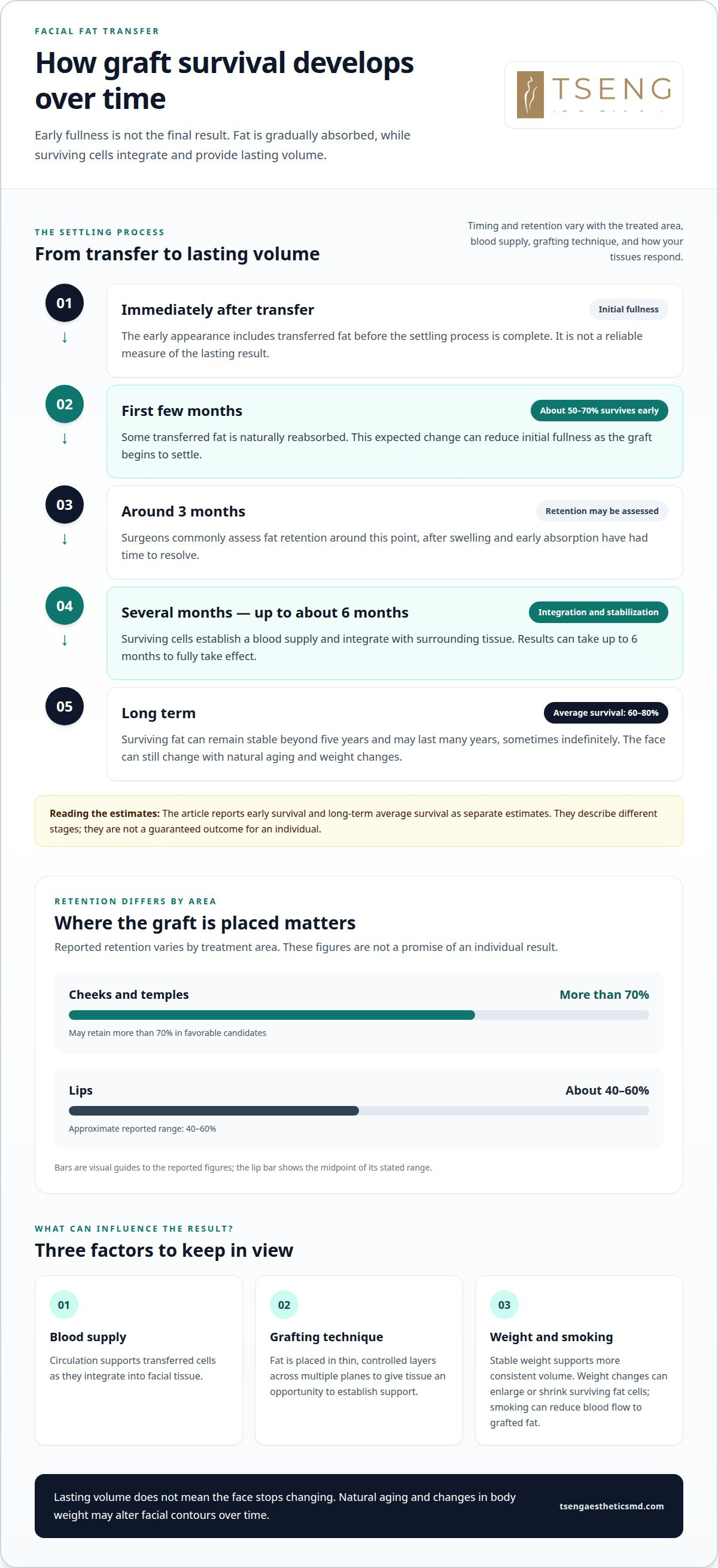
The early fullness after facial fat transfer isn’t the final result. The answer to “how long does facial fat transfer last?” depends partly on how much of the transferred fat establishes itself in its new location: on average, 60 to 80 percent survives long-term, and surviving fat can remain for many years, sometimes indefinitely.
Some of the transferred fat is naturally absorbed during the first few months, so results settle gradually. Once the surviving fat stabilizes, it can provide lasting volume, though weight changes and natural aging may alter facial contours over time.
This article explains how fat graft survival works, when results become clearer, and what can influence their longevity. It also compares facial fat transfer with fillers, which provide temporary results and generally need periodic maintenance, to help you understand the differences between these approaches to restoring facial volume.
Key Takeaways
- Keeping your weight stable and avoiding smoking can support more consistent fat-graft results over time.
- Fat transfer uses your own tissue for facial volume, while hyaluronic acid fillers typically need maintenance every 6-12 months.
- Fat survival varies by facial area and depends partly on blood supply and the surgeon’s grafting technique.
- Allow time for the result to settle: according to the NHS, a surgical fat transfer can take up to 6 months to fully take effect.
How Long Do Facial Fat Transfer Results Last?
Facial fat transfer can provide lasting volume, but weight changes may alter how the face looks over time. In the United States, there’s no single average cost: the price depends on the case, including the treatment plan and amount of work, and is provided after a quote request.
Weight Changes and Transferred Fat
Transferred facial fat responds to weight changes much like other fat in the body. Weight gain can enlarge surviving fat cells and increase facial volume, while weight loss can shrink them and reduce fullness. These fluctuations may change the contours created by the procedure, even after the graft has settled. The effect can be especially noticeable when treatment restores volume in defined areas such as the cheeks or temples.
Post-Procedure Care and Weight Stability
After the procedure, protect treated areas and follow your recovery and activity instructions. Avoiding pressure on the face and limiting physical activity as directed can help protect the graft as it heals. Maintaining a stable weight afterward supports more consistent volume because transferred cells can expand or shrink along with other fat. Smoking can reduce blood flow to grafted fat and affect its survival.
Stable weight cannot stop natural aging, but it can help preserve the balance established by facial fat grafting. Significant weight gain or loss can also affect skin elasticity, making changes in facial fullness more apparent. For example, considerable weight loss after treatment may reduce cheek volume, while weight gain may make the treated area fuller. These shifts reflect changes in fat cells, not necessarily a failure of the procedure.
Before treatment, consider how realistic weight stability is for your lifestyle. Your surgeon can tailor a plan to the facial areas you want to restore and discuss how future weight changes may affect volume. Results evolve with your body, so a stable weight and careful recovery can support a more consistent appearance over time.
Fat transfer compared with filler treatments
How long facial fat grafts last depends on the treated area, blood supply, grafting technique, and how your tissues respond. Fat transfer uses your own tissue, while dermal fillers are a temporary alternative with different maintenance needs.
Treatment Areas and Fat Retention
Treatment area affects how reliably grafted fat is retained, so it can shape the expected change in appearance. Facial fat transfer can restore volume in the cheeks, temples, nasolabial folds, and under-eye hollows. Cheeks and temples may retain more than 70% in favorable candidates, while lips often retain approximately 40-60%. A plastic surgeon considers these differences when planning a personalized approach to facial balance.
Fat transfer and dermal fillers differ in material and longevity. Fat transfer moves tissue from the patient’s body, while hyaluronic acid fillers add a gel that gradually dissolves. Many hyaluronic acid fillers last approximately 6-12 months; dermal filler results overall may last six months to two years, depending on the product. Filler maintenance is typically needed every 6-24 months, so lifestyle and preference for periodic treatment can inform the choice.
Maintenance and Staged Touch-Ups
Maintenance after fat transfer may involve a touch-up or a complementary treatment, rather than a fixed schedule. Some patients may benefit from a touch-up about 3-6 months after treatment, once swelling and early absorption have resolved. A staged plan gives the plastic surgeon an opportunity to assess settled volume before refining the result, which can support a balanced appearance instead of trying to achieve every contour at once.
A touch-up can address areas where less grafted fat remains, while dermal fillers may refine contours or treat areas affected by aging. These choices reflect the face’s natural changes and do not automatically mean the initial transfer failed. Discuss your desired appearance, treatment area, and preferences for maintenance to find an approach that aligns with your goals.
Typical facial fat graft survival rates
Facial fat graft survival varies; transferred fat doesn’t survive at a 100% rate. Results develop over several months as surviving fat cells establish themselves, so early fullness isn’t a reliable measure of lasting volume.
Early Fat-Cell Survival and Absorption
Early survival describes how much grafted fat remains after the body absorbs some of the transferred cells. Approximately 50-70% of transferred facial fat survives the first few months, while some fat is naturally reabsorbed during that period. This change can reduce initial fullness. Understanding the early shift helps distinguish expected settling from the eventual cosmetic result.
Blood Supply and Graft Survival
Blood supply supports transferred fat cells as they integrate into facial tissue, making circulation an important part of graft survival. Facial grafting places fat in thin, controlled layers across multiple planes, giving the tissue an opportunity to establish support from surrounding areas. The National Center for Biotechnology Information describes the vascular stromal fraction as fundamental to long-term survival of transplanted fat tissue.
Long-Term Fat Survival
Long-term survival refers to the portion of transferred fat that remains after early absorption and becomes lasting tissue. An average of 60 to 80 percent of transferred facial fat survives long-term. Surviving cells can remain stable beyond the five-year point, although individual results differ. Fat grafting can therefore create lasting volume, but “permanent” does not mean the face stops changing or aging.
When Results Stabilize
Facial fat transfer results usually stabilize over several months, as surviving cells establish a blood supply and integrate with surrounding tissue. Surgeons commonly assess retention around the 3-month mark, while grafts can take about 6 months to establish a blood supply. The distinction matters: an early assessment may show change, but later evaluation gives a clearer view of stable volume.
How long facial fat transfer results last
Patients often ask, “How long does facial fat transfer last?” The answer depends on how the surviving fat settles, how facial tissues change over time, and your aesthetic goals. Consider the question alongside the expected healing process, rather than judging the outcome while your face is still changing.
According to the NHS, a surgical fat transfer can take up to 6 months to fully take effect because some injected fat may be reabsorbed during the first few months. A surgeon considers this gradual change when discussing the expected result. Patients can use follow-up appointments to talk through how the treated areas are settling and whether the appearance aligns with their goals.
Once established, surviving fat can remain for many years, sometimes indefinitely. It still responds to changes in your body: weight changes can affect facial volume, and natural aging continues to influence contours. If your priorities or facial fullness change, you may want to reassess your overall balance rather than expect one procedure to preserve an unchanged appearance.
Daily sun protection and a consistent skincare routine help protect skin from sun damage and premature aging. Avoiding smoking also supports circulation to grafted tissue. These habits complement results but cannot freeze them. A healthy lifestyle supports general well-being as your face continues to change naturally.
Technique and facial anatomy also inform a personalized plan. A facial plastic surgeon can discuss how the treated areas, desired volume, and future changes shape expectations. Fillers may offer another way to refine contours or address areas affected by aging. Tseng Plastic Surgery also offers a non-surgical facelift for patients exploring facial rejuvenation.
If you’re considering how long facial fat transfer lasts in relation to your own goals, start a conversation about facial rejuvenation.
Tseng Plastic Surgery
Tseng Plastic Surgery can help you explore facial rejuvenation options when weighing lasting volume changes against the gradual effects of aging. Discussing your goals and facial features can help clarify whether a facelift or minimal invasive preservation face and neck lift aligns with the changes you want to address.
Facial fat transfer and these procedures take different approaches, so start by considering your priorities: restoring volume, refining facial contours, or addressing changes in the face and neck. Understanding how grafted fat settles over time can inform the conversation, while a personalized assessment can help match your concerns with an appropriate option.
Contact Tseng Plastic Surgery to discuss your facial rejuvenation goals.
Choose a Next Step That Reflects Your Goals
Deciding whether facial fat transfer suits you involves more than timing. Consider the change you hope to see, how you feel about gradual results, and whether your priorities may shift as your face ages. Knowing how long facial fat transfer lasts can help clarify your preferences, but the next step is connecting them to a treatment plan that respects your features and desired appearance.
A focused conversation can help you clarify which concerns matter most, what outcome feels natural to you, and which approach aligns with those goals. You do not need to arrive with every decision made. Start with the questions that matter most, then use the discussion to explore a considered path forward.
Start a conversation with Tseng Plastic Surgery about your facial rejuvenation goals. A thoughtful next step can bring greater clarity and help you move forward with confidence.
Frequently Asked Questions
How Long Does it Take to Recover From a Fat Transfer?
Most patients can resume normal activities 3 to 5 days after facial fat transfer, though full recovery takes longer. Swelling and bruising may last a few weeks, and at least one week may be needed to feel fully recovered. For example, returning to routine activities doesn’t necessarily mean facial swelling has completely resolved or the final contour is visible.
What are the side effects of fat transfer?
Common effects include temporary swelling, bruising, inflammation, and soreness in treated areas. Temporary numbness can also occur, and small scars may fade over time. For example, bruising near an injection area can make the face appear uneven during early healing. These effects differ from later volume changes as some grafted fat is absorbed.
How long do facial fat transfer results typically last?
Results can last for years, and some surviving fat may remain indefinitely. A specialist estimate places typical duration at 5-10 years, though the face continues to age and changes in weight can affect facial fullness. For a practical perspective, assess the result after healing has progressed, then consider how your appearance and goals evolve over time.
What percentage of transferred facial fat survives long term?
An average of 60 to 80 percent of transferred facial fat survives long-term. This is a general range, not a guarantee for each treated area or patient. For example, a result may retain less volume in one facial area than another. The remaining fat cells can persist for years, while the body absorbs some transferred fat during early healing.
Can facial fat transfer be repeated if results fade?
Yes, a repeat transfer or touch-up may be considered if a patient wants additional volume after the initial result settles. Some patients may benefit from refinement about 3-6 months after treatment. A follow-up assessment can identify which areas need attention and whether a subtle adjustment would better match the desired facial contour.
How does facial fat transfer compare with dermal fillers for longevity?
Facial fat transfer can provide lasting volume, while hyaluronic acid dermal fillers gradually dissolve and need maintenance. Many hyaluronic acid fillers last approximately 6-12 months, although filler results overall may range from six months to two years depending on product. For example, fillers may suit someone who prefers adjustable, periodic refinements rather than relying on transferred tissue.

