Hair Restoration: Treatment Choices and Financial Planning
By Tseng Plastic Surgery
What if the first step toward fuller-looking hair isn’t choosing a treatment, but understanding why it’s thinning? A search for professional hair restoration services may surface options with very different purposes, from cosmetic coverage to restoration-focused care. Hair loss can have different causes, and the right response depends on more than appearance alone. It’s natural to want clear answers about which approaches address hair-loss concerns, which simply change how hair looks, and what each may mean for your budget.
A thoughtful hair-restoration plan begins with an individualized assessment of your hair-loss pattern, relevant history, goals, and expectations. Dr. Mark H. Tseng has more than 20 years in practice and approaches hair restoration as part of personalized, non-surgical aesthetic care, with attention to natural-looking goals and the person behind them at Tseng Plastic Surgery.
This guide explains how restoration approaches differ, which personal and clinical factors can shape suitability, and how to build a realistic financial plan that accounts for potential ongoing care. Insurance coverage can depend on your plan and the reason for treatment, so review your specific benefits before budgeting. With a clearer picture of the options and their practical considerations, you can make your next decision with greater confidence.
Key Takeaways
- Distinguish treatments intended to address hair-loss concerns from cosmetic options that temporarily conceal thinning.
- Compare choices by your goals, comfort, and willingness to maintain a longer-term plan, not by appearance alone.
- An individualized assessment can help clarify suitability and realistic expectations for hair restoration.
- Build a thoughtful budget by clarifying goals, reviewing a personalized care plan, and checking your insurance terms rather than assuming coverage.
- Tseng Plastic Surgery’s patient-centered approach frames a hair-restoration discussion around your concerns and natural-looking goals.
Hair Restoration: What It Can Address and What to Clarify First
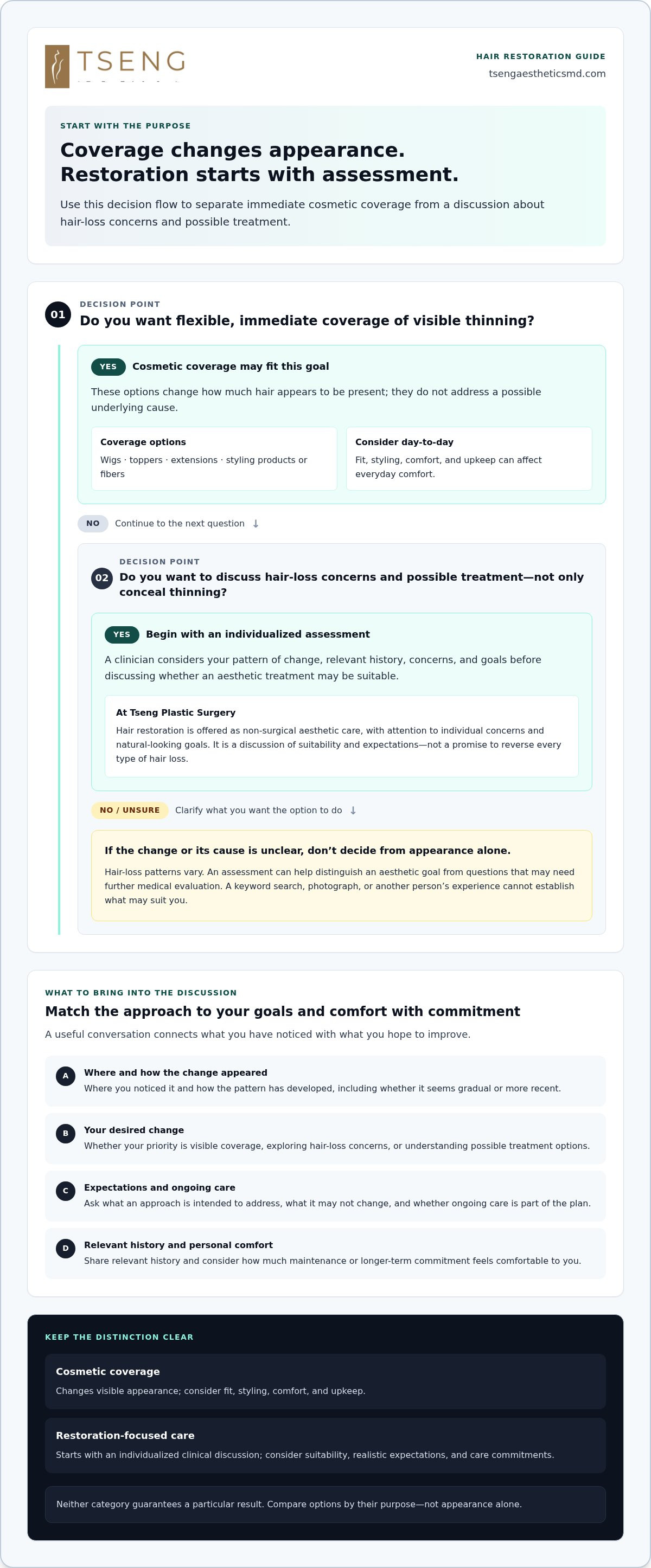
Hair restoration is a broad term for approaches intended to improve the appearance or condition of thinning hair. It differs from cosmetic camouflage, which changes how much hair appears to be present without addressing the underlying concern. Wigs, toppers, and styling fibers can offer coverage. Restoration-focused care begins with a discussion of hair-loss concerns and potential treatment. For background on surgical procedures, see this overview of hair transplantation techniques.
A change in density may show up as gradual thinning, more visible scalp, or a hairline that looks different over time. These changes can affect confidence and everyday comfort, from choosing a hairstyle to feeling at ease in photographs. Those reactions are personal, and there’s no single “right” reason to explore care.
What concerns can lead someone to explore hair restoration?
The same visible change can have different explanations, and hair-loss patterns vary from person to person. A broad description such as “thinning” doesn’t identify its cause or determine which approach may be suitable. A careful clinical assessment can help distinguish an aesthetic goal from questions that may require further medical evaluation. Camouflage can change appearance immediately, while an assessment considers the pattern and context of hair changes before treatment options are discussed.
That distinction matters because not every form or cause of hair loss has the same solution. A choice based only on how thinning looks may overlook important context, including whether the change is gradual or more recent. Another person’s experience cannot establish what may suit you.
What should an initial hair-restoration assessment clarify?
A useful discussion connects your concerns with your goals and relevant history. It may cover where you’ve noticed change, how the pattern has developed, what you hope to improve, and what kind of commitment feels comfortable. Bring questions about realistic expectations and factors that could influence suitability. The clinician can then discuss whether an aesthetic treatment aligns with your goals, rather than assuming one approach fits everyone.
Hair restoration is a personal decision, not a promise of a particular result. Clear expectations include understanding what an approach is intended to address, what it may not change, and whether ongoing care is part of the plan. At Tseng Plastic Surgery, hair restoration is offered as a non-surgical aesthetic treatment, with care shaped around individual concerns and natural-looking goals. An informed starting point is an honest conversation about what matters to you and what treatment can reasonably aim to accomplish.
Hair Restoration Approaches: Understand the Differences Before Comparing Payments
Hair-related options can look similar in photographs yet serve very different goals. A wig or topper can conceal areas of thinning, while restoration-focused care involves an individualized discussion about addressing hair-loss concerns. Neither category guarantees a particular result, and they shouldn’t be treated as interchangeable.
How does cosmetic coverage differ from restoration-focused care?
Wigs, toppers, extensions, and styling products can change the visible appearance of hair without treating a possible underlying cause. They may suit someone seeking flexible, immediate coverage, though fit, styling, and upkeep can affect everyday comfort. These options can be part of personal appearance choices, but they don’t replace clinical evaluation when someone has questions about a change in hair density or its cause.
Restoration-focused care takes a different starting point: a clinician considers your concerns, pattern of change, history, and goals before discussing whether an aesthetic treatment may be appropriate. At Tseng Plastic Surgery, hair restoration is a non-surgical aesthetic service, approached with attention to individual goals and natural-looking results. It’s a discussion of suitability and expectations, not a promise to reverse every type of hair loss.
Which personal factors shape a suitable approach?
The right comparison is personal. Consider what you hope to change, how you feel about ongoing maintenance, and whether you prefer appearance management or a treatment-oriented plan. A clinician can weigh those goals alongside your hair-loss pattern and relevant history. Suitability can’t be determined from a keyword search or a single photograph, and individual response may vary.
- Cosmetic coverage: Changes visible appearance. Consider fit, styling, comfort, and upkeep.
- Restoration-focused care: Begins with an individualized clinical discussion. Consider suitability, realistic expectations, and any care commitments involved.
When comparing options, focus on purpose as well as appearance. A solution that works well for temporary coverage may not address the goals of someone seeking a longer-term treatment plan. A treatment discussion, in turn, may not provide the immediate visual change someone wants. Clarifying that distinction can make later conversations about commitment and payment more useful.
If you’re considering care, a personalized hair restoration discussion can help connect your concerns and preferences with realistic aesthetic goals.
Compare Hair Restoration Choices by Goals, Upkeep, and Commitment
A useful comparison starts with the change you want, not with which option sounds most involved. Someone seeking a quick adjustment to how thinning looks may prioritize flexibility and day-to-day comfort. Someone exploring restoration-focused care may be more interested in a personalized clinical discussion and a plan that fits their circumstances. Neither goal is inherently better.
How do goals affect the comparison?
Describe what a satisfying, natural-looking change would mean to you. Is your priority coverage for a particular setting, a look you can adapt from day to day, or exploring care intended to address hair-loss concerns? Be specific about what you hope to see and what would feel comfortable. A clinician can consider those preferences alongside your hair-loss pattern and relevant history before discussing whether aesthetic treatment aligns with your goals.
Online search results may present options side by side, but a brief description can’t determine personal suitability. A photograph also captures only one moment and may not show how a pattern has changed or the context that matters to an assessment.
What should readers consider about maintenance and expectations?
Upkeep is part of the decision. Cosmetic coverage may involve recurring attention to fit, styling, or replacement, while treatment-oriented care may involve its own commitments and follow-up. The details vary, so consider how much time, routine, and change you’re comfortable incorporating into everyday life. Ask how progress will be assessed and what factors could affect the process, without assuming a fixed timeline or outcome.
Use these questions to compare choices without ranking them:
- Desired change: Are you seeking an immediate change in appearance or exploring a restoration-focused plan?
- Personal comfort: How does each option fit your daily routines, social settings, and styling preferences?
- Ongoing upkeep: What recurring care or attention would you be willing to maintain?
- Expectations: What would feel like a meaningful result, and how will you account for individual variability?
A greater commitment doesn’t automatically make an approach a better fit. A longer plan may not match someone’s priorities, while a lower-maintenance choice may not address the goal they care about most. Benefits, limitations, and candidacy vary, so a considered recommendation should reflect the person, not simply the apparent complexity of an option. With goals and practical preferences clearly defined, it becomes easier to evaluate financial responsibilities.
How to Plan Financially for Hair Restoration Without Assuming Coverage
A thoughtful budget starts with the care being considered, not an assumed insurance benefit or payment arrangement. Hair restoration is an aesthetic decision, and financial details can depend on the individualized plan, your benefits, and any ongoing care discussed. Keep written information separate from estimates or assumptions so you can see your responsibilities clearly.
What questions help build a realistic financial plan?
Use this sequence to organize your next steps:
- 1. Clarify your goals. Identify the change you hope to make and what matters most, such as a natural-looking appearance, comfort, or the level of ongoing care you’re prepared to manage.
- 2. Review a personalized plan. Understand what the proposed care includes, what it is intended to address, and what expectations or limitations have been discussed. Ask for the relevant details in writing so you have a practical basis for planning.
- 3. Review payment responsibilities. Separate confirmed charges and payment terms from assumptions about coverage, reimbursement, or payment arrangements. Include any follow-up or maintenance needs that are part of your specific plan, if applicable.
Consider how the plan fits your overall budget and whether you can accommodate its responsibilities without relying on uncertain benefits. Personal savings or funds in an eligible health account may be possibilities for some people, but eligibility depends on applicable rules and the circumstances of the care.
Can insurance or health accounts help pay for care?
Coverage isn’t universal. Insurers may distinguish elective aesthetic care from care considered medically necessary, and decisions can depend on plan terms, clinical circumstances, and required documentation. Don’t treat a general statement about coverage as a guarantee for your situation. Review your own plan documents and ask your insurer how its rules apply to the proposed care.
The same caution applies to health savings or flexible spending accounts. Eligibility can depend on account rules and the nature of the expense, so review the governing documents or consult the account administrator before budgeting with those funds. Avoid assuming a reimbursement or tax treatment without guidance specific to your circumstances.
At Tseng Plastic Surgery, hair restoration is discussed as part of personalized, non-surgical aesthetic care. To begin a conversation about your goals and a tailored plan, explore a hair restoration consultation.
A Personalized Hair-Restoration Journey at Tseng Plastic Surgery
Hair restoration at Tseng Plastic Surgery is a non-surgical aesthetic service shaped around individual concerns and personal goals. Led by Dr. Mark H. Tseng, who has been in practice for more than 20 years, the practice emphasizes personalized care and natural-looking aesthetic aims. The conversation begins with you: what changes you’ve noticed, what you hope to address, and what kind of result would feel balanced and appropriate.
What can patients expect from an individualized discussion?
An individualized discussion brings your concerns, relevant history, and aesthetic preferences into focus. You might describe where you’ve noticed thinning, how it affects your comfort, and what you’d like to look different. Clinical judgment can then help frame whether an aesthetic treatment aligns with your goals and what expectations are realistic. Recommendations should reflect the individual, not a one-size-fits-all formula.
Natural-looking goals are personal, too. For one person, a subtle change may feel most harmonious; another may have different priorities. A thoughtful discussion makes room for those preferences while recognizing that suitability and outcomes can vary. It’s also a chance to understand the purpose and limitations of an approach before deciding whether it feels right for you.
What is a sensible next step if hair restoration is on your mind?
Before exploring care, consider writing down the questions that matter most. For example:
- What change am I hoping to see, and what would feel natural to me?
- What factors about my hair history and pattern are relevant to suitability?
- What expectations are realistic, and how would progress be discussed?
- What should I understand about the plan and its financial responsibilities?
Exploring options doesn’t require you to commit to treatment. It can simply give you space to understand whether a personalized plan fits your priorities, expectations, and budget. Take time to consider the information and decide what feels appropriate for you.
If you’re ready to explore a personal conversation about your concerns and goals, Explore personalized hair-restoration care.
Make Your Next Step an Informed One
Choosing hair restoration starts with understanding what you want to change and which approaches align with your goals. Cosmetic coverage can alter appearance, while restoration-focused care involves a personalized discussion of suitability, expectations, and possible ongoing responsibilities. A clear financial plan also means reviewing your treatment details and insurance terms rather than assuming coverage.
At Tseng Plastic Surgery, hair restoration is offered as a non-surgical aesthetic treatment. Dr. Mark H. Tseng has more than 20 years in practice, and the practice emphasizes individualized care and natural-looking results. A conversation can help you consider your concerns and priorities without requiring a commitment to treatment.
When you’re ready to explore your options, Explore personalized hair-restoration care. Take the time you need to ask questions and decide what feels right for you. A thoughtful first step can make the path ahead feel clearer.
Frequently Asked Questions
Is hair restoration the same as wearing a wig or hair topper?
No. Wigs and toppers change the visible appearance of hair, while hair restoration refers more broadly to care intended to address hair-loss concerns. A wig may provide coverage without treating an underlying cause. The right discussion depends on your goals and circumstances, and a clinician can help clarify which category may be relevant. Cosmetic coverage alone shouldn’t be treated as an evaluation of why hair changes are occurring.
Can hair restoration work for every type of hair loss?
No single approach is appropriate for every person or cause of hair loss. Your pattern of change, relevant history, goals, and overall circumstances can all influence which options may be suitable. An individualized assessment can help clarify what a treatment may reasonably address and what expectations are realistic. An online description can offer general information, but it can’t diagnose your situation or determine which care is right for you.
How much does hair restoration cost?
The total cost depends on the specific treatment plan and the components included, so a general figure may not reflect your care. Ask for a personalized explanation of what the plan covers and whether follow-up or maintenance is relevant. Review written details carefully, including any payment responsibilities. Don’t assume that insurance coverage, reimbursement, or a particular payment arrangement will apply to your circumstances.
Does insurance cover hair restoration?
Coverage depends on your health plan, the reason for care, and the policy’s terms. Aesthetic treatment may be handled differently from care considered medically necessary, but coverage can’t be assumed either way. Review your policy and ask your insurer how its rules apply to the proposed care, including any documentation requirements. A general article can’t confirm your benefits or guarantee reimbursement for a specific treatment.
Can I use an HSA or FSA for hair-restoration treatment?
Eligibility depends on current account rules, the purpose of care, and your plan’s details. Don’t assume an aesthetic treatment qualifies simply because your account can pay for some healthcare expenses. Before using funds, review your account documents or speak with the administrator about eligibility and any records required. Tax treatment can vary as well, so avoid relying on general information as confirmation for your situation.
What happens if I am not sure which hair-restoration option fits me?
Start by describing what has changed, what you hope to improve, and what level of maintenance feels manageable. At Tseng Plastic Surgery, hair restoration is a non-surgical aesthetic treatment, and an individualized clinical discussion can help clarify your goals, suitability, and realistic expectations. You don’t need to choose based on a comparison chart alone, and exploring options doesn’t obligate you to proceed with treatment.

