Facial Rejuvenation Guide for Men Over 60
By Tseng Plastic Surgery
What if looking more rested after 60 doesn’t require looking like someone else? For men considering facial rejuvenation for men over 60, that distinction matters. Looseness around the jaw or neck, deeper folds, and changes in facial volume may be addressed in different ways, but the right approach depends on your features, health, and goals.
It’s understandable to wonder whether a treatment will look natural, how recovery may fit your life, and whether health conditions or medications affect your options. Age alone doesn’t determine a suitable plan. A careful assessment of your overall health and priorities is essential.
This guide explains common facial aging changes and how surgical and non-surgical options differ, including facelift approaches. It also outlines what to prepare for a consultation, from your medical history and medications to the changes you hope to see. Use it to understand the questions worth asking and consider informed next steps, without pressure to choose a procedure.
Key Takeaways
- Facial rejuvenation for men over 60 may involve surgical or non-surgical approaches, depending on the concerns you want to discuss.
- Treatments are not interchangeable. Your goals can help guide a conversation about their different purposes and limitations.
- Age alone doesn’t determine suitability. A clinician should consider your overall health, medical history, medications, and factors specific to the procedure.
- Prepare for a consultation by identifying what feels different, gathering relevant health information, and writing down your questions.
- Tseng Plastic Surgery offers facelift, minimal invasive preservation face and neck lift, injectables, and non-surgical facelift options for discussion as part of an individualized plan.
Facial Rejuvenation for Men Over 60: What Changes and What Can Be Addressed?
Wanting to look more rested while still looking like yourself is a reasonable goal. Facial rejuvenation for men over 60 isn’t one procedure or a single standard of appearance. It covers individualized surgical and non-surgical approaches that may be considered in light of your features, concerns, health, and preferences.
With age, skin may become less firm, facial volume can shift, and contours may look different. These changes vary from person to person. Age or a photograph alone can’t establish whether a treatment is suitable or what result to expect. An in-person assessment helps connect your specific concerns with options that may be relevant.
Which facial changes may concern men in their 60s?
Some men notice skin laxity, deeper folds, jowling along the lower face, or changes beneath the chin and around the neck. Others are more aware of changes in facial fullness or definition. These are possible concerns, not a checklist everyone experiences. Facial structure, skin quality, genetics, and lifetime exposures all influence how aging appears.
Instead of trying to decide what treatment you need, identify the features you want assessed. For example, you might say that your jawline looks less defined or that you appear more tired than you feel. A clear description gives the clinician a practical starting point for discussing whether any option may address your concern.
What does a natural-looking result mean?
A natural-looking goal is personal. It may mean a refreshed, balanced appearance that remains consistent with your features and doesn’t erase the expressions people recognize. Planning can take into account the areas that matter to you, the features you want to preserve, and how potential changes relate to the rest of your face.
No particular result can be guaranteed, and outcomes vary. A consultation should explore what “refreshed” means to you rather than assume one ideal applies to every man. For background on the surgical procedure, see this overview of Rhytidectomy (facelift). It explains terminology, but it can’t determine what is appropriate for an individual.
Does age alone determine suitability?
No. Being over 60 doesn’t, by itself, establish whether someone is a candidate for a procedure. A clinician needs to consider overall health, medical history, medications, personal goals, and factors specific to the option being discussed. Share relevant health information and ask how it may shape the choices presented. The purpose is to make a considered plan, not a decision based on age alone.
How Surgical and Non-Surgical Rejuvenation Options Differ After 60
Surgical and non-surgical treatments take different approaches to facial concerns, so they shouldn’t be treated as interchangeable versions of the same solution. A conversation about facial rejuvenation for men over 60 can start with the changes you want assessed. From there, the clinician can consider the nature of the concern, your health, and which options may be appropriate. Neither age nor a preference for a particular procedure determines the right plan on its own.
When might a surgical consultation be relevant?
If visible skin laxity or changes in the face and neck concern you, a surgeon can assess your anatomy and hear what you hope to address before discussing possible procedures. A facelift or face-and-neck lift may be part of that discussion, but neither is suitable for everyone. The American Society of Plastic Surgeons’ guidance on facelift candidates offers general context. Individual candidacy still requires a clinical assessment.
Technique, potential risks, and anticipated recovery depend on the person and the procedure under consideration. Discuss these points with a surgeon rather than assuming your experience will match someone else’s. For a broader overview of facelift approaches, read this guide to modern facelift approaches.
What can non-surgical treatments and injectables address?
Non-surgical options, including injectables and a non-surgical facelift, may be discussed for selected concerns. Ask what each option is intended to address and how that relates to your goals. These treatments differ from surgery in their scope and may involve different expectations about maintenance and the degree of change. Specific effects and timing vary, so one option shouldn’t be assumed to substitute for another.
When comparing treatments, ask what kind of change each may offer, what it may not address, whether repeat treatment may be part of the plan, and what risks or recovery considerations apply to you. Less invasive doesn’t automatically mean more suitable. This surgical versus non-surgical facelift comparison offers more detail to help you prepare questions.
A personalized discussion can help you weigh your concerns, health, and preferences before considering a next step. You can learn more about Tseng Plastic Surgery’s facial rejuvenation options as part of your research.
Does Being Over 60 Make Facial Rejuvenation Unsafe or Unsuitable?
No. Age alone can’t determine whether facial rejuvenation is appropriate. For men over 60, the decision depends on the proposed treatment and an individual assessment of overall health, medical history, medications, and goals. A procedure that may be considered for one person may not suit another, even if they’re the same age.
Before treatment, discuss the potential benefits, risks, alternatives, and recovery expectations that apply to your situation. There are no blanket assurances. Only the clinician evaluating you can explain how your health factors may affect the options or timing under consideration. If you have questions or feel uncertain, take time to consider the information before deciding.
What health details should you discuss with a clinician?
Share a complete picture of your health, including diagnoses, previous procedures, allergies, and all medications and supplements you take. Mention smoking or other nicotine use as well. Don’t stop or change a medication on your own. Ask the clinician what information is relevant and how to proceed.
Ask whether any evaluations or medical clearances are appropriate for you, and who should provide them. The answer depends on your health and the treatment being discussed, so it should come from your care team rather than a general checklist.
How can you evaluate a surgeon and treatment plan?
Use the consultation to understand who would perform the procedure, their relevant training, and their experience with the specific treatment you’re considering. Ask about the care setting and how your health history informs the proposed plan. Clear, individualized answers are more useful than a broad promise about what a procedure can achieve.
Before making a decision, make sure you understand:
- Which concerns the proposed treatment is intended to address and what alternatives may be considered.
- What risks and limitations apply to your case.
- What recovery may involve and what follow-up care is planned.
- Whether your medications, medical conditions, or other health details affect the recommendation or timing.
For facial rejuvenation for men over 60, a thoughtful plan connects your goals with a careful review of health and procedure-specific considerations. Ask follow-up questions, and consider seeking a second opinion if you remain unsure. You deserve to understand the reasoning behind a recommendation before deciding whether to proceed.
How to Prepare for a Facial Rejuvenation Consultation After 60
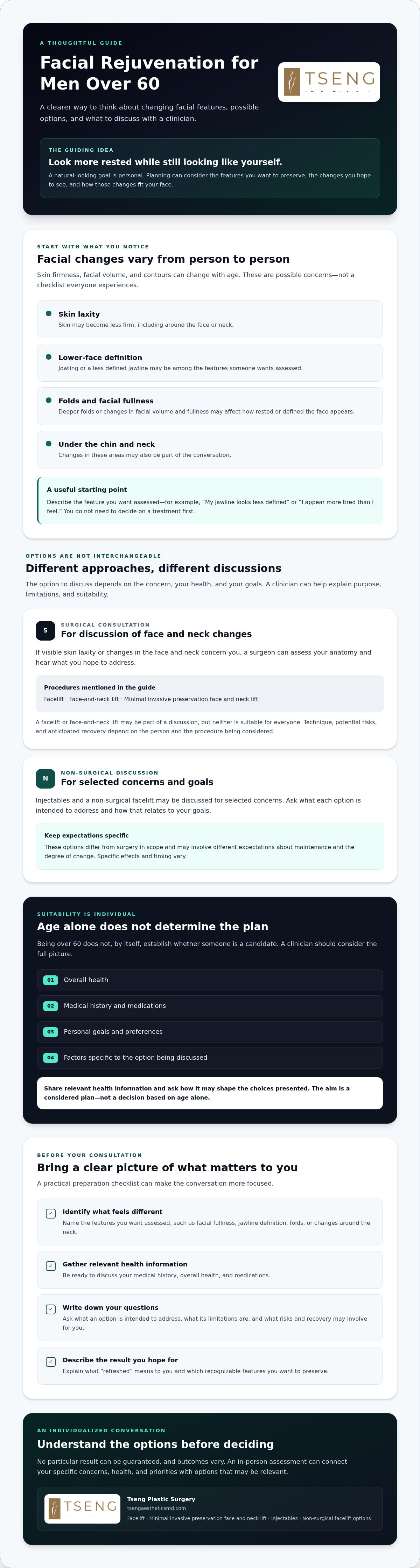
A little preparation can help you use consultation time well. For facial rejuvenation for men over 60, arrive ready to describe what feels different and what you hope to preserve, rather than with a fixed procedure already chosen. The clinician can assess your concerns and explain which options, if any, may be relevant. A consultation is for gathering information. It doesn’t obligate you to proceed.
Consider these steps beforehand:
- Clarify your concerns. Note the specific features you’d like to discuss, such as changes in your jawline, face, or neck. Describe what you notice in your own words instead of trying to diagnose the cause.
- Gather health information. Prepare a current list of diagnoses, prior procedures, allergies, medications, and supplements. Include relevant health details you’ve discussed with other clinicians.
- Prepare your questions. Write them down so you can return to them during the appointment. If you’re considering photographs, ask whether they would be useful and how they should be provided and handled according to the practice’s procedures.
- Review options carefully. Listen for how each approach relates to your concerns, what it may not address, and what alternatives are available, including no treatment.
Which questions can make the consultation more useful?
Ask which options may address your stated concerns and what limitations each has. You can also ask about risks specific to your health, recovery planning, follow-up, and alternatives. If a medical term or recommendation isn’t clear, request an explanation in plain language. Ask whether written information or instructions are available so you can review them after the appointment.
How should you assess whether the plan fits your goals?
Consider whether the proposed approach reflects your priorities and the degree of change you want. Ask how the recommendation connects to those goals, and discuss practical support and recovery arrangements before scheduling a procedure. You should understand the risks and next steps without feeling rushed. If expectations, options, or instructions remain unclear, pause and ask for clarification before deciding.
A thoughtful conversation can help you decide what feels right, including whether to take more time or pursue no treatment. To discuss your concerns and possible options, contact Tseng Plastic Surgery.
Explore a Personalized Facial Rejuvenation Plan with Tseng Plastic Surgery
Facial rejuvenation for men over 60 is an individual decision shaped by personal goals, facial anatomy, health, and the changes you want to address. At Tseng Plastic Surgery, Dr. Mark H. Tseng has been in practice for over 20 years. The practice offers surgical options including facelift and minimal invasive preservation face and neck lift, as well as injectables and non-surgical facelift options.
These choices aren’t interchangeable, and having several options to consider doesn’t mean that any particular procedure will be recommended or appropriate. A useful discussion weighs your priorities alongside relevant health factors and realistic expectations, while leaving room to consider alternatives or decide not to pursue treatment.
What to expect from an individualized discussion
Use a consultation to describe what feels different, explain the degree of change you hope for, and ask questions. Rather than arriving with a procedure already selected, share the features you’d like assessed and what you want to preserve about your appearance. The clinician can discuss options that may be relevant, their limitations, and any factors that need further assessment.
Bring questions about how your health history may affect the discussion, what alternatives might be considered, and what risks and recovery expectations apply to a proposed procedure. Confirm the specific consultation format and process with the practice. You should leave with a clearer understanding of the choices under consideration, not an assumption that you need to proceed.
Choose an informed next step
If surgery is among your questions, the practice’s modern facelift guide offers additional background on facelift approaches. Use educational material to prepare for a conversation, not as a substitute for individualized medical advice.
Deciding whether to pursue facial rejuvenation is personal. Take the time you need to understand the options, how they relate to your goals, and what further assessment may be needed. If you’d like to learn more, explore facial rejuvenation options with Tseng Plastic Surgery as a potential next step.
Take the Next Step at Your Own Pace
Facial rejuvenation for men over 60 isn’t a one-size-fits-all decision. A useful discussion starts with the changes you want to address, your health, and the result that would still feel like you. Surgical and non-surgical options serve different goals, and age alone can’t determine which, if any, may be appropriate.
At Tseng Plastic Surgery, Dr. Mark H. Tseng has been in practice for over 20 years. The practice offers surgical and non-surgical facial rejuvenation options, with personalized care focused on natural-looking, balanced results. An individualized conversation can help you understand the possibilities, relevant considerations, and questions to explore before deciding whether to proceed.
There’s no need to rush a personal choice. If you’re ready to learn more, explore facial rejuvenation options and take an informed next step that reflects your goals.
Frequently Asked Questions
Is 60 too old to have facial rejuvenation surgery?
No. Being 60 or older doesn’t automatically rule out facial rejuvenation surgery, but age alone can’t establish whether a procedure is appropriate. A clinician needs to consider your overall health, medical history, medications, goals, and the specific procedure being discussed. Share relevant health information openly and ask about individual risks, alternatives, and recovery expectations. Only a clinician who assesses your circumstances can advise whether surgery may be suitable.
What facial rejuvenation options are available for men over 60?
Options offered by Tseng Plastic Surgery include a facelift, minimal invasive preservation face and neck lift, non-surgical facelift, and injectables. These approaches differ in how they’re performed, the concerns they may address, and the kind of change they may provide. Which options are worth discussing depends on your anatomy, health, and preferences. A consultation can clarify what each approach involves, including its limitations, without presuming you need a procedure.
Can men over 60 get a natural-looking facelift?
A natural-looking result can be a goal, but no specific outcome can be guaranteed. Discuss what “natural” means to you, such as looking more rested while retaining familiar facial features and expression. A surgeon can assess your anatomy and explain how a proposed approach relates to your goals, along with potential limitations and risks. Results vary, so ask what is realistic for your situation rather than relying on someone else’s experience.
How do I know whether I need a facelift or non-surgical treatment?
You don’t need to decide on a procedure before speaking with a clinician. Describe the changes that concern you and the degree of change you hope for. A clinician can assess your face, review your health, and discuss whether a facelift, a non-surgical option, another available approach, or no treatment may fit your priorities. Ask about differences in scope, maintenance, risks, recovery, and expected results before weighing the alternatives.
Is facial rejuvenation safe if I take prescription medications?
Taking prescription medication doesn’t automatically determine whether a treatment is appropriate, but your clinician needs a complete, current list to assess your situation. Include prescriptions, over-the-counter medicines, vitamins, and supplements, and mention relevant diagnoses or allergies. Ask how these details may affect the options or timing being considered. Don’t stop, change, or skip medication on your own. Follow instructions from the clinician managing your care.
What should I ask at a facial rejuvenation consultation?
Ask which options may address your specific concerns, what each cannot change, and whether no treatment is an alternative. Discuss risks, recovery expectations, follow-up, and any health factors that need further assessment. You can ask about the clinician’s experience with the proposed procedure and request plain-language explanations or written instructions when available. Bring your questions and medical information, then take time to consider the answers before making a decision.
Do non-surgical facial treatments last as long as a facelift?
Not necessarily. Non-surgical treatments and surgery differ in scope, and the duration of results varies with the treatment, individual factors, and ongoing aging. Some non-surgical approaches may involve maintenance, while a facelift is a surgical option with its own recovery, risks, and expectations. There’s no single timeline that applies to everyone. Ask the clinician what duration and maintenance considerations are realistic for the options being discussed.

