Cost of Looking Younger: What Aesthetic Treatments May Cost
By Tseng Plastic Surgery
The cost of looking younger isn’t one fixed price. It depends on the treatment, the areas addressed, and whether maintenance is needed. Botox effects last approximately three months, so maintaining results involves recurring treatments rather than a one-time expense. A realistic budget accounts for both the procedure and its upkeep.
It’s reasonable to want a clear sense of costs before considering aesthetic treatments. National estimates can provide context, but they aren’t a personal quote. Your total depends on the treatment plan and the results you hope to achieve.
This guide compares cosmetic procedure costs, explains why ongoing treatments can add up, and outlines different approaches to facial rejuvenation. It also considers how aesthetic enhancement relates to accepting the natural signs of aging, helping you make an informed choice that reflects your priorities.
Key Takeaways
- Factor in maintenance, not just the first appointment: Botox effects last approximately three months, making repeat treatments part of the longer-term budget.
- Compare chemical peels, microneedling, and laser resurfacing by treatment type; their national cost ranges vary considerably.
- Set expectations around both results and timing: some treatments take weeks or months to show their full effect, and aesthetic procedures don’t stop aging.
- Consider your personal goals alongside broader attitudes toward aging; according to Pew Research Center, 3% of U.S. adults said they had gotten cosmetic plastic surgery to look younger in a September 2025 survey.
- Learn how a facelift may fit when your main concern is facial aging, and how to think through the decision as part of a personalized treatment plan.
1. Botox and ongoing maintenance costs
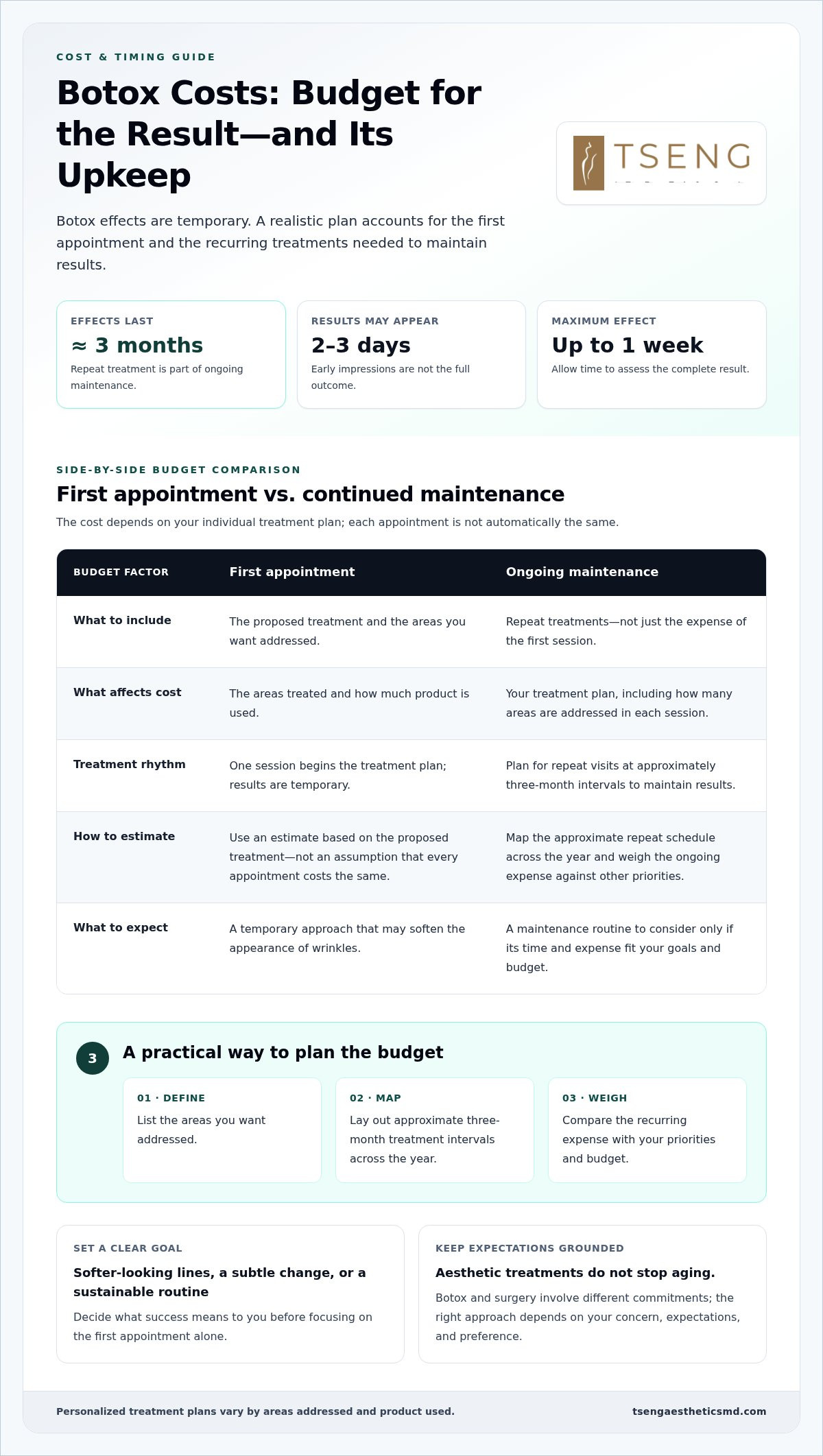
Botox can soften the appearance of wrinkles without surgery, but its effects are temporary. They last approximately three months before another treatment is necessary. That makes maintenance part of the cost, rather than an optional detail after the first appointment. For someone planning to continue treatment throughout a year, the schedule means repeat visits, not a single expense.
Botox results often become visible in 2 to 3 days and can take up to a week to reach their maximum effect. That timing matters when planning treatment around an event or assessing the result. A useful step is to leave enough time to see the full effect before deciding whether the treatment met your goals. Early impressions alone don't show the complete outcome.
The amount spent on Botox depends on the areas treated and the treatment plan, including how much product is used and how many areas are addressed in one session. Since these details vary from person to person, the price depends on your individual plan. A clear estimate should reflect the proposed treatment, rather than assuming every appointment is the same.
To understand the cost of looking younger over time, consider both the initial session and the repeat schedule. List the areas you want addressed, then map the approximate three-month treatment intervals across the year. This gives you a recurring expense to compare with other priorities and helps you decide whether ongoing maintenance fits your budget.
Botox and plastic surgery involve different commitments. Botox offers a temporary approach to wrinkles, while surgery has a different treatment plan and recovery considerations. The choice depends on your concern, expectations, and preference for recurring appointments or a surgical option. Neither approach stops aging, so set a goal around a refined appearance rather than permanent youth.
Before proceeding, define what success means to you: softer-looking lines, a subtle change, or a maintenance routine you can sustain. Keep the three-month interval in mind when considering the ongoing commitment. A thoughtful plan weighs the visible result against the time and expense of maintaining it, rather than focusing only on the first appointment.
2. National average costs for cosmetic procedures
Nonsurgical treatments and cosmetic surgery differ in their scope, recovery, and cost structure. Because facelift is a service offered here, that market figure isn’t included; actual pricing depends on the individual case.
Among nonsurgical options, treatment type makes a substantial difference. These figures show why “chemical peel” alone isn’t enough to compare costs: peel depth changes the treatment and its expense.
Other national estimates offer useful context regarding the overall cost of looking younger across different modalities and practitioner fees.
These comparisons cover different procedures, not interchangeable ways to achieve the same result. A peel addresses the skin’s surface, while microneedling and laser treatments use different techniques. The treatment, areas addressed, and number of sessions all influence the overall plan. A per-treatment estimate, for example, doesn’t represent the total if a course involves repeated visits.
To compare prices and choose a qualified provider, focus on the specific treatment plan, areas addressed, expected recovery, and what the quoted fee includes. Compare plans designed for the same concern, not just headline figures. For a nonsurgical facelift, consider how the proposed approach aligns with your goals and whether the explanation sets realistic expectations.
Your exact price depends on the treatment, areas addressed, technique, and number of sessions; a quote for your case gives the actual figure. If you’re exploring a non-surgical approach to facial rejuvenation, learn about a non-surgical facelift at Tseng Plastic Surgery as one option to discuss alongside your priorities.
These national figures cover different services, so read them as separate benchmarks rather than direct substitutes for the nonsurgical treatments discussed here.
These amounts broaden the cost picture across procedures, but they don’t describe one shared treatment or outcome. National averages can provide a starting point for budgeting and discussion, while a quote reflects the planned procedure and its specifics. Match the procedure and scope when reviewing estimates, rather than treating all cosmetic services as interchangeable.
3. Realistic expectations for aesthetic treatments
Insurance coverage depends on your plan and the treatment’s purpose. Procedures chosen solely to change appearance are generally considered elective, while treatment connected to a medical need may be assessed differently under your policy.
Set goals around a specific feature, not a different identity. Aesthetic treatments can restore facial volume and smooth wrinkles, but they cannot stop aging entirely. They aren’t intended to make a 60-year-old look 20. A more grounded aim is a refreshed appearance that remains in harmony with your features.
Timing also shapes expectations. Many people see Botox results in 2 to 3 days, though the maximum effect may take up to a week. Ultherapy Prime results take three months to appear, and the effects of one face-and-neck session last a year or more. PRP facial rejuvenation typically requires three or more treatments to see results.
Recovery varies by procedure. Skin typically recovers from a chemical peel within one to two weeks, although a deeper peel may take several months to heal. After a facelift, it may take two to three months to feel normal. Consider these timelines when planning work, social commitments, or travel.
Risks and recovery depend on the technique, treatment area, and individual circumstances. Before proceeding, understand the possible complications and aftercare for the specific procedure, including which symptoms require prompt attention. For surgery, build recovery time into your plans. After a facelift, it may take two to three months to feel normal.
Use a few practical steps to keep expectations clear:
- Name the concern you want to address, such as wrinkles or loss of facial volume.
- Ask what changes the treatment is designed to make, and what it cannot change.
- Discuss the expected timeline, recovery, maintenance, and treatment-specific risks.
- Compare the proposed outcome with your own priorities, rather than an idealized image.
A thoughtful plan weighs visible change alongside treatment time and recovery. Someone considering PRP, for example, should account for three or more treatments before assessing results. Someone considering a peel should understand that deeper treatments can take several months to heal. These differences help you compare options realistically and decide whether the expected result suits your preferences.
4. Age acceptance and aesthetic enhancement
In a September 2025 survey, 3% of U.S. adults said they had gotten cosmetic plastic surgery to look younger, according to Pew Research Center. The finding offers context, not a measure of what any individual should choose. Aesthetic enhancement and age acceptance can coexist: one person may welcome visible signs of age, while another prefers a subtle change to a specific feature.
The same survey found that 40% of U.S. adults had taken at least one of four measures to look younger. Cosmetic procedures weren’t the only approach: 27% said they had colored their hair to cover grays, and 21% had taken antiaging supplements. These varied choices show that personal attitudes about aging can lead to different routines, from professional coloring and styling at salons such as Ross Adams Hair & Beauty to medical treatments.
Start by separating your own preferences from outside pressure. Write down the feature you want to address, such as a change in facial volume or the appearance of wrinkles. Then describe your desired result specifically, such as looking more rested while still looking like yourself. This keeps the conversation focused on your priorities, not an abstract demand to look younger.
Before choosing a treatment, consider how it fits your relationship with aging. Ask yourself whether you’d still want the change if nobody else commented on it. Consider the practical commitment too: Botox effects last approximately three months, so maintenance involves recurring appointments. A preference for a temporary adjustment may differ from a desire for a longer-term surgical change.
Use these steps to clarify your decision:
- Name one concern and the change you hope to see.
- Decide what would still feel natural to you in photographs and daily life.
- Consider treatment timing, recovery, and any maintenance routine.
- Give yourself space to reconsider if your goals feel driven by pressure.
Survey results describe groups, not individual motivations. The 3% figure doesn’t mean cosmetic surgery is necessary, nor does it suggest that choosing treatment conflicts with accepting age. It simply records how some U.S. adults responded at that time. Your own decision can reflect both self-acceptance and a considered wish to change one feature.
A natural-looking result is personal, not defined by a universal age or appearance. For one person, it may mean preserving familiar features while softening a concern; for another, it may involve embracing creative, expressive styling through salons like heavymetalhairdresser.com rather than medical procedures. Define what feels authentic before comparing options, and let that guide whether aesthetic enhancement belongs in your approach to aging.
5. How much do chemical peels, microneedling, and laser skin resurfacing cost?
These differences make the type of peel essential when comparing prices.
The treatment plan matters because an estimate for one appointment may not represent the full course. People receiving PRP therapy for facial rejuvenation typically need three or more treatments to see results. PRP is a distinct treatment, but it illustrates why comparing a single-session price with a multi-treatment plan can be misleading.
Laser resurfacing costs vary by treatment type. The technique, treatment area, and number of sessions shape the overall plan.
Use a consistent comparison process before weighing these figures:
- Identify the exact treatment type, such as a light peel or ablative laser.
- Check whether the quoted amount covers one treatment or a planned series.
- Compare the treatment area and goals, rather than relying on a procedure name alone.
- Factor in recovery time; chemical peel recovery typically takes one to two weeks, while deeper peels may take several months to heal.
These national figures are useful starting points, not interchangeable prices. Comparing a light peel’s average with a deep peel’s average, for example, overlooks differences in treatment depth and recovery. Similarly, ablative and non-ablative laser treatments have different cost ranges. First match the exact approach and treatment plan, then assess how each option fits your priorities.
If your concerns extend beyond skin texture to broader facial aging, explore facial rejuvenation options and consider which approach best reflects your goals.
Cost is only part of choosing a skin treatment. Consider the routine you’re willing to follow and the guidance you’ll receive. Apply moisturizer to your body immediately after showering, while your skin is still slightly damp. For procedure-specific care, ask your clinician what to use, when to use it, and whether the recommended routine changes before or after treatment. Keep general body care separate from instructions for treated facial skin.
Before booking, ask for a clear explanation of what the quoted plan includes and what care guidance accompanies it. Clarify which products or steps are appropriate for your treatment plan, and note any instructions you want explained. If the guidance differs from your usual routine, discuss it with your clinician rather than assuming general advice applies to every area or procedure. This connects the cost discussion to practical choices without substituting broad skin-care reminders for individualized directions.
Tseng Plastic Surgery: Facelift
Tseng Plastic Surgery offers facelift options for people considering a surgical approach to visible facial aging. If your main concerns involve changes in facial appearance and you’re weighing surgery against nonsurgical treatments, a personalized discussion can help clarify which approach aligns with your goals. Options include a facelift and a minimal invasive preservation face and neck lift, each considered in relation to the areas you want addressed and the degree of change you hope to see.
A thoughtful next step is to describe your priorities, ask about the differences between these procedures, and discuss expected recovery as part of your decision. The aim is a considered plan that reflects your features and preferences, not an imposed standard of youth.
To discuss facelift options, contact Tseng Plastic Surgery or visit tsengaestheticsmd.com.
Choose an approach that feels like you
The cost of looking younger is only one part of an aesthetic decision. Your priorities matter just as much: which feature you want to address, how much change feels authentic, and what treatment commitment suits your life. A well-defined goal can focus the next conversation and help distinguish between options that address different concerns.
For facial aging, Tseng Plastic Surgery offers a facelift and a minimal invasive preservation face and neck lift. Liposuction addresses a different concern, so the right starting point depends on the area and change you have in mind. Before discussing a treatment plan, write down what you hope to refine and what you want to preserve.
Take the next step at your own pace. Contact Tseng Plastic Surgery to discuss your aesthetic goals and possible options. A thoughtful choice begins with a clear sense of what feels right for you.
Frequently Asked Questions
How much do Botox and other wrinkle-relaxing injections cost in the United States?
There isn’t one price that applies to every Botox or wrinkle-relaxing injection treatment. The total depends on the areas treated, the amount of product used, and the treatment plan. For a useful estimate, define which lines or facial areas you want addressed, then compare plans for those same areas. This clarifies the scope more than an isolated price without details of what the treatment includes.
What is the average cost of cosmetic procedures such as a facelift, eyelid surgery, or brow lift?
There isn’t one average that applies equally to a facelift, eyelid surgery, and brow lift; each addresses different areas and goals. The cost depends on the procedure’s scope, the areas involved, and the details of the surgical plan. To make a meaningful comparison, identify the concern you want addressed and consider the proposed procedure and its included services together, rather than comparing procedure names alone.
How much do anti-aging treatments cost over time, including repeat appointments and maintenance?
Your ongoing total depends on each treatment’s fee and how often you maintain it. Botox effects last approximately three months, so include recurring appointments in your budget rather than considering only the first session. Record each treatment, its date, expected repeat timing, and fee to get a clearer picture of your personal cost of looking younger across the year.

