Buccal Fat Removal for Chubby Cheeks: Options, Candidacy, and Considerations
By Tseng Plastic Surgery
If you searched for chin liposuction because you want more definition, first identify where the fullness is. Full cheeks don’t always mean excess buccal fat, and removing fat that isn’t causing the fullness may not create the balance you’re hoping for. The right approach starts with understanding what’s shaping your face, not assuming one procedure is the answer.
It’s understandable to want more definition while worrying that surgery could leave your cheeks looking too hollow or out of proportion. Buccal fat removal reduces fat pads in the mid-cheek, but it doesn’t address fullness beneath the chin, facial structure, or every other factor that can affect contour. Those distinctions matter when comparing surgery with other approaches or choosing no treatment.
This article explains what buccal fat removal can and can’t change, how candidacy is assessed, and what considerations may shape a thoughtful decision. You’ll also learn how it differs from chin and neck liposuction, which targets a different area. Tseng Plastic Surgery offers liposuction, but buccal fat removal is not a confirmed service. Led by Dr. Mark H. Tseng, who has practiced for over 20 years, the practice emphasizes individualized care and balanced results, without a one-size-fits-all approach.
Key Takeaways
- Cheek fullness can have different causes, so identifying what contributes to your facial shape is an important first step.
- Buccal fat removal targets fat pads inside the cheeks; it may not address fullness beneath the chin or differences in facial structure.
- Compare procedures and no-treatment options by their target area, level of intervention, recovery considerations, and suitability for your goals.
- Ask a qualified surgeon to explain potential risks, limitations, follow-up, and how they assess whether a procedure is appropriate for you.
- If your concern is under the chin, ask whether liposuction may be relevant; it addresses a different area than buccal fat removal.
Buccal Fat Removal for Chubby Cheeks: What the Procedure Actually Changes
Full cheeks can feel out of step with the facial definition you want, but their appearance doesn’t point to one cause or one solution. Buccal fat removal is a specific operation, not a general way to slim the face. Understanding what it targets, and what it leaves unchanged, can help you consider the idea without pressure to pursue surgery.
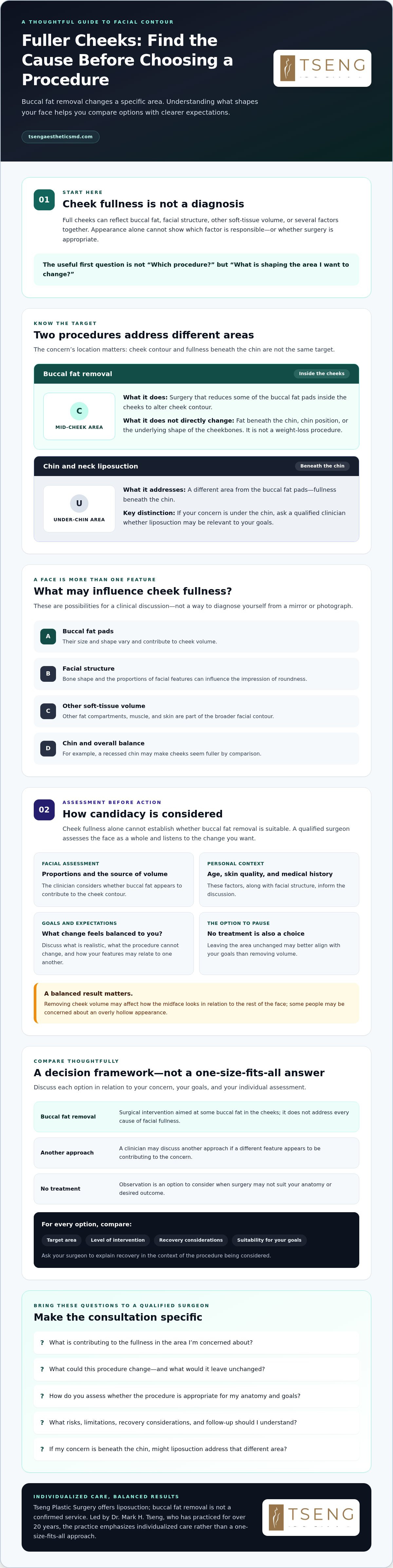
Buccal fat removal is surgery that reduces some of the buccal fat pads inside the cheeks to alter cheek contour; it is not a weight-loss procedure. It addresses a particular pocket of fat, not all facial fullness. It won’t directly change the amount of fat beneath the chin, the position of the chin, or the underlying shape of the cheekbones. For a general overview of the procedure, see Buccal fat extraction.
Where are the buccal fat pads, and what do they do?
Buccal fat pads sit deep within the soft tissue of the cheeks, between facial muscles. Their size and shape vary from person to person, and they contribute to cheek volume as part of a broader arrangement of bone, muscle, skin, and other fat compartments. A qualified clinician can explain the relevant anatomy during an assessment.
What cheek fullness can buccal fat removal address?
The procedure may be considered when a surgeon determines that prominent buccal fat contributes to fullness in the lower or central cheek. Appearance alone isn’t enough to establish that this is the cause. A rounded face may reflect facial structure, other areas of soft-tissue volume, or several factors together. These are possibilities to discuss, not conclusions readers can draw from a mirror or photograph.
That distinction matters for proportion. Removing cheek fat won’t correct every concern described as “chubby cheeks,” and reducing volume in one area may affect how the midface looks in relation to the rest of the face. Suitability and likely results depend on individual anatomy, facial proportions, and clinical assessment. A thoughtful evaluation should clarify what is contributing to the fullness, what change is realistic, and whether leaving the area unchanged may better align with your goals.
Who May Be a Candidate, and Why Chubby Cheeks Have Different Causes
Wanting more definition is a reasonable concern, but cheek fullness by itself doesn’t show whether buccal fat removal is appropriate. Cheek fullness alone cannot establish candidacy for buccal fat removal. A surgeon needs to consider the source of the volume, the face as a whole, and the kind of change you hope to see before discussing whether surgery is suitable.
Age, facial structure, skin quality, medical history, and personal goals all inform that discussion. Facial features and soft-tissue volume change over time, and removing volume may not create a balanced result for every face. A change that appears subtle in one person could make another person’s cheeks look overly hollow or less in harmony with the rest of their features. There isn’t a single checklist that can account for those differences.
How can a surgeon assess whether buccal fat is the source?
An in-person evaluation can include an examination of facial proportions, a discussion of medical history, and careful listening to your desired changes. The surgeon can assess whether buccal fat appears to contribute to the cheek contour and explain the limits of what changing it may accomplish. The American Society of Plastic Surgeons’ overview of cheek reduction surgery also describes candidacy as a decision shaped by individual features and goals.
A photograph, online checklist, or description of your face can’t replace that examination. Bring questions about the specific area that concerns you and the result you’re hoping for; a qualified clinician can then explain whether your expectations align with the procedure’s scope.
When might another explanation or approach matter?
Cheek appearance can reflect more than one feature. For example, a recessed chin may make the cheeks seem fuller by comparison, while overall facial structure can also influence the impression of roundness. These are possibilities for clinical discussion, not ways to diagnose yourself. A qualified clinician may recommend observation or discuss another approach based on the examination and your goals.
Procedures aren’t interchangeable simply because they may affect facial contour. Buccal fat removal addresses a specific area inside the cheek, while liposuction is a separate treatment category that a clinician may discuss for a different concern, such as fullness beneath the chin. If you’re exploring chin liposuction, clarify which area it targets and how that differs from your concern about cheek volume. For an individualized discussion of confirmed treatment options, you can learn more about personalized aesthetic care.
Buccal Fat Removal Compared with Other Ways to Address Cheek Fullness
Different concerns call for different conversations. Buccal fat removal targets a specific fat compartment inside the cheeks, while chin or submental liposuction addresses fullness beneath the chin. A search for chin liposuction Bellevue may reflect a concern about the under-chin area, but that is not the same as cheek fullness. Neither procedure is a general solution for every rounded facial shape, and a clinician’s assessment is needed before considering any intervention.
| Option | Area addressed | Invasiveness and recovery considerations | Assessment needed |
|---|---|---|---|
| Buccal fat removal | Buccal fat pads inside the cheeks | Surgery; ask the surgeon about the expected recovery and procedure-specific risks. | Yes. The clinician must determine whether buccal fat contributes to the concern and discuss facial proportions. |
| Chin or submental liposuction | Fat beneath the chin, not the cheek pads | Surgery; recovery expectations depend on the individual procedure and patient. | Yes. An examination can help clarify whether the under-chin area is the concern being addressed. |
| Another treatment discussion | Depends on the identified cause and treatment considered | Varies; the clinician should explain the approach and its recovery considerations. | Yes. Options should follow an assessment, not be assumed to reduce buccal fat. |
| Observation or no treatment | No area is altered | No procedure-related recovery. | A discussion can still help clarify expectations and whether doing nothing suits your goals. |
Buccal fat removal versus chin or submental liposuction
The distinction is anatomical: cheek fat pads are inside the cheeks; submental fullness is beneath the chin. Liposuction is among Tseng Plastic Surgery’s confirmed services, but buccal fat removal is not a confirmed offering. Liposuction in other body areas also illustrates why the treatment site matters, as discussed in this overview of arm liposuction. These procedures aren’t substitutes for one another.
When is observation or a different treatment discussion reasonable?
Choosing no treatment is valid, particularly if the potential benefit doesn’t justify surgery for you or the proposed change doesn’t align with your priorities. A clinician may discuss observation or another option based on examination findings, but treatments shouldn’t be presented as interchangeable. Injectables, for example, should not be described as directly reducing buccal fat.
If you’re researching chin liposuction Bellevue, ask a clinician to clarify whether the concern is beneath the chin or in the cheeks, and which options, if any, fit the assessment. Reviewing the target area, expected scope, and recovery considerations can help you compare approaches without assuming a procedure is necessary.
Risks, Recovery, and Questions to Ask Before Buccal Fat Removal
Considering surgery means weighing a possible change in cheek contour against the procedure’s risks, recovery demands, and limits. Buccal fat removal isn’t a confirmed service at Tseng Plastic Surgery, so this section is educational, not an offer to perform it. If your research began with “chin liposuction Bellevue,” remember that chin liposuction addresses a different area. Before proceeding with any surgeon, ask for a clear explanation of procedure-specific risks and the care plan that would apply to you.
What should patients understand about risks and recovery?
Risks, aftercare instructions, and warning signs should be explained by the treating surgeon and reviewed by a qualified medical professional. Ask which complications are relevant, how they would be addressed, and whom to contact if a concern arises. Informed consent should also clarify the procedure’s limitations and that results can’t be guaranteed.
Recovery experiences differ. The surgeon’s instructions take precedence over general information, and your care team should explain activity guidance, follow-up arrangements, and signs that call for prompt attention. Avoid relying on a promised timeline or assuming another patient’s experience predicts yours.
What should you ask during a consultation?
Bring questions that help you understand the recommendation, not just the procedure. A clear discussion can help you weigh potential benefits against risks and decide whether the plan fits your goals. If “chin liposuction Bellevue” was your original search, ask whether your concern involves the under-chin area or the cheeks, since the procedures target different areas.
- What do you believe is causing my cheek fullness? Ask how the examination supports that assessment and whether other factors may contribute.
- What change could this procedure reasonably address? Discuss its limits and how the proposed change may relate to your facial proportions.
- What relevant experience do you have with this procedure? Ask how the clinician assesses candidacy for the procedure being discussed.
- What alternatives, including no treatment, should I consider? Ask why each option may or may not fit the examination findings.
- What risks, aftercare, and follow-up should I expect? Request clear instructions, including warning signs and how follow-up is arranged.
- Is this procedure among your offered services? Confirm this directly before treating a consultation as a plan to proceed.
Tseng Plastic Surgery lists liposuction and non-surgical aesthetic treatments among its confirmed services, but not buccal fat removal. For a conversation about your goals and which confirmed treatment categories may be relevant, discuss your aesthetic goals with the practice.
Choosing a Thoughtful Next Step for Fuller Cheeks
A measured decision begins with identifying the concern, not selecting a procedure by name. First, describe what you’d like to change and where you notice it. Next, seek an in-person assessment from a qualified clinician, compare the options that fit the findings, and decide only after you understand the trade-offs. Surgery is not the only valid outcome; choosing no treatment can be appropriate too.
How to evaluate a surgeon and proposed treatment plan
Before moving forward, verify the clinician’s relevant credentials and experience with the procedure being discussed. Ask where care would take place and who would be responsible for your care and follow-up. These details help you make an informed choice, but no credential or facility can guarantee a particular result.
A sound recommendation should explain how your anatomy and facial balance inform the plan, including what the proposed treatment can and can’t change. Ask whether observation is reasonable, what alternatives are relevant to the examination, and why the clinician recommends one path over another. If the explanation feels unclear or your questions remain unanswered, it’s reasonable to pause and seek further information before deciding.
What a personalized aesthetic consultation can clarify
A consultation can help distinguish the area you’re concerned about from the factors that may contribute to its appearance. It can also clarify whether a confirmed service fits your goals, what limitations to expect, and what follow-up a proposed treatment involves. The practice lists liposuction and non-surgical aesthetic treatments, but buccal fat removal is not a confirmed offering. Ask directly whether any procedure discussed is among the clinician’s services.
For example, if your concern is fullness beneath the chin rather than in the cheeks, ask how the treatment target differs and whether the proposed option addresses your specific goal. That distinction can keep a discussion focused and help prevent choosing a procedure based on a broad label like “full face.”
There’s no need to make a decision during the first conversation. Take time to consider the explanation, expected changes, potential risks, and care plan. Informed consent means understanding those details and choosing freely, with expectations grounded in what the treatment can realistically address. If you’d like to discuss your goals and available options, explore a personalized consultation.
Choose a Next Step That Fits Your Goals
Full cheeks can have different causes, and buccal fat removal addresses only a specific area. The most useful next step is to identify what concerns you, seek an in-person assessment, and compare the options, including no treatment, before deciding. A search for chin liposuction Bellevue may point to another distinct concern: fullness beneath the chin is not the same as cheek volume.
A qualified clinician should explain how your anatomy and facial proportions shape the recommendation, what a procedure can and can’t change, and what risks and follow-up to consider. Tseng Plastic Surgery offers liposuction and aesthetic treatments, but buccal fat removal is not a confirmed service. Led by Dr. Mark H. Tseng, whose practice experience exceeds 20 years, the practice emphasizes individualized care and balanced, natural-looking results.
You don’t need to rush toward a procedure. A thoughtful conversation can help clarify which options are available and whether any aligns with your goals. To discuss your priorities and available treatments, discuss your aesthetic goals and available options. An informed choice, including choosing no treatment, is a meaningful step toward feeling confident in your decision.
Frequently Asked Questions
Does buccal fat removal make chubby cheeks look slimmer?
It may create a slimmer cheek contour when buccal fat is a meaningful source of the fullness. The procedure reduces fat pads inside the cheeks, but it won’t address every cause of a rounded face or reduce fullness beneath the chin. A surgeon needs to assess your anatomy and facial proportions before estimating whether the change may suit your goals. It isn’t a weight-loss procedure.
Who is a good candidate for buccal fat removal?
A potential candidate is someone whose examination suggests that prominent buccal fat contributes to cheek fullness and whose goals are consistent with what the procedure can change. There’s no reliable way to determine candidacy from cheek fullness alone. A clinician should consider your facial structure, medical history, skin quality, and desired outcome, then explain potential benefits, limitations, and alternatives. An assessment may also conclude that surgery isn’t appropriate.
Can buccal fat removal make your face look too hollow?
Yes, reducing cheek volume can leave some faces looking overly hollow or less balanced, depending on individual anatomy and how facial features change over time. The degree of change can’t be predicted from a general description or photo alone. Ask the surgeon how they assess facial proportions, what conservative planning means for your case, and how they’ll discuss the possibility that no treatment may better fit your goals.
How long does recovery from buccal fat removal take?
Recovery differs by patient, and the treating surgeon should explain what to expect for your procedure and health. Ask about activity guidance, follow-up visits, and warning signs before deciding. Follow the surgeon’s aftercare instructions rather than relying on a general timeline or another patient’s experience.
Is buccal fat removal the same as chin liposuction?
No. Buccal fat removal targets fat pads inside the cheeks, while chin or submental liposuction targets fullness beneath the chin. They address different anatomical areas and aren’t substitutes for each other. If you’re researching chin liposuction Bellevue, clarify whether your concern is under the chin or in the cheeks and ask a qualified clinician what they observe. Tseng Plastic Surgery lists liposuction among its services, but not buccal fat removal.
What should I ask a surgeon before buccal fat removal?
Ask what the surgeon believes is causing your fullness and how an examination supports that assessment. Discuss relevant experience, realistic changes, risks, alternatives including no treatment, aftercare, and follow-up. Ask how the plan accounts for facial balance and whether the procedure is among the clinician’s offered services. Before consenting, make sure you understand the limitations and potential complications, and feel comfortable taking time to consider the recommendation.

