Breast Implant Exchange Cost: Price, Insurance and Financing
By Tseng Plastic Surgery
The cost isn’t determined by the implant alone. Breast implant exchange cost depends on the extent of revision, implant choice, surgical setting, anesthesia, and whether capsule or pocket work is needed. A personalized price is provided after a quote request. Cosmetic exchanges are generally not covered by insurance, while coverage may be possible when surgery is medically necessary.
It’s understandable to want a clearer sense of the financial commitment before considering another operation. The final scope can vary considerably depending on whether the goal is simply to replace an implant or also address concerns such as scar tissue, implant position, or breast shape.
This guide explains what can affect the cost, when insurance may contribute, and what financing options and implant warranties may offer. It also covers implant lifespan, so you can understand why replacement isn’t automatically required on a fixed schedule and what changes may prompt a discussion about revision.
Key Takeaways
- Separate cosmetic goals from medical concerns when reviewing potential insurance coverage, and understand which costs your plan may leave to you.
- Compare estimates by what they include, such as the surgeon’s fee, facility, anesthesia, implants, tests, and recovery-related expenses.
- Explore payment approaches and implant warranty benefits, while accounting for the possibility that benefits may be limited.
- Implants aren’t lifetime devices, but replacement isn’t automatically needed on a fixed schedule; symptoms, implant changes, and your preferences can shape the decision.
Does insurance cover breast implant exchange?
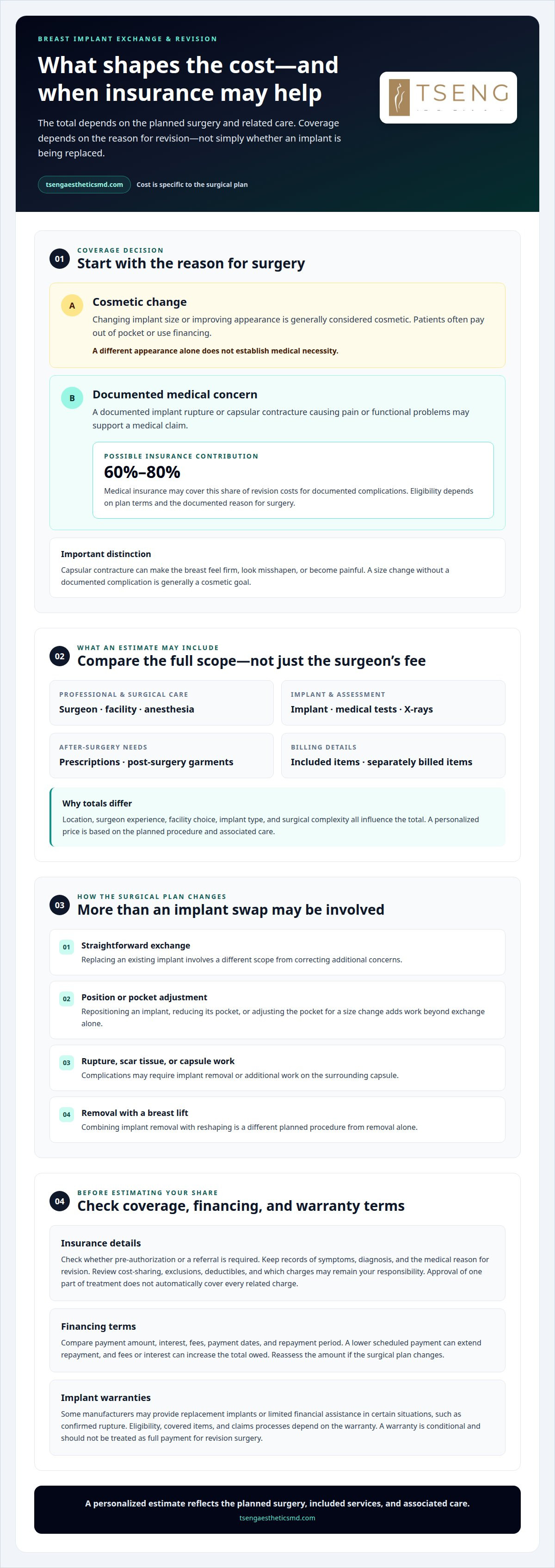
Cosmetic breast augmentation is typically not covered by health insurance. An exchange chosen to change implant size or improve appearance is also generally considered cosmetic. Patients often pay out of pocket or use financing for these procedures. The reason for surgery, not simply whether an implant is being replaced, determines the medical distinction.
Coverage may be available when revision is medically necessary. Documented implant rupture or capsular contracture that causes pain or functional problems can support a medical claim. For these documented complications, medical insurance may cover 60% to 80% of breast implant revision costs. The plan’s terms and the documented reason for surgery determine what portion is eligible.
Symptoms and surgical goals help distinguish a medical concern from an aesthetic preference. Capsular contracture can make the breast feel firm, appear misshapen, or become painful. A patient seeking only a different size, without a documented complication, is pursuing a cosmetic change. If breast implant-associated anaplastic large cell lymphoma is confirmed, the U.S. Food and Drug Administration says treatment generally requires implant removal and removal of the surrounding scar capsule.
Before scheduling implant revision surgery, find out whether your health plan requires pre-authorization or a referral. You’re responsible for costs the plan doesn’t cover and for obtaining any required approvals. Keep records explaining your symptoms, diagnosis, and medical reason for revision, as these details help the insurer assess the claim. Approval of one part of treatment doesn’t automatically mean every related charge is covered.
For example, an exchange to address painful contracture has a different medical rationale from one requested solely for a new appearance. Even with a documented complication, review your plan’s cost-sharing and exclusions to estimate your portion. Separate expected surgical charges from the insurer’s decision, and account for any deductible or other patient responsibility stated in your policy.
How Much Does Breast Implant Replacement and Revision Cost?
The total reflects the planned surgery and the care surrounding it. Reviewing the procedure’s components helps explain why estimates can differ.
Costs of Replacement and Revision
Implant replacement exchanges an existing implant, while revision surgery may also correct related concerns. That distinction matters because a straightforward exchange involves different work from correcting implant position or changing the pocket. Your exact price is provided in a quote based on your planned procedure and associated care.
Surgical and Recovery Cost Components
A complete estimate may include the surgeon’s fee, surgical facility, anesthesia, implant, prescriptions, post-surgery garments, medical tests, and X-rays. Some estimates cover professional services alone, with facility and anesthesia charges billed separately. To compare quotes, review each item side by side and note what’s included or billed separately. Consider recovery-related needs, too, rather than comparing only the surgeon’s fee.
Factors That Affect Revision Costs
Location, surgeon experience, facility choice, implant type, and the complexity of the surgery all influence the total. Revision can require repositioning an implant or reducing its pocket, adding work beyond exchange alone. Complications such as implant rupture or scar tissue may require removal or additional capsule work. Those surgical differences can change the procedure’s scope and its associated facility, anesthesia, and recovery expenses.
Upgrading Existing Implants
Changing implant size or type can involve more than choosing a replacement device. A size change may require pocket adjustment so the new implant fits appropriately, while a simple exchange may not address other concerns. Implant removal with a breast lift combines removal with reshaping, so the planned work differs from removal alone. Discuss your desired appearance along with implant position and breast tissue, since these factors shape the surgical plan and quote.
Financing options
Patients often pay out of pocket or use financing for breast implant revision. Financing can divide the expense into scheduled payments, but the terms determine the total repayment amount. Compare the payment amount, interest, fees, and repayment period before choosing an arrangement. Include the planned procedure and related care in your budget rather than focusing only on the implant.
Start by identifying which parts of the procedure need funding. For example, a cosmetic augmentation may involve an implant exchange, while revision for capsular contracture may require additional work on surrounding tissue. A written estimate helps you match the amount financed to the planned care. Leave room in your budget for recovery-related expenses, such as prescriptions or garments.
Read financing terms closely before committing. A lower scheduled payment can extend repayment, while fees or interest can increase the total amount owed. Compare the full repayment total, payment dates, and any conditions that apply if your procedure changes. If your surgical plan changes after evaluation, reassess the amount you intend to finance rather than borrowing against an outdated estimate.
Implant warranties are another possible source of assistance, separate from financing. Some breast implant manufacturers offer warranties that may cover replacement implants or provide limited financial assistance in certain situations, such as a confirmed rupture. The warranty terms define eligible complications, covered items, and the claims process. A warranty is conditional, so it shouldn’t be treated as full payment for revision surgery.
For example, a confirmed rupture could make a manufacturer’s warranty relevant, while a change in implant size may not qualify under the same terms. Review the warranty paperwork alongside your surgical estimate, and distinguish implant benefits from other expenses. Surgeon, facility, anesthesia, and recovery charges may remain separate. Financing can address remaining expenses, but consider the available terms and total repayment when deciding.
Typical implant lifespan and replacement
Breast implants may last 10 to 20 years, but they aren’t lifetime devices. The timing of replacement depends on implant condition, symptoms, and your preferences.
Expected Implant Lifespan
The 10-to-20-year range is a general lifespan, not a scheduled replacement deadline. If your implants cause no problems and you’re satisfied with their appearance, routine replacement isn’t necessary. This distinction helps you avoid treating a calendar milestone as a surgical requirement.
Some warranties typically don’t extend beyond 10 years, so their terms may not match an implant’s lifespan. Keep track of your implant information and any warranty documents. If you notice a change, bring those details to a clinical evaluation rather than assuming age alone explains it.
Reasons for Replacement or Revision
Replacement or revision may be considered for rupture, capsular contracture, implant displacement, a desired size change, or a preference for a different implant type. Each reason can lead to a different surgical plan, so identifying your main concern helps clarify what the procedure needs to address.
Capsular contracture can make a breast feel firm, look misshapen, or become painful. It affects 10% to 15% of patients within 10 years. A silicone implant rupture is another reason to discuss removal; the implant can be replaced after safe removal.
Aesthetic preferences can also change after breast augmentation. For example, someone who once wanted a fuller appearance may later prefer a different size or implant type. That preference alone doesn’t mean replacement is medically necessary. By contrast, rupture or painful contracture may provide a medical reason to consider revision. Distinguishing a desired change from a complication helps frame both the surgical discussion and potential insurance questions.
Implant age, symptoms, and the change you want all matter more than an automatic timetable. Discuss your breast augmentation goals as you consider whether replacement or revision fits your needs.
Tseng Plastic Surgery: Facelift
Tseng Plastic Surgery offers Breast Augmentation for patients considering changes to breast volume and appearance. After reviewing the factors that shape implant replacement decisions, clarify your goals and consider how they relate to augmentation, rather than assuming every concern calls for the same procedure.
Discussing your desired outcome can help distinguish a preference for a different appearance from questions about an existing implant. Bring your priorities and concerns into the conversation so the next step reflects your individual goals. For questions about Breast Augmentation, contact Tseng Plastic Surgery.
Make Your Next Decision With Clarity
Deciding whether to pursue another procedure is personal, and the right next step begins with defining what you want to change. Consider your priorities alongside your health, implant history, and comfort with surgery. A clear understanding of your goals can make a conversation about breast implant exchange cost more useful and focused.
Tseng Plastic Surgery offers Facelift, Minimal invasive preservation face and neck lift, and Liposuction as part of its aesthetic services. These procedures address different concerns and may be relevant if your interests extend beyond breast surgery. A thoughtful discussion can help you consider which goals align with the care you’re seeking.
Contact Tseng Plastic Surgery to discuss your aesthetic goals and possible next steps. You can move forward at your own pace, with a clearer sense of what matters to you.
Frequently Asked Questions
Are financing options available?
Yes, patients may use financing to spread procedure expenses into payments. Compare the full repayment amount, interest, fees, payment schedule, and consequences of missed payments before agreeing to terms. For example, if the surgical plan changes after evaluation, the amount you need to finance may change too. Revisit your budget using the updated estimate before deciding how much to borrow.
Can an implant warranty help reduce the cost?
Yes, a manufacturer’s warranty may provide a replacement implant or limited financial assistance in certain situations, including a confirmed rupture. The benefit depends on the specific warranty terms, and payment isn’t guaranteed. Review the documents to understand what qualifies, which expenses are covered, and how to submit a claim. Keep your implant information and warranty paperwork together so they’re available if a complication occurs.
What is the average cost of breast implant exchange in the United States?
There isn’t one average that reflects every surgical plan. Breast implant exchange cost depends on whether the procedure involves only replacement or also addresses concerns such as scar tissue or implant position. Implant type, surgeon, and facility also shape the estimate. A quote tailored to the planned procedure provides a more relevant basis for budgeting than a generalized figure.
What is the typical price range for breast implant replacement surgery?
The total varies with the scope of replacement surgery and the services included in the estimate. A straightforward exchange differs from revision involving capsule work, pocket adjustment, or another procedure. Compare quotes by checking whether each includes the same components, such as the surgeon’s care, anesthesia, facility, and implant. This like-for-like comparison helps explain why estimates may differ.
What factors affect the cost of breast implant exchange?
The breast implant exchange cost reflects surgical complexity, implant type, surgeon, location, and facility. For example, an exchange may require additional work if the implant pocket needs revision or scar tissue requires attention. An implant rupture can also change the operative plan. Compare estimates that describe the same planned procedures, so additional surgical work isn’t mistaken for a difference in the basic exchange.
Does breast implant exchange cost include surgeon, anesthesia, and facility fees?
Not always. Some estimates list only the surgeon’s fee, with anesthesia and facility charges billed separately. Review each line item, including testing, prescriptions, and recovery garments, to see what the total covers. If anesthesia or facility costs fall outside the estimate, include them in your budget rather than treating the surgeon’s fee as the full amount.

